
South West Sydney Warehouse Staffing 2026: Moorebank, Eastern Creek & Prestons
Warehouse staffing guide for South West Sydney's logistics hubs — Moorebank, Eastern Creek, Prestons. Award rates, cold chain compliance, seasonal surge planning.
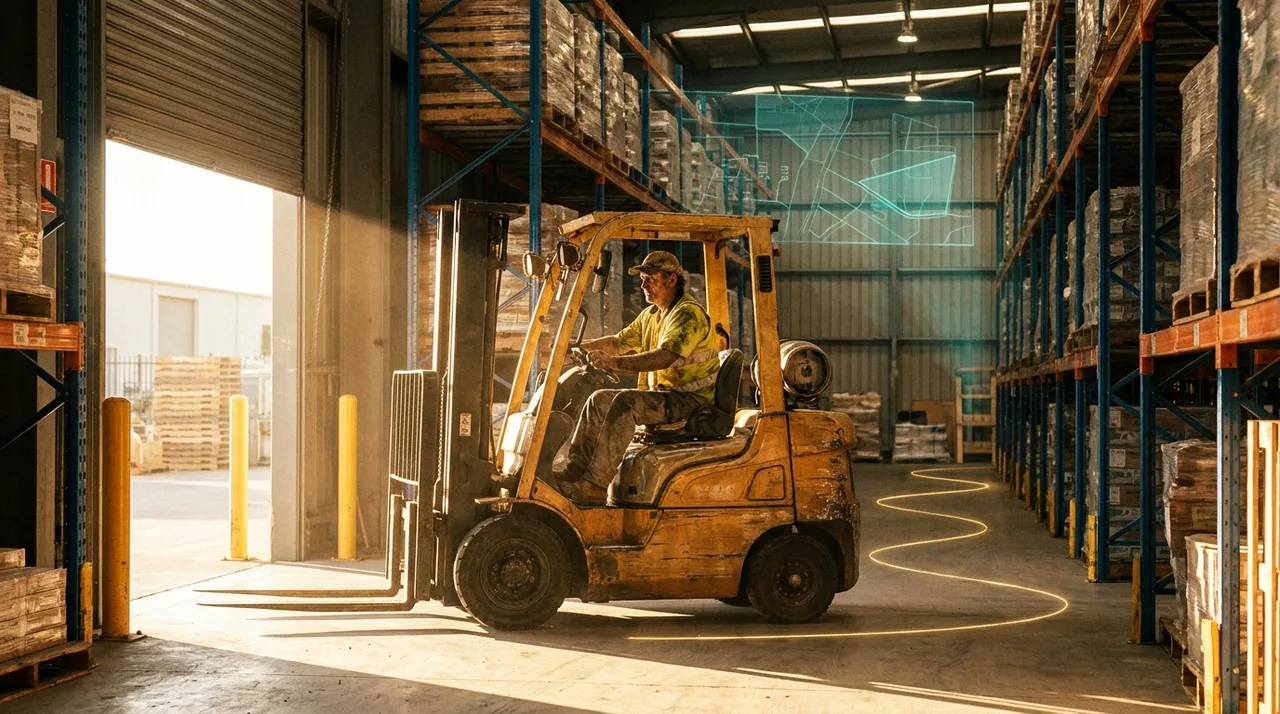
South West Sydney — Moorebank, Eastern Creek, Prestons — is Australia's largest inland logistics corridor, with three distinct warehouse staffing profiles and LF forklift operators as the hardest role to fill same-day.
- Three warehouse types: cold chain (specific PPE + induction required), general 3PL (same-day fill for pick/pack), heavy manufacturing (different safety profile)
- Most in demand: LF forklift operators — same-day for general pick/pack; 24–48 hrs for licensed forklift and cold chain roles
- Award rate: MA000084 Storeworker Grade 1 (on commencement) from 1 July 2026 is $27.08/hr base, $33.85/hr casual with the 25% loading (Fair Work Pay Guide MA000084)
- Same Job Same Pay: if your business runs an EA above award, labour hire workers doing the same work must be paid the EA rate
- Christmas peak: lock seasonal crews by October — trained casual pool drains when major 3PLs activate priority lists
South West Sydney is now Australia's largest inland logistics corridor.
Moorebank, Eastern Creek, Prestons, Ingleburn and Smeaton Grange together account for over 850,000 square metres of active warehousing. Moorebank's dedicated rail link to Port Botany adds capacity that no road-only 3PL precinct can match.
LF forklift operators are the most in-demand role in this corridor. General pick-and-pack can be filled same-day.
Cold chain compliance requires specific induction and certification that most casual workers don't hold.
Christmas peak bookings that aren't locked by October routinely miss — the trained casual pool drains from September.That drain happens when Australia Post and Amazon activate their own vendor priority lists first.
This guide is for the warehouse and logistics operations managers running sites across South West Sydney.
It covers the three warehouse types, what roles are fillable same-day, the 2026 award rates, cold chain compliance under SafeWork NSW, how Same Job Same Pay affects your costs — and why your seasonal call needs to happen in October, not December.
Table of Contents
- Why South West Sydney Is Australia's Logistics Ground Zero
- Three Warehouse Types, Three Staffing Profiles
- 2026 Award Rates: What You Actually Pay
- Cold Chain Compliance: The SafeWork NSW Brief
- Same Job Same Pay: What It Means for Your Site
- The Christmas Trap — And How to Avoid It
- How Leap Staffs South West Sydney Warehouses
- Frequently Asked Questions
Why South West Sydney Is Australia's Logistics Ground Zero

This isn't marketing language. The numbers back it up.
Moorebank Intermodal Precinct: 500K TEU/year capacity, 850K m² warehousing, ~6,800 jobs at full build — Australia's first independent open-access interstate terminal, now commissioned (Australian Government). That's Moorebank alone.
Now extend your view across the M7 corridor. Eastern Creek hosts some of Australia's largest distribution centres — major retail, FMCG and e-commerce operators. Prestons runs a dense strip of 3PL and cold storage facilities along Bernera Road and Airds Road. Ingleburn sits on the Southern Highlands corridor, home to food manufacturing and pharmaceutical logistics. Smeaton Grange — further south — carries heavy manufacturing and automotive supply chain operations.
At full capacity, Moorebank removes up to 3,000 daily truck movements from Sydney roads — and that freight flows directly into the warehouses along this belt. More containers in means more hands needed on the floor.
The workforce demand in this corridor is not cyclical. It is structural and growing.
Distribution centres keep expanding their footprints. The Moorebank rail link to Port Botany means container throughput bypasses the road network entirely — and that volume lands in warehouses directly.
If your site sits anywhere between Liverpool and Penrith, this is your context.
The workers your site needs are being competed for by 40 other warehouses within a 15km radius.The South West Sydney warehouse belt isn't a market segment. It's Australia's primary inland freight processing zone — and the labour competition reflects that. Early relationships with a responsive local labour hire company aren't a nice-to-have. They're a throughput lever.
Three Warehouse Types, Three Staffing Profiles
Not all warehouses are the same.
The roles you need, the credentials those roles require, and the lead time to fill them differ dramatically across these three types.
Getting this wrong — assuming all warehouse labour is interchangeable — is the fastest route to a site induction fail or a workers' comp claim.
Here's how South West Sydney's warehouse landscape actually breaks down:
Why this matters for your booking:
Pick/pack roles in a general 3PL are the easiest to fill fast. These are Storeworker Grade 1 classifications under the Storage Services and Wholesale Award. No high-level credential required beyond basic WHS induction.
If your request lands before 10am, same-day confirmation is achievable.
LF (Licence to Operate a Forklift) operators add one credential check — the forklift licence types in NSW guide covers this in detail. The LF licence is straightforward to verify, and there's a strong pool across the corridor. Still same-day, but confirm early.
Cold chain is different. The credential is less about paperwork and more about site-specific experience.
A worker who has never operated a reach truck in a -18°C freezer is a safety liability on day one. You need workers who've done it before. That takes a short-list, not just a list.
Heavy manufacturing is different again. Some sites sit under the Manufacturing Award (MA000010) rather than MA000084, and the classification structure is not the same. The roles overlap with warehouse classifications in some cases — but the safety profile, and sometimes the award, diverges. Confirm which award applies before you lock in a rate.
Not every warehouse worker fits every warehouse. Match the role to the type — before you book.
2026 Award Rates: What You Actually Pay 💰
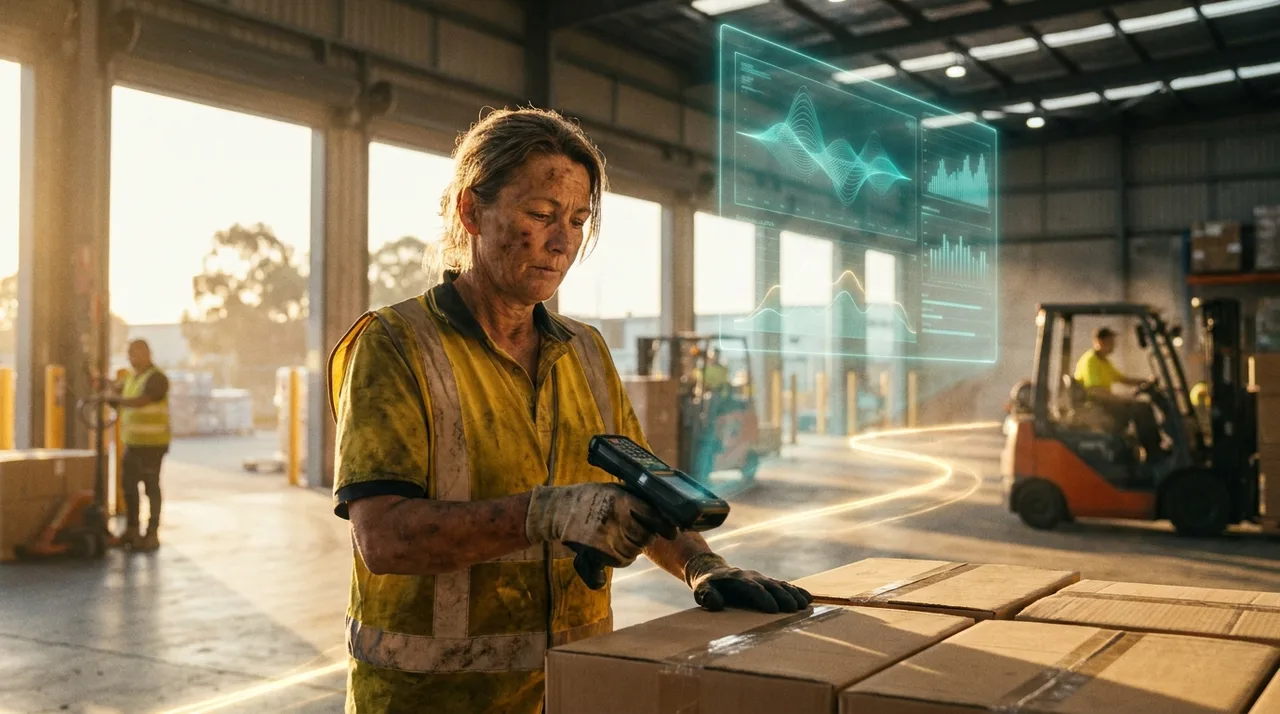
The award rate is the floor, not the ceiling. But knowing it is essential.
It matters for budgeting your labour costs — and for making sure your provider isn't underpaying crews, which is your problem under the Closing Loopholes Act, not just theirs.
Most warehouse roles in South West Sydney fall under the Storage Services and Wholesale Award 2020 (MA000084).
MA000084 covers storage, packing, despatch, and wholesale to other businesses — including labour hire workers placed in this industry.
Here's what the numbers look like from 1 July 2026 (operative from the first full pay period on or after that date, after the 4.75% Annual Wage Review increase):
Key MA000084 Storeworker Grade 1 rates from 1 July 2026: on commencement $27.08/hr base ($33.85/hr casual); after 3 months $27.41/hr ($34.26 casual); after 12 months $27.72/hr ($34.65 casual). Weekly rate on commencement is $1,029.10. Casual loading is 25% under clause 11.2.
Source: Fair Work Pay Guide MA000084, effective 01/07/2026 and the full award text. Higher grades sit above these figures — check the current pay guide for the exact classification before you budget.
LF forklift operators must be classified at Grade 3 or above. If your provider sends them billed at Grade 1, that's a classification error or a compliance shortcut.
Super Guarantee: 12% of ordinary-time earnings from 1 July 2025 — applies equally to casual workers placed through labour hire.
What does this translate to in all-in labour hire rates?
Leap quotes a single all-in $/hr per classification — not a base+loading line item. General pickers sit at the lower end; LF forklift operators (Grade 3+) and cold chain specialists attract a higher classification rate. Sunday and public holiday penalty rates add materially on top. Use the Leap rate checker for a specific quote against your roles.
Sunday rates under MA000084 are 2x base for permanents; casual rate is calculated on base before the casual loading is applied. Use the Leap rate checker for a specific quote.
Cold Chain Compliance: The SafeWork NSW Brief 🦺
Cold chain warehouses carry distinct hazards that require specific induction, PPE, and site controls. Under the WHS Regulation 2025 (commenced 22 August 2025), your PCBU obligations when operating a cold chain facility extend to labour hire workers you bring on site.
See the host employer responsibilities guide for the full duty-of-care split. Key hazards SafeWork NSW identifies for cold environments:
- Slip/trip/fall — ice, water and condensation between temperature zones
- Entrapment — cool room or freezer doors that can trap workers
- Hazardous atmosphere — poor ventilation causing fume build-up from LPG forklifts or ammonia leaks
Ammonia leak risk in low-ventilation freezer environments is a genuine hazard that your site induction must address for every worker — including casuals placed through labour hire.
PPE requirements for cold chain workers:
PCBUs must provide PPE and cannot charge workers for it. If labour hire workers arrive without adequate thermal PPE, your PCBU obligation is to ensure they have it. Confirm your provider equips workers before dispatch, or have site-issue PPE ready at induction.
Host employer note: Under the WHS Regulation 2025, workers placed by a labour hire agency still fall under your duty of care as PCBU once they're on site. A cold environment induction is not optional. It must cover: entrapment risks, ammonia hazard protocols, warm-up break schedules, and buddy-check procedures for freezer entry. Document this induction per worker.
PCBUs must induct workers on cold environment hazards — thermal stress increases fatigue and impairs safe work performance. Cold chain is not a same-day fill scenario unless the worker has site-specific experience.
Ask your labour hire provider directly: "Has this person worked in a temperature-controlled environment before?" A good provider has this documented.
If they can't answer whether the worker has done cold store work before, that's your answer.Same Job Same Pay: What It Means for Your Site ⚠️
The Fair Work Legislation Amendment (Closing Loopholes) Act 2023 introduced Same Job Same Pay — first orders came into effect November 2024.
It ensures labour hire workers are paid at least the same as directly hired employees doing the same job, where a regulated order applies.
What does this mean for a South West Sydney warehouse operation?
Scenario A — Award-only site: Your warehouse operates under the Storage Services and Wholesale Award. No enterprise agreement. Same Job Same Pay orders cannot be applied — there's no higher rate for labour hire workers to be "undercut" against. Your labour hire costs remain as per award minimums.
Scenario B — Enterprise Agreement site: Your facility has an enterprise agreement paying above award. The Fair Work Commission can set a 'Protected Rate of Pay' requiring labour hire workers to be paid the EA rate. This applies to businesses with 15+ employees covered by an EA. Civil penalties apply to labour hire providers that pay less than the protected rate, with anti-avoidance provisions also in place.
Practical implications for your budget:
If your site has an EA and you're currently using labour hire at award rates, Same Job Same Pay means those workers must receive wages equal to your in-house employees doing the same roles.
This isn't a reason to avoid labour hire. It's a reason to work with a compliant labour hire provider who understands their obligations and bills transparently.
A quality provider will have reviewed their rates against your EA before placing workers. A dodgy one won't — and the liability risk lands on both parties.
For most smaller and mid-size 3PLs in Prestons and Eastern Creek operating under award, the practical impact is limited. For large distribution centre operators with formal EAs, this is a conversation worth having before your next seasonal ramp.
Over 7,600 workers across mining, aviation and warehousing have benefited from Same Job Same Pay orders so far.See the Fair Work Ombudsman's labour hire changes page for current guidance.
The Christmas Trap — And How to Avoid It

Here's what the South West Sydney seasonal peak looks like from the inside of a labour hire operation:
October: Major 3PLs, FMCG distributors and e-commerce fulfilment centres start confirming their Christmas volume forecasts. They call their labour hire contacts to pre-book experienced pickers, LF operators and bulk-pick sorters.
November: Pre-booked workers start being allocated. The strongest workers — the ones who show up, hit pick rates, and don't disappear mid-shift — are confirmed across multiple client sites. Availability tightens.
December 1–10: The last wave of bookings comes in. Rates are firm. Quality workers are committed. What's left is the unallocated pool — new workers, inconsistent attendance records, and no site familiarity.
December 15+: Surge pricing. Anyone left available costs more. Lead times stretch. Quality is unpredictable.
If you're making your Christmas warehouse staffing call in December, you've already lost.What roles move first in the South West Sydney Christmas market:
🥇 LF forklift operators — highest demand, lowest available pool during peak. Book these first.
📦 Experienced pickers (pick rate proven) — 3PLs compete hard for workers with documented pick-per-hour metrics. First-timers cost you throughput.
🥶 Cold chain pickers — the smallest pool of all. If you're running a cold store through Christmas, start your booking conversation in September.
The Leap team pre-positions workers for the South West Sydney corridor from October each year. Clients in that conversation early get priority allocation. Clients who call in December get whoever's left.
This isn't a sales pitch. It's the operational reality of a tight labour market across 40+ competing warehouses in a 15km radius.
How Leap Staffs South West Sydney Warehouses
Leap Labour is a Sydney labour hire company. We place warehouse workers across the South West Sydney corridor — Moorebank, Prestons, Eastern Creek, Ingleburn, Smeaton Grange. That's the honest version of who we are and what we do.
We're not a recruitment agency. We don't place permanent staff.
We supply crews — confirmed by the same business day for general warehouse roles, 24–48 hours for specialised or cold chain placements.
Here's how allocation actually works:
For cold chain specifically: We ask about temperature-environment experience at registration. Workers who've done cold store work get flagged. When you request a cold chain picker, we're not pulling from a general pool — we're pulling from the documented cold-environment subset.
For LF operators: All forklift workers in our pool have licence verification on file. If it's expired or unverified, they don't get placed. The forklift licence types NSW guide explains the exact licence classes and what work each authorises.
For seasonal pre-booking: Contact us in October. Names before Christmas — not promises.
We publish our rates transparently — no surprise on-cost additions. What you're quoted is what you're billed. Award rate base, casual loading, and our margin disclosed upfront. If your site has an EA and Same Job Same Pay applies, we'll tell you before we place anyone.
A note on cash-in-hand warehouse work: it exists in the South West Sydney corridor. Workers paid cash with no payslips still have full Award rights — including penalty rates, casual loading and super. The FWO handles those complaints.
For clients, hosting workers paid off-books by a labour hire provider is a compliance risk under the Closing Loopholes Act — not just the provider's problem.
See the full Warehouse Staffing Solutions Sydney guide for the broader Sydney picture.
Get Started
South West Sydney's logistics corridor doesn't slow down. Your staffing shouldn't either.
Need warehouse workers for Moorebank, Eastern Creek, Prestons or Ingleburn? Get a confirmed rate and availability check in your inbox →
Planning for the Christmas peak? Call us now — not in December. Pre-book your LF operators and experienced pickers before the October lock-in. Workers confirmed before the market tightens.
Check rates and availability → | View our warehouse service page →
Frequently Asked Questions
How quickly can Leap Labour supply warehouse workers in South West Sydney?+
For general pick/pack roles, same-day supply is possible if your request is in before 10am. LF forklift operators take slightly longer — usually confirmed the same business day. Cold chain roles with specific PPE requirements and temperature-controlled environment experience need 24–48 hours of lead time. Pre-booked seasonal roles (Christmas peak) are confirmed weeks in advance for clients who book in October.
What award rate applies to warehouse pickers and packers in NSW?+
Pickers and packers in NSW are covered by the Storage Services and Wholesale Award 2020 (MA000084). From 1 July 2026, the Storeworker Grade 1 (on commencement) base rate is $27.08/hr, with casual employees receiving a 25% loading on top of the minimum hourly rate. That brings the casual minimum to $33.85/hr before penalty rates. After 3 months the base is $27.41/hr ($34.26 casual); after 12 months $27.72/hr ($34.65 casual), per the Fair Work Pay Guide MA000084 effective 01/07/2026. LF forklift operators must be classified at Grade 3 or above.
Does Same Job Same Pay affect my warehouse labour hire costs?+
It depends on your site structure. The legislation applies to businesses with 15 or more employees that are covered by an enterprise agreement and use labour hire workers. If your site operates under the award only, Same Job Same Pay orders are unlikely to affect your labour hire rates. If you have an EA that covers the roles being performed by labour hire workers, a regulated labour hire arrangement order can be sought — requiring your provider to pay workers at the EA rate. Ask your provider directly whether they've reviewed your EA before placing workers.
What PPE is required for cold chain warehouse workers in NSW?+
SafeWork NSW requires employers to plan and manage cold environment risks based on the type of environment, who is working there, and the duration of exposure. Specific hazards include slip/trip risks from condensation, entrapment in cool rooms, and fume accumulation from forklifts or ammonia leaks. Required PPE includes thermal base layers, insulated waterproof gloves, slip-resistant waterproof safety footwear, and thermal head covering. Employers/PCBUs must provide PPE to workers and must not charge anyone for using the equipment.
When should I book seasonal warehouse workers for the Christmas peak?+
October. The South West Sydney corridor runs a competitive worker market during November–January. Labour hire providers pre-commit their strongest, most reliable workers to clients who book early. By mid-December, the unallocated pool carries inconsistent attendance records — and surge rates apply. Pre-booking in October locks in names, not just a verbal promise, before the market tightens.
What is the difference between a 3PL warehouse and a cold chain facility for labour hire purposes?+
A general 3PL needs pickers, packers and LF forklift operators — roles fillable same-day for most requests. Pick/pack workers fall under Storeworker Grade 1 or 2 classifications. If they're using machinery like a forklift or leading a small team, Grade 3 or 4 applies. Cold chain requires workers experienced in temperature-controlled environments with specific PPE, cold hazard induction (including entrapment and ammonia risks), and documented cool room experience. Heavy manufacturing adds a different safety profile with potentially different award coverage.