Warehouse Staffing Sydney: How to Hire Warehouse Workers Fast
How to hire warehouse workers in Sydney fast — same-day to 48hr fill. Roles, rates, qualifications, and what to look for in a warehouse staffing agency.
To hire warehouse workers fast in Sydney, engage a warehouse staffing agency that can supply vetted, inducted workers within 24–48 hours. General warehouse hands cost $44–$48/hr all-in through a compliant agency. Licensed forklift operators cost $50–$58/hr. Rates include wages, super, insurance, and admin — no hidden costs.
It's 4:47pm on a Thursday.
Your 3PL client just called. A major retailer pulled forward a container drop — 40-foot high-cube, 1,200 cartons, needs to be unloaded, sorted, and racked by Monday morning. Your current warehouse crew is already running at capacity. You need four more workers by 6am tomorrow.
You don't have four people. You don't have time to post a job ad. You don't have two weeks to screen applicants and check references.
What you have is a phone call to make.
This is the reality of warehouse staffing in Sydney. Not a carefully planned recruitment campaign. A Thursday afternoon phone call, a Friday morning start, and a weekend deadline that doesn't move.
This guide covers exactly how warehouse staffing agencies work, what they cost, what roles you can fill, and how to pick one that won't leave you short on a Friday morning.
We run a warehouse staffing operation in Sydney. We'll tell you how it works — including the parts other agencies don't mention.
Table of Contents
- What Does a Warehouse Staffing Agency Actually Do?
- How Fast Can You Get Warehouse Workers in Sydney?
- What Roles Can You Hire Through Warehouse Staffing?
- How Much Does Warehouse Staffing Cost in Sydney?
- What Qualifications Do Warehouse Workers Need?
- When Does Warehouse Staffing Make More Sense Than Direct Hire?
- What Should You Look for in a Warehouse Staffing Agency?
- How LEAP Handles Warehouse Staffing Differently
- Frequently Asked Questions
1. What Does a Warehouse Staffing Agency Actually Do?
There's a common misconception that staffing agencies are just middlemen who mark up labour. That is half right — there is a mark-up — but what sits behind that mark-up is a full employment infrastructure that most warehouse operators don't want to run themselves.
Here's what actually happens when you call a warehouse staffing agency.
They are the employer. The worker is employed by the agency, not by you. The agency handles every employment obligation under Australian law — wages, superannuation, workers compensation, payroll tax, leave entitlements for permanent staff, and all Fair Work compliance. Under the Fair Work Act 2009, the agency is the legal employer and carries all the liability that comes with it.
They recruit and vet. The agency maintains a pool of pre-screened warehouse workers — reference-checked, licence-verified, inducted, and ready to deploy. When you call at 4:47pm on a Thursday, they are not posting a job ad. They are calling workers who are already in the system.
They handle payroll. Every worker gets a payslip every week. Super is filed. Tax is withheld. Workers comp premiums are paid and reconciled. For a 20-worker warehouse crew, that's 20 payslips, 20 super contributions, and a workers comp return — every single period.
They manage the compliance stack. Storage Services and Wholesale Award 2020 (MA000084) rates. Superannuation Guarantee at 12% from 1 July 2025. Workers compensation insurance classified correctly for warehousing. Payroll tax at 5.45% in NSW above the $1.2M threshold. Same Job Same Pay obligations where applicable. Miss any of these and the penalties start at $82,500 per contravention under the Fair Work Act.
They replace no-shows. A worker doesn't turn up at 6am? The agency sends a replacement. That is not a nice-to-have — it is the core value proposition. You cannot do this with direct hire. You cannot replace a sick employee in 30 minutes by yourself.
A warehouse staffing agency doesn't just find you workers. It carries the entire employment risk so you don't have to.
If you want the full breakdown of what sits inside a labour hire rate — every dollar accounted for — see our complete cost breakdown guide.
2. How Fast Can You Get Warehouse Workers in Sydney?
Speed is the number one reason warehouse operators use staffing agencies. Not cost. Not convenience. Speed.
Here's what's realistic.
Same-day fill (established clients): If you have an existing relationship with a staffing agency and they know your site, your induction requirements, and your operational standards — same-day fill is achievable for standard warehouse roles. The agency already has pre-inducted workers who know your facility. This is about the relationship, not the agency's marketing claims.
24-hour fill (standard requests): For a new or semi-regular client, 24 hours is the standard turnaround for general warehouse hands, pick-packers, and receival staff. The agency confirms the brief, matches workers from their active pool, verifies availability, and briefs the worker on site requirements.
48-hour fill (specialist roles): Licensed forklift operators, WMS-experienced workers, cold-chain staff, dangerous goods handlers, and team leaders typically need 48 hours or more. Licence verification, specific induction requirements, and the smaller talent pool for specialist roles all add time.
72+ hours (hard-to-fill): Night shift forklift operators with specific WMS experience, hazmat-certified workers for chemical warehouses, and experienced warehouse supervisors willing to work casual through an agency. These roles exist in the pool — but the pool is smaller.
The Honest Caveat
Any agency that promises same-day fill for every role, every time, regardless of whether they know your site — is either lying or sending warm bodies without proper vetting.
Fast fill matters. But a warm body who doesn't know the difference between a pallet jack and a reach truck costs you more than waiting 24 hours for the right worker.
The fastest fill is not always the cheapest fill. The right fill at the right speed — that's the sweet spot.
3. What Roles Can You Hire Through Warehouse Staffing?
One of the most common mistakes warehouse operators make is calling a staffing agency and saying "I need warehouse workers." That's like calling a builder and saying "I need construction people."
Warehouse staffing covers a wide spectrum of roles, each with different skill requirements, pay rates, and availability timelines. Here's what the landscape actually looks like.
General Warehouse Hand
What they do: Loading, unloading, manual sorting, cleaning, basic material handling, shrink wrapping pallets, stacking shelves, and general operational support.
Skills required: Physical fitness, reliability, basic English for safety communication.
Award classification: Storage Services and Wholesale Award — Level 1. Casual base rate approximately $26.73/hr + 25% casual loading = ~$33.41/hr (per Fair Work Commission current rates).
Fill time: 24 hours or less.
Pick-Packer
What they do: Picking items from racking based on order lists (paper or RF scanner), packing for dispatch, quality checking, labelling. The backbone of any e-commerce fulfilment centre.
Skills required: Accuracy, ability to read pick lists, RF scanner experience preferred but trainable in 1–2 shifts.
Award classification: Level 1–2. Casual rate ~$33.41–$34.80/hr.
Fill time: 24 hours.
Receival and Dispatch Operator
What they do: Receiving inbound freight, checking against purchase orders, logging into WMS, staging for put-away. On dispatch side — marshalling orders, loading trucks, generating shipping documentation.
Skills required: WMS familiarity, attention to detail, basic computer literacy, understanding of freight documentation.
Award classification: Level 2–3. Casual rate ~$34.80–$36.33/hr.
Fill time: 24–48 hours.
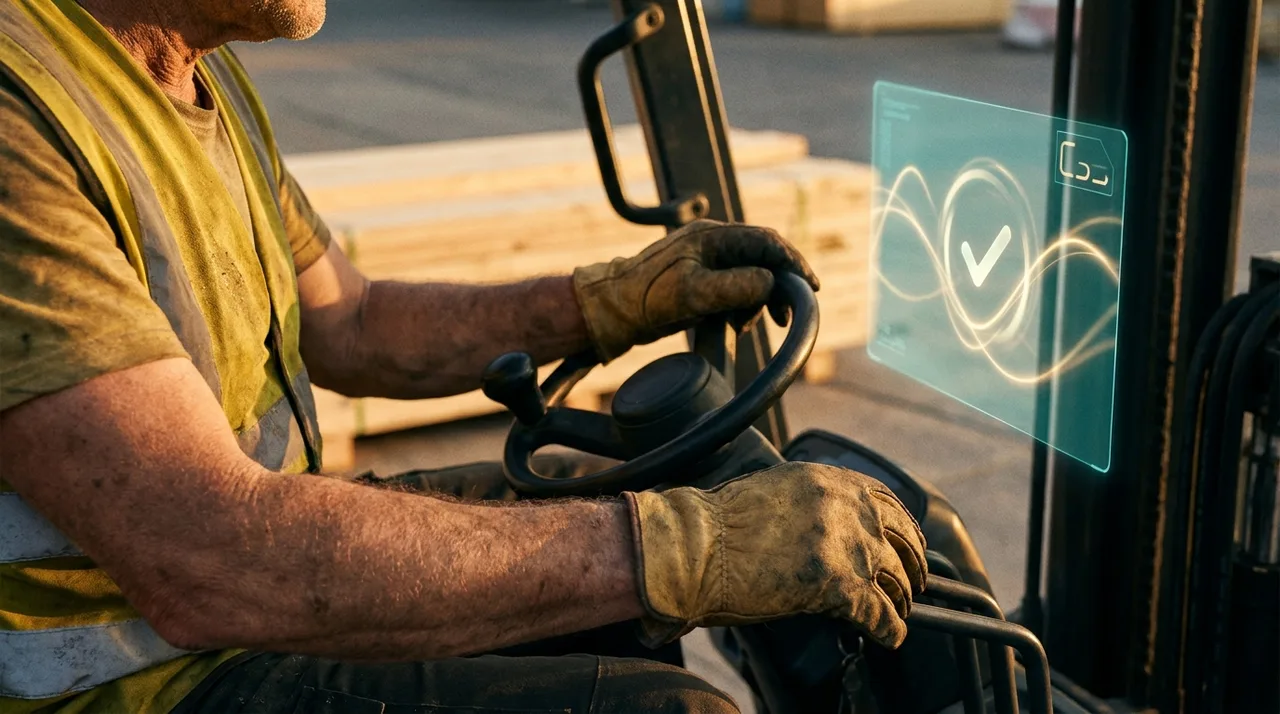
Forklift Operator (Counterbalance — LF Class)
What they do: Moving pallets, loading and unloading trucks, racking and de-racking, stock replenishment, yard work. The most in-demand licensed role in Sydney warehousing.
Skills required: Current High Risk Work Licence (HRWL) — LF class issued by SafeWork NSW. Pre-operational check competence. Understanding of load capacity, racking safe working loads, and pedestrian exclusion zones.
Award classification: Forklift operator rates. Casual rate ~$36.25–$40.00/hr.
Fill time: 48 hours. Licence must be verified before deployment.
For the full breakdown of forklift licence classes — LF vs LO, what each covers, and how to get them — see our forklift licence guide.
Order-Picking Forklift Operator (LO Class)
What they do: Operating elevated order-picking forklifts where the operator platform rises with the forks. Common in large distribution centres with high racking — particularly retail and grocery.
Skills required: HRWL — LO class. Comfort working at height. Precision operation in narrow aisles.
Award classification: Specialist forklift operator. Casual rate ~$38–$42/hr.
Fill time: 48–72 hours. LO licence holders are a smaller pool than LF.
Team Leader / Warehouse Supervisor
What they do: Coordinating crews of 5–20+ workers, managing workflow, conducting toolbox talks, liaising with management, handling WHS on the floor.
Skills required: Prior warehouse supervisory experience, strong communication, WHS awareness, ability to manage casual and agency staff.
Award classification: Level 3+ or above-Award. Casual rate ~$38–$46/hr.
Fill time: 48–72 hours. Quality team leaders are in high demand.
WMS Operator / Inventory Controller
What they do: Operating Warehouse Management Systems (SAP, Manhattan, Oracle WMS, CartonCloud, etc.), managing stock accuracy, running cycle counts, resolving discrepancies.
Skills required: Specific WMS experience, strong data accuracy, understanding of inventory methodologies.
Award classification: Above-Award in most cases, negotiated per placement.
Fill time: 72+ hours. System-specific experience narrows the available pool significantly.
The difference between a general labourer and a skilled worker matters just as much in warehousing as it does in construction. Sending a general warehouse hand to operate a counterbalance forklift isn't a skill mismatch — it's a legal violation.
4. How Much Does Warehouse Staffing Cost in Sydney?
Let's build the numbers from the ground up. No vague ranges. No "contact us for a quote." Real maths.
The Base: What the Worker Actually Gets Paid
Warehouse workers in Sydney are covered by the Storage Services and Wholesale Award 2020 (MA000084). The Award sets minimum pay rates by classification level.
| Classification | Role | Ordinary Hourly Rate | Casual Rate (incl. 25% loading) |
|---|---|---|---|
| Level 1 | General warehouse hand | ~$26.73/hr | ~$33.41/hr |
| Level 2 | Pick-packer / receival | ~$27.84/hr | ~$34.80/hr |
| Level 3 | Experienced operator / team leader | ~$29.06/hr | ~$36.33/hr |
| Forklift (LF/LO) | Licensed forklift operator | ~$29–$32/hr | ~$36.25–$40.00/hr |
Rates as at July 2025 per the Fair Work Commission Annual Wage Review. Enterprise Agreement sites may pay above-Award. Casual loading covers annual leave, personal leave, and redundancy entitlements that casuals do not receive.
The Mandatory On-Costs
On top of the worker's pay, the employer (the staffing agency) must pay:
Superannuation — 12%. From 1 July 2025, the Superannuation Guarantee sits at 12% of ordinary time earnings. On a $33.41/hr casual rate, that's $4.01/hr.
Workers Compensation Insurance — ~3–4%. Warehouse workers attract a lower workers comp premium than construction workers — typically 3–4% of wages versus 4–5% for on-site construction. The lower rate reflects the reduced injury severity profile. On $33.41/hr, that's approximately $1.00–$1.34/hr.
Payroll Tax NSW — 5.45%. Applies once annual wages exceed the $1.2M threshold. On $33.41/hr, that's approximately $1.82/hr. Any staffing agency running 30+ workers clears this threshold within months.
The All-In Bill Rate
Once you add the agency's operating costs — recruitment, payroll processing, compliance management, technology, and allocation — the client bill rates look like this:
| Role | Worker Pay (Casual) | Employment Cost | Typical Bill Rate |
|---|---|---|---|
| General warehouse hand | ~$33.41/hr | ~$40.41/hr | $44–$48/hr |
| Pick-packer / receival | ~$34.80/hr | ~$42.10/hr | $45–$50/hr |
| Experienced operator / team lead | ~$36.33/hr | ~$43.95/hr | $48–$54/hr |
| Forklift operator (LF/LO) | ~$36.25–$40.00/hr | ~$43.86–$48.40/hr | $50–$58/hr |
All rates are standard weekday day shift. Saturday time-and-a-half, Sunday double-time, and public holiday rates apply per the Award. Overtime applies after 38 ordinary hours per week or 7.6 hours per day.
Penalty Rates — The Weekend Maths
If you need warehouse workers on weekends, the numbers change significantly.
A Level 1 warehouse hand on a Saturday earns 150% of the ordinary rate: approximately $40.06/hr casual. After on-costs, the bill rate can hit $52–$58/hr.
Sunday is 200% — approximately $53.41/hr casual. Bill rates push to $64–$72/hr.
Public holidays at 250% — approximately $66.76/hr casual. Bill rates push to $78–$86/hr.
If you are booking weekend warehouse shifts and expecting weekday rates, someone in the chain is being underpaid. That is not a discount — it is a compliance problem.
Warehouse vs Construction — The Cost Comparison
One of the advantages of warehouse staffing is the lower cost base compared to construction labour hire. Here's why:
- Lower workers comp premiums — warehousing (3–4%) vs construction on-site (4–5%+). Fewer catastrophic injury claims.
- No White Card requirement — standalone warehouses don't need Construction Induction Cards, saving $100–$200 per worker in onboarding.
- Lower Award base rates — Storage Services Award rates sit below Building and Construction General On-site Award rates at equivalent experience levels.
- Less PPE cost — steel-cap boots and high-vis versus full hard hat, safety glasses, gloves, and steel-cap boots on construction sites.
The result: warehouse bill rates typically sit $2–$6/hr below equivalent construction rates. For a detailed comparison of construction labour hire costs, see our complete cost breakdown.
Is the rate worth it? If you're comparing warehouse staffing costs against direct hire, the hourly rate alone tells you nothing. Factor in recruitment ($1,000–$3,000 per hire), turnover (30–50% annually in warehouse), payroll admin, and compliance management — and the break-even point for direct hire is typically 12–18 months. For a full cost-benefit analysis, see our guide on whether labour hire is worth it.
5. What Qualifications Do Warehouse Workers Need?
This is where warehouse operators — and staffing agencies — get tripped up most often. The qualification requirements for warehouse workers are different from construction, and the line between "required by law" and "nice to have" is frequently blurred.
Here's what's actually mandatory.
WHS Induction (Every Worker, Every Site)
Under the Work Health and Safety Act 2011, every person conducting a business or undertaking (PCBU) must ensure workers are inducted on-site before commencing work. This is not a formal qualification — it's a site-specific safety briefing covering:
- Emergency procedures and evacuation routes
- Hazard identification for the specific warehouse
- PPE requirements
- Traffic management (forklift pedestrian zones, loading dock procedures)
- Reporting obligations for incidents and near-misses
A staffing agency that sends workers to your site without confirming your induction requirements is cutting the most basic safety corner.
Forklift Licence (HRWL — LF or LO Class)
If a worker is operating a forklift — any forklift, any warehouse, any time — they must hold a current High Risk Work Licence issued by SafeWork NSW. No exceptions. No "they'll be supervised." No "they've done it before."
The two relevant forklift classes for warehouse work:
- LF — Forklift Truck. Covers counterbalance forklifts up to 10,000kg capacity. The standard sit-down forklift you see in every warehouse.
- LO — Order-Picking Forklift. Covers elevated work platform forklifts where the operator rises with the forks. Common in large distribution centres.
Training costs $600–$1,200 through a registered training organisation (RTO) listed on training.gov.au. The SafeWork NSW HRWL application fee is approximately $83 for a 5-year licence.
White Card (Only If Construction Work Is Involved)
A White Card (General Construction Induction Card) is not required for standalone warehouse operations. It is required only when:
- The warehouse is part of or adjacent to an active construction site
- Construction work is being performed inside the warehouse (fit-outs, mezzanine installation, structural modifications)
- The worker will cross into a construction area during their shift
If your facility is a standard distribution centre, fulfilment warehouse, or 3PL operation with no construction activity — White Cards are not needed.
Manual Handling Training
Not a formal licence, but the Code of Practice for Hazardous Manual Tasks requires that workers performing manual handling are trained in safe techniques. A good staffing agency includes manual handling awareness as part of their pre-deployment briefing.
Dangerous Goods (If Applicable)
Warehouses storing or handling dangerous goods (chemicals, flammable liquids, gases) may require workers to hold specific dangerous goods awareness training. This is site-specific and depends on the goods classification under the Australian Dangerous Goods Code.
What Employers Should Verify
Before any worker — agency or direct — starts in your warehouse, verify:
A compliant staffing agency verifies all of this before the worker reaches your door. If your agency is asking you to verify licences on arrival — that is their job, and they aren't doing it.
For the full deep-dive on forklift licence classes in NSW — which class covers which machine, training costs, and what employers actually check — we've written a dedicated guide.

6. When Does Warehouse Staffing Make More Sense Than Direct Hire?
Not always. And any staffing agency that tells you otherwise is selling, not advising.
Here are the specific scenarios where warehouse staffing is the smarter play.
Seasonal Peaks
Sydney warehousing has three major peak periods:
- November–January — Christmas and holiday season. E-commerce fulfilment volumes can spike 50–200% above baseline. Retailers, 3PLs, and distribution centres need temporary surge capacity that disappears in February.
- May–June — End of Financial Year. Stocktake, clearance fulfilment, and pre-EOFY order surges.
- July — New financial year stock replenishment and fresh inventory intake.
According to the Australian Bureau of Statistics, the transport, postal, and warehousing sector employed approximately 690,000 people nationally in 2025, with significant seasonal fluctuation in temporary and casual roles. Sydney's Western Sydney logistics corridor — from Wetherill Park through Erskine Park to the new Aerotropolis precinct — drives a disproportionate share of this demand.
You do not hire permanent staff for a three-month peak. You staff up with an agency and staff down when volumes return to normal.
Project-Based or Contract Work
A new 3PL contract. A warehouse relocation. A stocktake that needs 15 extra bodies for a week. An urgent recall requiring dedicated picking and packing teams.
These are defined engagements with a clear start and end date. Hiring permanent employees for a 4-week project is a recruitment cost you'll never recover.
3PL Overflow
Third-party logistics providers live and die by utilisation rates. When a new client comes on board or an existing client exceeds their forecast, 3PLs need additional warehouse staff immediately — not in three weeks.
Staffing agencies are the flex layer that lets 3PLs say "yes" to new volume without over-committing on headcount.
New Facility or Market Entry
Opening a new warehouse in Sydney? You don't know your steady-state headcount yet. You don't know your shift patterns. You don't know your turnover rate in this market.
Start with agency staff. Learn the operation. Identify the reliable performers. Convert the best to permanent over 3–6 months. This is a proven de-risking strategy — you see the worker on your floor before you commit to a permanent employment contract.
For a deep analysis of when labour hire wins and when direct hire wins, read our honest cost-benefit analysis.
When Direct Hire Wins
To be straight with you:
- Stable, full-time roles with 18+ months expected tenure — direct hire is cheaper per hour once you absorb the upfront recruitment cost.
- Core leadership roles — warehouse managers, operations leads, WHS officers. These people need to be invested in your operation, not rotating through an agency.
- Roles requiring deep system knowledge — if your WMS is complex and training takes 4+ weeks, the cost of training agency staff who might leave is prohibitive.
- ✕Recruitment: $1,500–$3,000 per worker
- ✕Onboarding + induction: 3–5 days of reduced productivity
- ✕Payroll setup and admin: ongoing weekly cost
- ✕Workers comp premium management: annual
- ✕If worker leaves at 6 months: repeat from step 1
- ✓Recruitment cost: $0
- ✓Worker arrives inducted and ready to work
- ✓Payroll, super, workers comp: handled by agency
- ✓No admin overhead — one invoice, one payment
- ✓Worker leaves? Replacement next shift. No re-recruitment.
7. What Should You Look for in a Warehouse Staffing Agency?
Not all staffing agencies are built the same. The difference between a good agency and a liability in a polo shirt comes down to a few specific things you can verify before you sign anything.
Compliance — The Non-Negotiable
Before you look at rates, speed, or service — check compliance. A non-compliant staffing agency isn't just their problem. Under the Fair Work Act, host employers can face accessorial liability if they knew or should have known their supplier was underpaying workers.
Ask for:
-
Certificate of Currency — Workers Compensation. Verify the industry classification matches warehousing (not a cheaper code). Check the expiry date. Call the insurer if something feels off.
-
Certificate of Currency — Public Liability. $10M is the normal level and it is standard for warehouse operations.
-
Proof of Payroll Tax Registration. Or confirmed exemption if their payroll is below the NSW threshold. Any agency supplying 30+ workers is almost certainly above the $1.2M threshold.
-
Sample Payslip. Showing correct Award rates, casual loading, super contributions, and tax withheld. A compliant agency will show you this without hesitation. If they hesitate — that is your answer.
-
Same Job Same Pay Compliance. Under the Closing Loopholes Act 2023, labour hire workers must receive at least the same pay as directly employed workers doing the same work at your site, where a Same Job Same Pay order applies.
For the full compliance checklist — what to verify, what the law requires, and what happens when suppliers cut corners — see our labour hire compliance guide.
Warehouse-Specific Experience
A staffing agency that predominantly places construction workers and "also does warehouse" is not the same as an agency that understands logistics operations.
What warehouse experience looks like:
- They know the difference between a counterbalance forklift and an order picker — and verify the correct licence class before deployment.
- They understand WMS environments and can ask candidates about specific system experience.
- They know peak season timing and start building their casual pool in September for the Christmas surge.
- They understand temperature-controlled environments, food safety requirements, and dangerous goods classifications.
- They can supply workers who know the difference between FIFO and LIFO — and why it matters for your stock rotation.
Red Flags
Questions to Ask Before Signing
-
"What Award do you pay your warehouse workers under?" — The correct answer is the Storage Services and Wholesale Award 2020 (MA000084). If they don't know the Award, walk away.
-
"How do you verify forklift licences?" — The correct answer involves checking against SafeWork NSW's HRWL register, not just looking at the card.
-
"What is your no-show replacement policy?" — You need a guaranteed time-to-replace, not a vague "we'll do our best."
-
"Can you break down the bill rate for me?" — A transparent agency will show you exactly where every dollar goes. We do this as standard — our rates page shows the full breakdown.
-
"What is your workers comp classification code?" — It should match warehousing/logistics, not a lower-risk classification. Misclassification is fraud — and if a worker is injured, the claim may not be covered.
8. How LEAP Handles Warehouse Staffing Differently
We are a labour hire company. We are biased. We will tell you exactly how we are biased so you can judge for yourself.
Full rate transparency. We publish our rate structure. We show you the base pay, the on-costs, and the margin. Every dollar has a name. You never wonder where the money goes. See the full breakdown on our rates page.
Technology-driven allocation. Our allocation system is not a whiteboard and a phone tree. We use automated matching, real-time availability tracking, and digital induction management. When you call at 4:47pm, we're not flipping through a paper notebook — we're querying a database of pre-screened, available workers by skill, licence class, and location. For how this works under the hood, see our piece on how automation affects labour hire rates.
Licence verification before deployment. Every forklift operator's HRWL is verified against SafeWork NSW records before they are sent to your site. Not on arrival. Not after they've started driving. Before they leave our system.
Honest about what we can't do. We don't promise same-day fill for specialist roles when the talent pool won't support it. We don't quote weekend rates as weekday rates. We don't pretend our margin is smaller than it is. If you want the cheapest rate in Sydney, we are probably not your agency. If you want the most transparent, compliant, and reliable — we'd like the chance to prove it.
Construction and warehouse under one roof. Many of our clients operate across both sectors — a construction company with a materials warehouse, a developer with a logistics arm, a contractor that needs labourers on site and warehouse hands at the yard. We cover both under the same account, the same compliance framework, and the same rate transparency.
The right warehouse staffing agency doesn't just fill shifts. It runs a compliant, transparent employment operation that you can trust with your workforce — and your reputation.
Frequently Asked Questions
How fast can a warehouse staffing agency provide workers in Sydney?+
Most reputable warehouse staffing agencies in Sydney can provide general warehouse hands within 24–48 hours. For urgent requests from established clients, same-day fill is possible for standard roles like pick-packers and receival staff. Licensed forklift operators and WMS-experienced workers may take 48–72 hours depending on availability and licence verification.
How much does warehouse staffing cost per hour in Sydney?+
Through a compliant warehouse staffing agency in Sydney, expect to pay $44–$48/hr all-in for a general warehouse hand, $45–$50/hr for a pick-packer or receival operator, and $50–$58/hr for a licensed forklift operator. These rates include the worker's casual pay under the Storage Services and Wholesale Award 2020, 12% superannuation, workers compensation insurance, payroll tax (5.45% in NSW above the $1.2M threshold), and agency operating costs. For the full rate mathematics, see our cost breakdown guide.
What qualifications do warehouse workers need in Sydney?+
At minimum, warehouse workers need a completed WHS induction for the specific site. Forklift operators require a High Risk Work Licence (HRWL) with the correct class — LF for counterbalance forklifts, LO for order-picking forklifts — issued by SafeWork NSW. If the warehouse is on or adjacent to a construction site, a White Card is also mandatory. Manual handling training is expected but not formally licensed.
What is the difference between warehouse labour hire and a recruitment agency?+
A warehouse labour hire company employs the worker directly and supplies them to your site — you pay an hourly bill rate covering wages, super, insurance, and admin. A recruitment agency finds permanent employees and charges a one-off placement fee (typically 10–15% of annual salary). Labour hire is better for variable demand, seasonal peaks, and short-term engagements. Recruitment suits stable, long-term permanent roles. Many Sydney businesses use both depending on the role.
When does warehouse staffing make more sense than hiring directly?+
Warehouse staffing is more cost-effective during seasonal peaks (November–January, EOFY), project-based work, 3PL overflow, new contract ramp-ups, and any engagement under 12–18 months. It eliminates recruitment costs ($1,000–$3,000 per hire), removes payroll and compliance admin, and lets you scale headcount up or down with a phone call — critical in logistics where volumes can shift 30–50% week to week.
Do warehouse workers need a White Card in NSW?+
Only if the warehouse is on or adjacent to a construction site where construction work is being performed. A standalone distribution centre, fulfilment warehouse, or 3PL facility does not require workers to hold a White Card. However, if any part of the site involves construction activity — fit-outs, mezzanine installation, structural work — the White Card requirement applies to all workers entering that area under the Work Health and Safety Regulation 2017.
What warehouse roles can you hire through a staffing agency?+
Warehouse staffing agencies supply general warehouse hands, pick-packers, receival and dispatch operators, forklift operators (counterbalance and order-picker), inventory controllers, WMS operators, loading dock workers, returns processors, team leaders, and warehouse supervisors. Specialist roles like dangerous goods handlers, cold-chain workers, and high-reach experienced operators are also available but may require longer lead times.
How do I verify a warehouse staffing agency is compliant?+
Ask for a current Certificate of Currency for workers compensation insurance (classified correctly for warehousing), public liability insurance ($10M is the normal level), proof of payroll tax registration, and a sample payslip confirming Storage Services and Wholesale Award rates with 12% super. A compliant agency provides these without hesitation. For the full compliance checklist, see our compliance guide.
Ready to Staff Your Warehouse?
If you need warehouse workers in Sydney — whether it's four pick-packers by Friday or a 30-person team for peak season — we'd like to talk.
We'll give you a transparent rate breakdown, confirm fill timelines based on the specific roles you need, and show you exactly how we verify every licence and qualification before a worker arrives at your door.
No fluff. No bait-and-switch rates. Just compliant, reliable warehouse staffing with full transparency.