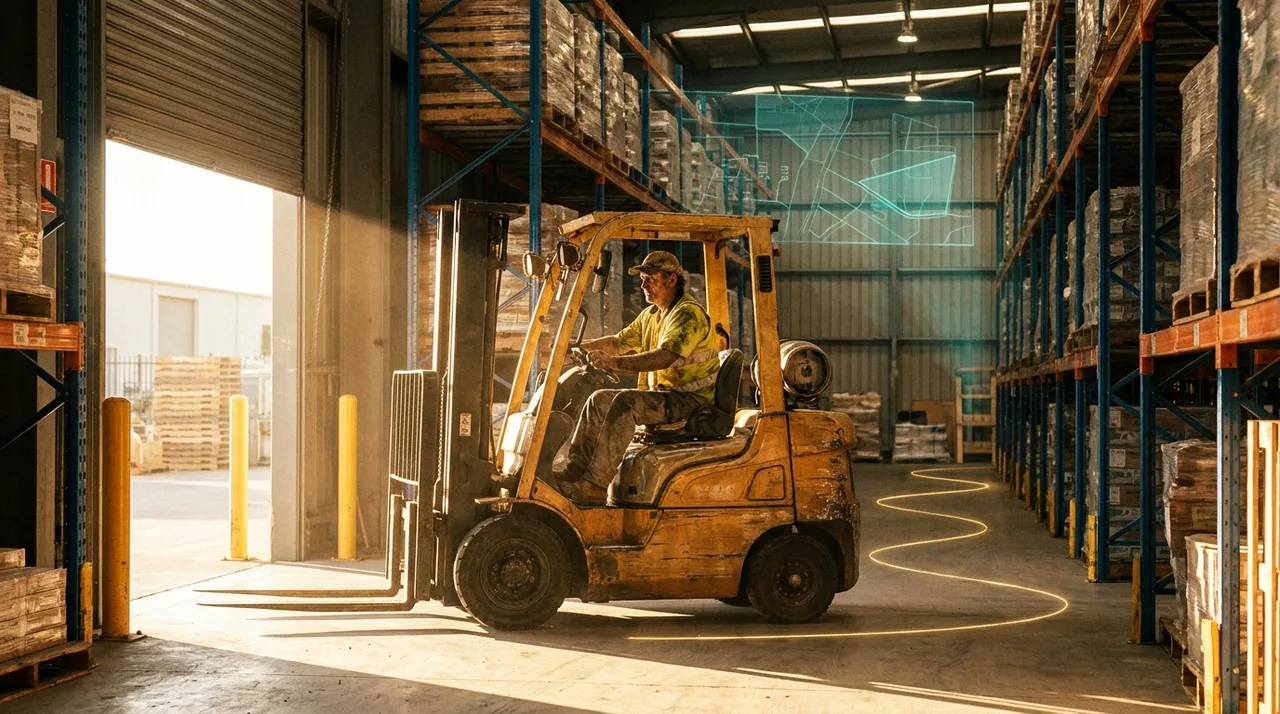

Same-Day Warehouse Replacement in Sydney 2026: What an Idle Dock Costs You
Sydney warehouse forklift driver no-show by 7am? Work out what the idle hours actually cost your dock, and how a same-day replacement inside 90 minutes changes the maths.
When a forklift seat sits empty, the cost is your throughput, not the missing wage. Work out your own number before you accept any provider's response time.
- The formula: your pallets (or orders) moved per hour x the hours the seat is empty
- Add the flow-on: dock time held, truck slots pushed, and the backlog the next shift inherits
- Typical self-fill: three to four hours, because the first hour goes on ringing around
- Same-day standard: a pre-cleared replacement on the floor inside 90 minutes of your call, which is a standard to measure, not a guarantee
- Fastest corridor: south-west Sydney, Eastern Creek through Moorebank, where the worker base lives
Your forklift driver doesn't show at 7am. ⏱️ Every hour that seat stays empty, your dock moves fewer pallets, and nothing you do at 10am gets those hours back.
This is the warehouse no-show maths that nobody puts in a brochure. The missing wage is the smallest number on the page.
You don't lose a shift when a forklift driver no-shows. You lose the hours of throughput that shift was going to move.Here is how to work out what that is worth on your site, and what a same-day replacement in Sydney actually looks like in 2026.
Table of Contents
- What an empty forklift seat really costs
- How to work out your own downtime number
- What a 90-minute replacement looks like
- The South-West Sydney standby corridor
- Get a Sydney replacement crew today
- Frequently Asked Questions
What Does an Empty Forklift Seat Really Cost?
A warehouse doesn't stop when a driver is missing. It slows to the speed of its slowest constraint, and on most docks that constraint is the forklift.
Pickers keep picking. The pallets just stack up waiting to be moved, wrapped, and loaded.
So the loss isn't idle people. It's throughput you never recover, because the hours you lost at 7am are hours you can't buy back at 3pm.
Then the flow-on starts. Dock doors stay occupied longer, the afternoon truck slot slides, and whatever didn't ship today lands on tomorrow's shift on top of tomorrow's volume.
Lost hours don't wait for you. Every hour down is an hour the next shift inherits.The staffing reality makes it worse. According to the ABS Job Vacancies release for February 2026, Australia's vacancy count hit 337,900, the highest since late 2024, with transport, postal and warehousing among the chronic shortage industries.
Translation: when your driver doesn't show, neither does the next one off the street.
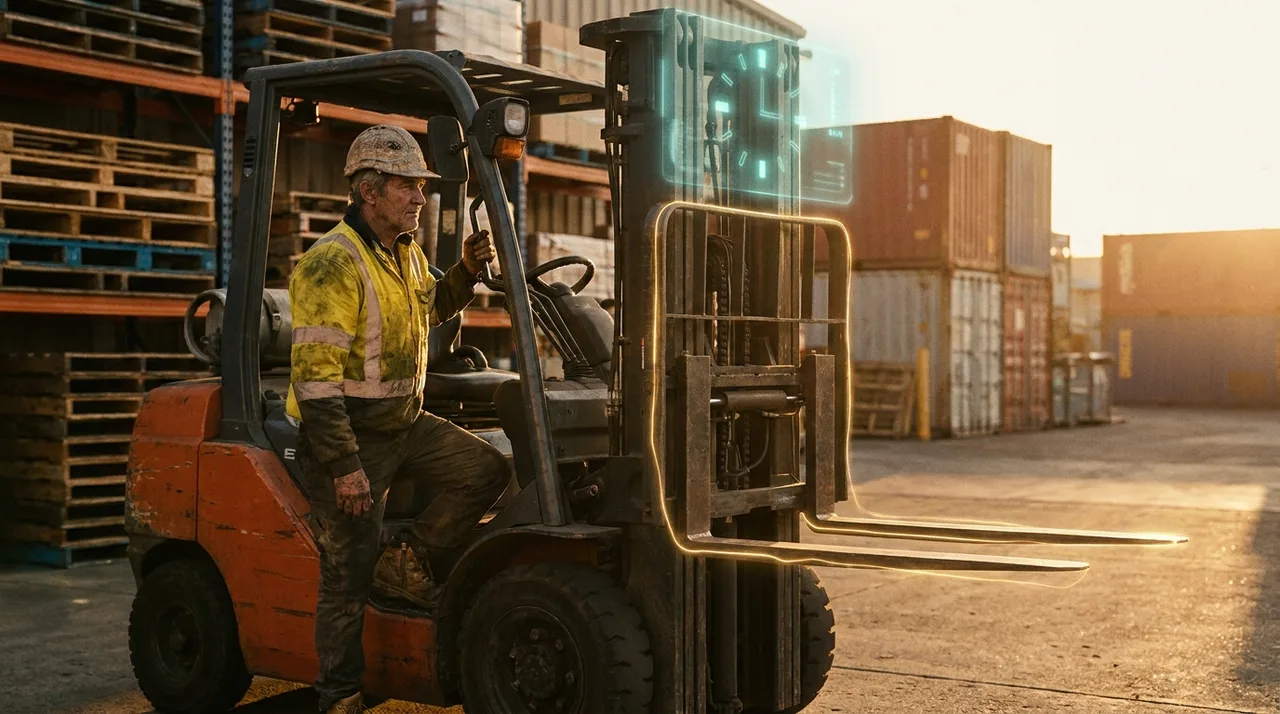
Why you can't just move a picker across
The obvious fix is to put someone else on the machine. It isn't available to you.
SafeWork NSW is direct: a host should not ask a labour hire worker to operate a forklift or similar plant without the right licence.
So the seat stays empty until a licensed operator walks in. That is the whole reason a forklift no-show hurts more than a picker no-show.
If you're unsure which ticket covers which machine on your site, our forklift licence types in NSW guide sets out the classes.
The four ways the seat goes empty
- The 7am no-show, no text, no answer, and by 7:15 you know
- The mid-shift walk-off, a driver swipes out at smoko and doesn't come back
- The injury, a soft-tissue twinge at 9am and the seat is cold by 10am
- The surge, a promotion ramps and you're short bodies by Tuesday lunch
All four have the same fix: a pre-cleared replacement who is already inducted to your site.
How Do You Work Out Your Own Downtime Number?
Don't take an industry average off a vendor slide. Your own operating data is the only number that survives a review with your GM.
Three inputs you already have on your WMS dashboard.
Run it once with real numbers and the argument about response times ends. Four hours down at your rate is a figure you can defend, unlike a headline stat you can't trace.
Then price the second half honestly at your own commercial terms. Only you know what a missed dock window or a pushed truck slot costs on your accounts.
The hidden hours nobody counts
Most dispatch managers do the heroic thing first. They ring two mates, text the casual roster, and hit LinkedIn by 7:30am.
By 9am they've burned 90 minutes of their own attention and produced one unverified body and three apologies.
That's the hidden line item. The dispatcher's morning is gone, and the person who covers the gap is doing the work of two.
Scrambling for a replacement yourself costs a dispatcher's whole morning, and usually still doesn't fill the seat.What Does a 90-Minute Replacement Actually Look Like?
"Same-day labour hire" gets thrown around. Here's the operational version.
You ring the dispatcher and the clock starts. Ninety minutes later a worker is swiping in at your dock, not "available", not "en route", on your floor.
Treat that as the standard to measure, not a promise. No honest labour hire provider guarantees a fill, and Leap's service contract says so plainly, so ask any provider for their actual arrival times over the last month instead.
Three things make that timeline possible, and none of them are visible from the outside.
Pre-cleared site inductions. Your site pack, aisle layout, plant rules, evacuation and HSR contacts, sits on file against every worker who has done a shift for you.
That matters because a cold induction at the gate is another 45 minutes of downtime you're paying for in throughput.
Licence verified at intake. Every forklift operator's HRWL LF licence is checked at intake and re-checked at booking, so an unlicensed body never gets sent to a licensed role.
A shared standby pool. Workers aren't waiting at home for your call. They're available to 8-12 active sites in the same corridor, first call gets first pick, and pay starts at swipe-in.
Which Sydney Suburbs Get a Replacement Fastest?
Same-day works where the workers live. 🔍 Sydney's warehousing footprint clusters hard in the south-west and outer-west, and that's where the standby pools sit.
The reason isn't fancy. Workers live in Liverpool, Fairfield, Bankstown, Mount Druitt and Penrith, so they drive ten minutes to your dock.
The North Shore worker base is thinner, and M2 traffic punishes the 7am window every time.
If you run a DC in Eastern Creek, Erskine Park, Kemps Creek, Horsley Park, Wetherill Park, Smithfield, Yennora, Chullora, Moorebank, Prestons, Minto or Ingleburn, you're inside the prime corridor.

Roles inside the standby pool
- Forklift operators (HRWL LF), reach truck, counterbalance, order picker (HRWL LO)
- Storepersons and pickers, RF scanner, voice-pick, paper-pick
- General warehouse, pallet wrap, manual handling, container unload
- Despatch and loaders, truck loading, manifest checking
- MC and HR drivers, yard shunts and local runs, on a longer lead time
The mix is deliberate. Most gaps open at the picker and forklift level, so that's where the bench is deepest.
A real Tuesday morning in the corridor
A March 2026 Tuesday, south-west Sydney, one 3PL site.
- 6:47am, the site rings: night picker walked off, AM picker no-show, two bodies needed by 8am
- 6:51am, three pre-cleared pickers pinged, two accept inside four minutes
- 7:04am, first picker confirms a 22-minute drive from Liverpool
- 7:31am, first picker swiping in, supervisor handover at 7:35am
- 7:48am, second picker on floor, both fully productive by 8:00am
Forty-four minutes from phone call to first body on the floor. On that site's own throughput maths, the day never lost its shape.
Forty-four minutes from phone call to first picker on the floor. That's the difference between a slow morning and a lost one.
The same call to a generalist agency with no corridor pool tends to produce a four-hour arrival at best. Put four hours into your own formula and you'll see why the corridor matters more than the sales pitch.
Get a Sydney Replacement Crew Today
If you're reading this at 7:15am with an empty forklift seat, ring the dispatcher and start the clock. 📞
If you're reading it at 2pm planning tomorrow, even better, because a pre-briefed standby pool clears faster than a cold call.
Want the numbers for your site? Get a Sydney warehouse rate in your inbox in minutes
Planning peak season rather than firefighting a Tuesday? Start with our warehouse staffing Sydney guide, and if you're building your own local bench, our Sydney job board is where the warehouse crews come from.
Frequently Asked Questions
What does it cost when a warehouse has no forklift driver?+
Work it out from your own numbers, not an industry average. Multiply your pallets or orders moved per hour by the hours the seat sits empty, then add the dock time held and the truck slots that shift as a result. That figure is yours, it is defensible in a review, and it's the only version worth putting in front of a GM.
How long does a Sydney warehouse usually sit short after a no-show?+
Filling from scratch on the morning takes most dispatch teams three to four hours, because the first hour goes on ringing around before anyone is even booked. A pre-cleared replacement drawn from a local standby pool typically lands inside 90 minutes of the call.
How fast is same-day warehouse replacement in Sydney?+
Ninety minutes from your call to a worker swiping in is the operational standard to expect and to measure a provider against. It is not a guarantee, and no labour hire provider can honestly promise a fill or a response time. Ask instead for the actual arrival times recorded over the last month.
Which Sydney suburbs get the fastest replacement?+
South-west Sydney (Eastern Creek, Erskine Park, Yennora, Prestons, Moorebank, Chullora, Smithfield, Wetherill Park) usually sees replacement inside 45 to 75 minutes on weekdays. The M7 corridor is where the worker base lives. North Shore and Northern Beaches typically run 90 to 120 minutes.
Are replacement workers pre-inducted to my site?+
Leap holds your site induction pack on file against every worker who has done a shift for you, along with their forklift licence (HRWL LF) and white card where needed. That removes the cold induction at the gate, which is the single biggest avoidable delay on a same-day booking.
Why does an unlicensed picker not solve a forklift gap?+
SafeWork NSW is clear that a host should not put a labour hire worker on a forklift or similar plant without the right high risk work licence. The seat stays empty until a licensed operator arrives, so your pallet throughput stays capped no matter how many pickers are on the floor.