Month One Survival: Body, Sleep and Money When You're New
Your first month on a Sydney site is won or lost off the clock. How the body adapts, why sleep makes people quit, staying safe in your first summer, and surviving to the first pay.
Month one on a Sydney site is mostly won off the clock.
- Body: soreness from new physical work is common and usually settles. healthdirect says DOMS typically clears in 5 to 7 days
- Sleep: most adults need 7 to 9 hours (Sleep Health Foundation). An early alarm means an early night
- Heat: outdoor workers and people not used to the heat are at higher risk (healthdirect)
- Money: know your pay day and hold enough to reach it
😴 Week two. Alarm at 4:45. Your lower back has an opinion before your feet hit the floor.
You were in bed at 11 again. The energy drink at smoko got you through, then kept you awake.
Nobody on site talks about this part. Here's the honest version.
What does the first month do to your body?
It hurts, then it adapts. That's the common experience, not a medical timetable.
Most new labourers feel it in the same places: lower back, legs and feet, hands and forearms. Your body is doing work it hasn't done before.
healthdirect describes delayed onset muscle soreness as a normal response that is "not an injury" and "usually goes away in 5 to 7 days" (healthdirect, 2026).
What helps, per healthdirect's guidance on muscle aches: rest the sore muscles, apply heat, and keep moving gently in ways that don't make it worse.
Soreness vs injury: know the difference
- Soreness: dull, both sides, eases as you warm up, better each week
- Something else: sharp, one spot, swelling, numbness, or worse each day
The second kind gets reported, to your supervisor and your agency, the same day. That's not being soft. Injuries reported late are harder to sort out for everyone.
Sore that eases as you warm up is adapting. Sharp pain in one spot is a report, not a toughen-up.Ask for a hand on loads that are awkward or heavy. In month one, nobody expects you to carry what the bloke with ten years in carries.
Why is sleep the thing that makes people quit?
Because you can push through sore. You can't push through tired for long.
The Sleep Health Foundation says "most adults require between 7 and 9 hours a night" to function at their best (Sleep Health Foundation, 2026). Site starts are early, so the maths is brutal.
| Alarm | Lights out for 7 hours | Lights out for 8 hours |
|---|---|---|
| 4:30am | 9:30pm | 8:30pm |
| 5:00am | 10:00pm | 9:00pm |
| 5:30am | 10:30pm | 9:30pm |
Read that table again. Most people starting out are going to bed two hours too late and wondering why Thursday feels like a wall.
Three habits that fix most of it
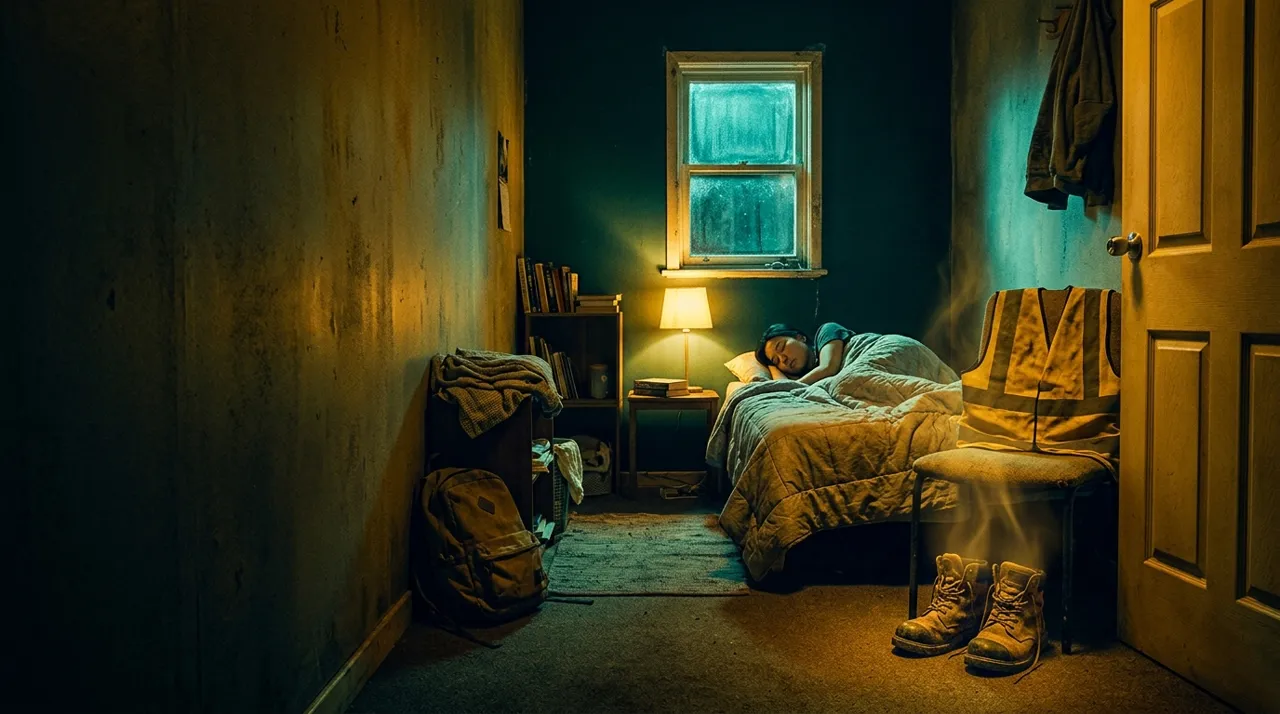
- Set the night up for the morning. Boots, vest, lunch and charger by the door. Fewer decisions at 4:45.
- Cut caffeine early. healthdirect says caffeine's effects "can last for up to 6 hours" (healthdirect, 2026). A 3pm can is still working at 9pm.
- Keep the same wake time on days off, within reason. A Sunday sleep-in to 11 makes Monday's alarm feel like jet lag.
healthdirect puts the safe daily caffeine level for healthy adults at around 400mg. Energy drinks count toward that, and so does every coffee.
Your shift starts the night before. Lights out is part of the job.How do you handle your first Sydney summer?
The coming 2026-27 summer will be the first on site for a lot of new workers. Heat is a real risk, not a comfort issue.
healthdirect lists people who work outdoors and visitors not used to the heat among those at higher risk in hot weather (healthdirect, 2026). A new worker from overseas can be both.
Its advice is plain: drink water even if you don't feel thirsty.
Know the signs of heat exhaustion (healthdirect):
- Thirst, headache, dizziness or fainting
- Muscle weakness or cramps
- Feeling anxious, or a raised body temperature
Feel any of those? Stop, tell your supervisor, get to shade or a cool spot. If someone doesn't improve with cooling and fluids within about 10 minutes, healthdirect says call 000.
What to eat and drink across a hot shift is covered properly in the Sydney labourer's site-day fuel guide. We won't repeat it here.
How do you survive until the first pay lands?
Month one has a gap nobody plans for: you're spending before you're earning.
Know your pay cycle. The construction award requires wages to be paid by Thursday of each working week (MA000020 cl.20.3, 2026). The storage and warehouse award allows weekly or fortnightly (MA000084 cl.16.1). Ask your agency which applies and which day pay lands.
Your gear budget may be smaller than you think. Leap supplies standard PPE: hard hat, hi-vis shirt, steel-capped boots and gloves. Check what your agency supplies before you buy anything.
Three things shrink a first pay:
- No TFN declaration. Without one, tax can be withheld at a much higher rate. The ATO explains the TFN declaration.
- Unsigned timesheets. Hours that aren't recorded are hours that get chased later.
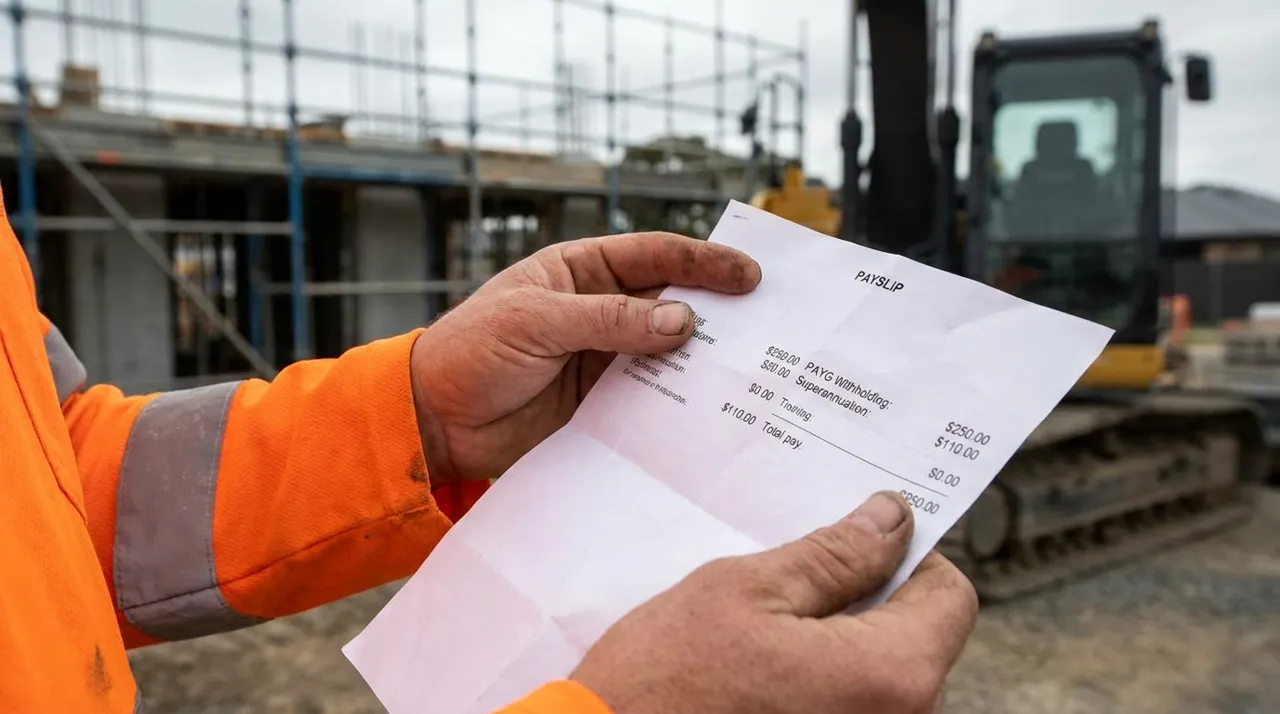
- Expecting super in your account. Super is 12% of ordinary time earnings (from 1 July 2025), paid into your fund, not your pay.
How to read every line of the payslip is in the Sydney labourer's pay guide.
How do you look after your mental health for the long run?
Month one is about getting through. The years after are about staying well.
Construction is hard on heads, not just backs. Male construction workers in Australia die by suicide at almost double the rate of other male workers: 25.7 vs 14.3 per 100,000, pooled over 2001-2021 (University of Melbourne report for MATES in Construction, 2025).
That's why you'll hear one question on Aussie sites: "R U OK?"
It comes from R U OK?, the Australian suicide prevention charity. R U OK?Day is the second Thursday of September, but the charity's message is that any day is the day to ask.
Its four steps are simple: Ask, Listen, Encourage action, Check in. You don't need to be an expert. You need to be a good mate.
It works both ways. If someone asks you at smoko, give them a real answer, not "yeah, good".
The long-run habits are the month-one habits: sleep, a routine, and staying connected. Moving between sites makes it easy to lose touch with people, so keep the mates you make.
If things get heavy, talk to someone who knows the industry:
- MATES in Construction helpline: 1300 642 111. Free, confidential and 24/7, answered by counsellors familiar with construction (MATES, 2026)
- Lifeline: 13 11 14, or text 0477 13 11 14 (Lifeline, 2026)
- Life in danger: call 000
What does a good first month look like?
Not a perfect one. Every new worker has a flat Thursday and a sore Monday.
A good month one looks like this:
- You turned up to every shift you accepted
- You told someone when something hurt or didn't feel right
- You worked out a bedtime that actually matches your alarm
- You knew your pay day and didn't run dry before it
Get those four right and month two is a different job. The body has caught up, the routine runs itself, and the money arrives on a day you can plan around.
Sore is normal and passes. Sleep is the job before the job. Heat is a real risk in your first summer. Know your pay day before you need it.
Still in your first week? Start with the Sydney site day-1 checklist and the 5 first-week mistakes that get labourers sent home.
Ready for steady work? Browse labourer jobs in Sydney or register with Leap and tell us which days and start times you can actually do.
Frequently Asked Questions
Is it normal to be sore in your first weeks as a labourer?+
Yes. Muscle soreness after new physical work is common. healthdirect describes delayed onset muscle soreness as a normal response, not an injury, that usually settles in 5 to 7 days. Sharp pain, swelling or pain that gets worse is different: report it.
How much sleep does a new labourer need?+
The Sleep Health Foundation says most adults need 7 to 9 hours a night. With a 4:45am alarm, that means lights out by about 9:45pm at the latest, which is the habit most new workers struggle with.
When should you stop drinking coffee or energy drinks before an early start?+
Early. healthdirect says caffeine's effects can last up to 6 hours depending on the person, and that healthy adults can safely have around 400mg a day. A 3pm energy drink can still be working at 9pm.
Am I more at risk of heat illness as a new worker?+
You can be. healthdirect lists people who work outdoors and visitors not used to the heat among those at higher risk. Drink water even when you are not thirsty and know the signs of heat exhaustion.
When will I get my first pay in labour hire?+
It depends on the award and the agency's pay cycle. The construction award (MA000020 cl.20.3) requires wages to be paid by Thursday of each working week, and the storage award (MA000084 cl.16.1) allows weekly or fortnightly. Ask your agency which day pay lands.
What money do you need to start your first month on site?+
Enough to cover transport, food and rent until the first pay arrives, plus any gear the agency doesn't supply. Leap supplies standard PPE: hard hat, hi-vis shirt, steel-capped boots and gloves.
Why is my first pay smaller than I expected?+
Usually tax, a missing tax file number declaration, or an unsigned timesheet. Super at 12% is paid into your fund, not your account. Check your payslip line by line and ask early.
Where can a construction worker get mental health support?+
The MATES in Construction helpline on 1300 642 111 is free, confidential and 24/7, answered by counsellors familiar with the industry. Lifeline is on 13 11 14. If a life is in danger, call 000. On site, the R U OK? steps are Ask, Listen, Encourage action and Check in.