
Eat Like an Athlete: The Sydney Labourer's Site-Day Fuel Guide (2026)
An 8-hour shift is a workout — some days it's a full gym session. Why so many tradies run on Monster and durries, what it costs you, and how to fuel the machine that earns.
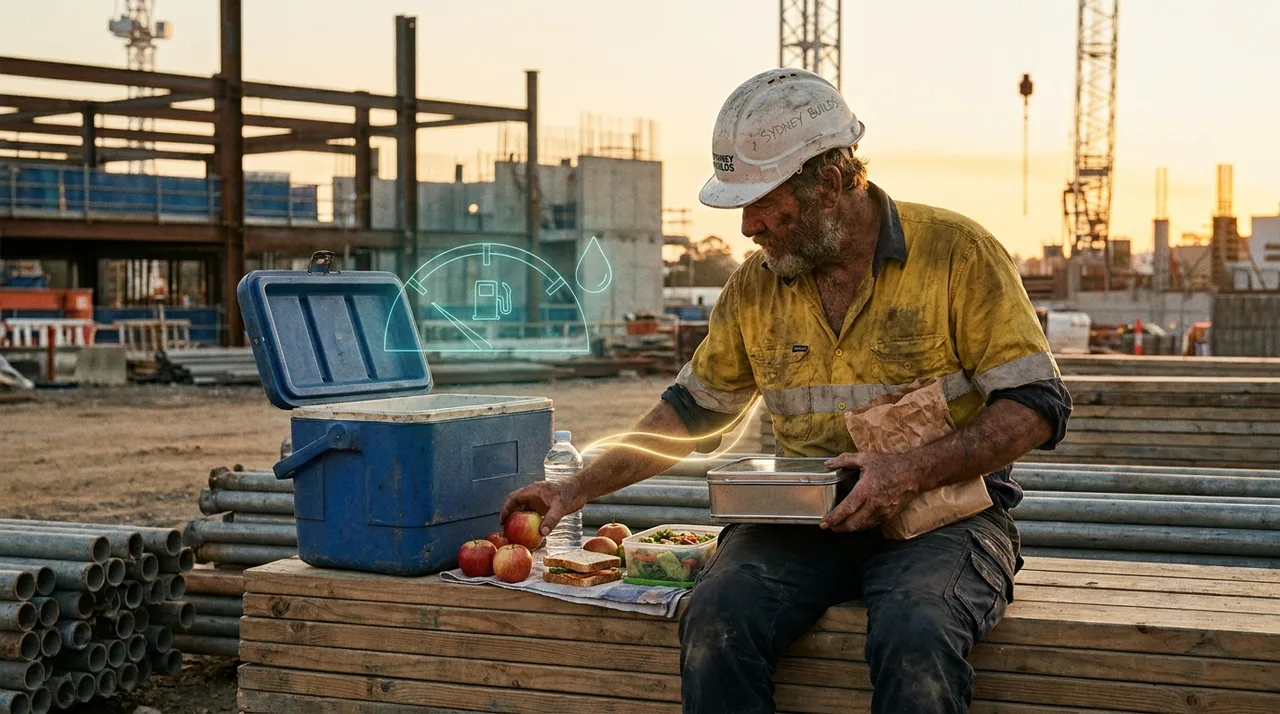
You wouldn't run a generator dry or swing a blunt grinder — so don't run your body on a servo pie and a Monster. An 8-hour shift is a workout; some days it's a full gym session. Fuel the machine that earns:
- Plan it like your tools — pack the esky the night before, don't decide at 5am
- Brekkie: slow carbs + protein 60-90 min before start (oats + banana, or eggs on toast)
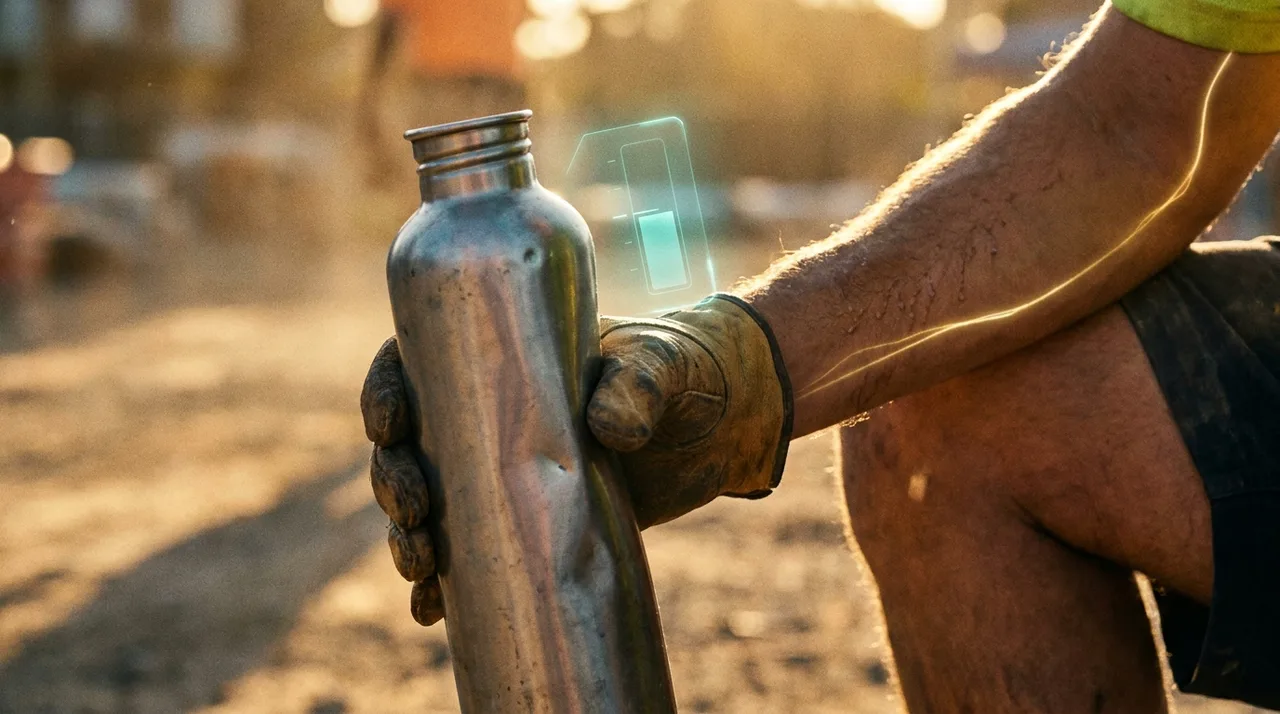
- Hydration: roughly 600-1000 ml water per hour in heat — up to 6-8 L on a 35°C day
- Ditch the Monster + durries: short kick, hard crash, worse by 2pm
- Real food + a cheap supplement (electrolytes) beats energy drinks for lasting power
- Recovery: protein + carbs within 2 hours of knock-off so you front up strong tomorrow
Table of Contents
- Why Do So Many Tradies Eat Badly and Get Out of Shape?
- You're an Athlete on an 8-Hour Duty — Fuel Like One
- What Should You Eat for Brekkie Before a Site Start?
- How Much Water Do You Actually Need on a 35°C Day?
- Do You Need Electrolytes and Supplements, or Is Water Enough?
- What Goes in the Esky for a Full Shift?
- What's the Smoko That Won't Crash You?
- How Do You Beat the 2pm Energy Crash?
- What Should You Eat to Recover After Knock-Off?
- How Do You Eat Well on a Budget?
- Frequently Asked Questions
Why Do So Many Tradies Eat Badly and Get Out of Shape?
Walk onto any Sydney site and the food story's the same: brekkie skipped, a servo run mid-morning, Maccas or a pie at lunch, a Monster to push through the arvo, durries on the breaks.
It's not because blokes are lazy. It's because nobody planned the food. 🍔
Studies of construction crews find the exact same pattern — heavy fast food, big caffeine, and skipped meals — driven by long hours, short breaks, and physically flogging work, not by choice. When the tank's empty at 10am and there's a servo across the road, that's what gets eaten.
The real problem isn't willpower. It's that the food never got organised — same as a job that goes pear-shaped because no one set the gear up the night before.And it adds up. Workers eating mostly junk and running on energy drinks report worse concentration and productivity, and the smokes-and-no-real-food combo leaves a lot of blokes both knackered and undernourished — strong-looking but running on fumes.
💡 Here's the bit most miss: looking after the food is exactly like looking after your tools. You wouldn't turn up with a flat battery or a blunt blade. Turning up underfed is the same thing — you just can't see it.
Research on construction workers' diets backs this up: fast food, caffeine and breakfast-skipping are the norm, and short breaks plus poor food access on site are the main reasons.
You're an Athlete on an 8-Hour Duty — Fuel Like One
Here's the reframe that changes everything: a labourer is an athlete. Not a weekend jogger — a pro on an ongoing 8-hour duty, day after day.
The numbers aren't a stretch:
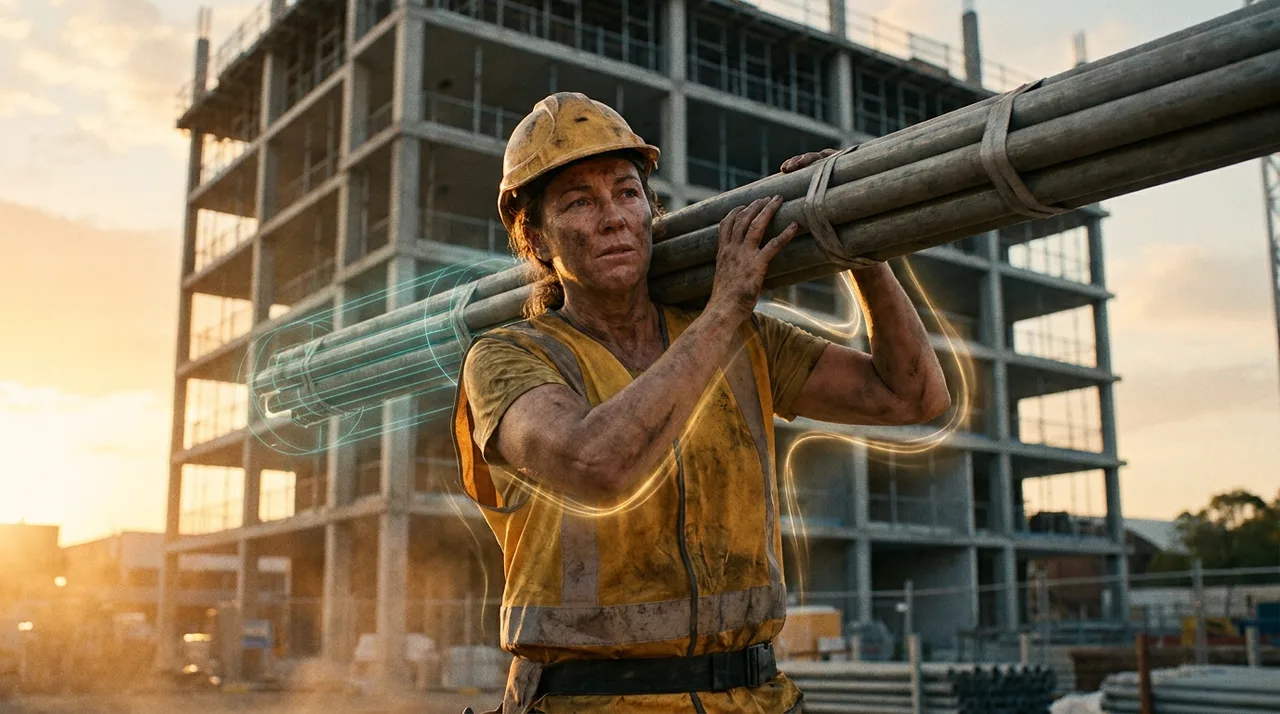
Across a full shift, heavy labour burns 3,000-4,000+ calories — closer to a pro athlete's day than an office worker's. On a hard day, the shift IS your gym session. (source)
No athlete fronts up to game day on a pie and a tin of Mother's. So why would you?
This isn't a diet lecture. It's the practical stuff: what to pack, what to drink, and how to not fall in a heap mid-arvo.
What Should You Eat for Brekkie Before a Site Start?
Eat 60-90 minutes before start so it's settled before you're lifting.
Go for slow carbs + protein — that combo releases energy over hours instead of spiking then crashing:
- Oats with milk and a banana
- Eggs on wholegrain toast
- Wrap with eggs or last night's leftovers
- A coffee if you want one — but coffee is not breakfast
Skip the sugar-bomb start. A jam donut and a can of soft drink spike your blood sugar, then drop it through the floor an hour into the shift.
A good brekkie is the cheapest performance gear you'll ever buy.How Much Water Do You Actually Need on a 35°C Day?
More than you think. Sydney summers regularly push past 35°C, and on a slab or a tin roof the working temp is higher again.
Safe Work Australia guidance points to roughly 600-1,000 ml of water per hour during heavy work in heat. Across a long shift that's 6-8 litres on a scorcher.
How to actually do it:
- Start hydrated — a big glass of water with brekkie, before you leave
- Sip steadily — don't skol a litre at smoko and nothing else
- Check your wee — pale = good, dark yellow = you're behind
- Freeze a bottle overnight so you've got cold water by lunch
Dehydration on a hot site isn't just feeling ordinary — it's headaches, cramps, dizziness, and the front edge of heat illness. If you stop sweating or feel confused, that's an emergency — tell someone.
Do You Need Electrolytes and Supplements, or Is Water Enough?
For a normal day, water plus a normal lunch usually does the job. You don't need a cupboard full of powders.
When you're sweating hard for hours, though, you lose sodium too — and chugging only plain water can leave you low, which brings on cramps and headaches.
When a cheap supplement earns its keep:
- Long shifts above ~30°C → an electrolyte sachet in one bottle
- Heavy sweater (salt rings on the shirt) → a pinch of salt with your food
- Back-to-back hot days → keep the electrolytes going
A supermarket sachet does the same job as the fancy stuff for a fraction of the price. The point isn't to chase miracle products — it's to stop the fatigue and cramps before they start. That's what keeps an athlete on the park, and it's what keeps you on the tools.
Go easy on the sugary sports drinks and energy drinks — half of them are more sugar than salt, and the Monster habit is a hydration killer in the heat.
What Goes in the Esky for a Full Shift?
Pack the night before so a sleepy 5am-you isn't deciding. Treat it like setting up your tools — it's the same job. A solid esky for a hard day:
- 💧 2-3 frozen water bottles (thaw through the day = cold water at lunch)
- 🥪 Lunch with protein + carbs (wrap, rice, leftovers)
- 🍌 Smoko snacks — banana, nuts, muesli bar, yoghurt
- 🥚 Brekkie if you eat on the way (boiled eggs, oats pottle)
- 🧂 An electrolyte sachet for the hot ones
Keep it cold and keep it real food. The servo is a backup, not a meal plan — it's dearer and it's mostly sugar and fat that crashes you.
What's the Smoko That Won't Crash You?
Smoko is a top-up, not a sugar hit. The mid-morning pie-and-energy-drink combo feels great for 40 minutes, then dumps you.
Steady smoko picks:
- Banana + a handful of nuts
- Yoghurt or a wholegrain muesli bar
- Cheese and crackers
- Leftover wrap half
Skip: energy drinks, soft drink, and the sausage roll if you want to feel human at 2pm.
For who actually pays for smoko time and when you can sit, read our take on smoko etiquette on Sydney sites.
Smoko is a refuel, not a reward. Eat for the next four hours, not the next forty minutes.How Do You Beat the 2pm Energy Crash?
That early-arvo slump is usually a blood-sugar dip after a big simple-carb lunch — made worse by dehydration and a rough night's sleep.
How to flatten it:
- Lighter lunch with protein + fibre — not a kilo of white bread and a litre of Coke
- Steady water all morning so you're not playing catch-up
- A real-food snack mid-arvo — fruit, nuts, yoghurt — not a fourth coffee
- Real sleep — caffeine can't replace it
An energy drink at 1:45 gets you a 20-minute kick and a worse crash by 3. Food and water last.
For the bigger picture on holding up under the load, see our guide to mental health on Sydney construction sites.
What Should You Eat to Recover After Knock-Off?
What you eat after the shift decides how you feel tomorrow. An athlete recovers between sessions — so do you. Two priorities:
- Protein to repair muscle — chicken, mince, eggs, tuna, legumes
- Carbs to refill energy stores — rice, pasta, potato, bread
A simple plate: chicken or mince + rice + veg, eaten within a couple of hours of knocking off. Nothing fancy.
Rehydrate with water first. A cold beer's fine, but beer is not your recovery drink — it dehydrates you, and you start tomorrow behind.
The blokes who eat and sleep properly are the ones who front up sharp every morning — and that consistency is exactly what gets you rebooked every week.
How Do You Eat Well on a Budget?
Eating right doesn't mean dropping a fortune at the supermarket. The cheapest foods are some of the best fuel.
Cheap and energy-dense staples:
- Oats, rice, pasta — bulk carbs for cents per serve
- Eggs, tinned tuna, mince — cheap protein
- Bananas, peanut butter, frozen veg — vitamins + energy for next to nothing
- Tap water — free, and better than $4 a bottle
The trick is cook once, eat twice. A big feed of mince and rice on Sunday is four lunches sorted — cheaper than the servo and it actually fuels you. ✅
The servo lunch costs you twice — once at the counter, and again at 2pm.Fuelling yourself properly is on you. Lining you up with the Sydney site work where showing up strong pays off — that's on us. Tell Sammy you're keen and what tickets you've got, any hour.
Frequently Asked Questions
Why do so many construction workers eat badly and get out of shape?+
Most don't plan or organise their food. Short breaks, no fridge on site, and a servo round the corner mean breakfast gets skipped and lunch becomes a pie and an energy drink. Research on construction workers' diets finds a clear pattern of fast food, heavy caffeine and skipped meals — driven by long hours and physical fatigue, not laziness. The fix is planning your food the same way you sort your tools the night before.
Is a construction shift really like a workout?+
Yes. Carrying heavy loads burns roughly 660 calories an hour — about the same as an hour of basketball. Shovelling is comparable to a cardio session and carpentry to jogging. Across an 8-10 hour shift a labourer can burn 3,000-4,000+ calories, closer to an athlete's day than an office worker's. On a heavy day, the shift IS your gym session.
What should a labourer eat for breakfast before a site day?+
Eat a mix of slow carbs and protein 60-90 minutes before start. A common option is oats with milk and banana, or eggs on wholegrain toast. This combination releases energy over hours rather than spiking and crashing. Add a coffee if you want, but it is not a substitute for food.
How much water should I drink on a hot Sydney site?+
Safe Work Australia guidance suggests roughly 600-1,000 ml of water per hour during heavy work in heat. On a 35°C day that can mean 6-8 litres across a shift. Sip steadily rather than skolling a litre at smoko, and start the day already hydrated.
Are energy drinks and cigarettes a problem for site workers?+
Yes. Energy drinks give a short caffeine and sugar lift then a crash that leaves you worse off mid-afternoon, and they count against hydration in heat. Daily labourers who smoke are more likely to be undernourished, and high caffeine plus poor food is linked to lower concentration and productivity. Real food, water and sleep last far longer than a Monster and a durrie.
What are good cheap high-energy meals for labourers?+
Oats, eggs, tinned tuna, rice, pasta, wraps, bananas, peanut butter, and frozen veg are all cheap and energy-dense. A wrap with tuna or chicken, some rice, fruit and a handful of nuts feeds a full shift for a few dollars when bought in bulk.
What should I eat after a hard shift to recover?+
Eat a meal with protein and carbs within a couple of hours of knocking off — for example chicken or mince with rice and veg. Protein helps muscles repair and carbs refill your energy stores for the next day. Rehydrate with water rather than only beer.
Is it okay to skip lunch to get the job done faster?+
No. Skipping food on a hard physical shift drops your blood sugar, slows you down, and raises your injury and heat-illness risk in the afternoon. A 10-15 minute feed keeps you sharper and safer for the rest of the day. In NSW you are also entitled to your award meal breaks.
Treat your body like the machine that earns. Fuel it, last the week, get rebooked — that's the whole game.
Leap Labour is a Sydney-based labour hire agency placing general hands, forklift drivers, skilled labourers, traffic controllers, and leading hands across construction and warehouse sites. This article is general nutrition and safety guidance, not medical advice — if you have a health condition, talk to your GP. Work safe in the heat per Safe Work Australia and SafeWork NSW guidance.