Sydney Site Day-1 Checklist 2026 (PPE, IDs, Tickets)
The honest Sydney site Day-1 checklist for 2026 — White Card, PPE, IDs, tickets, how to take instructions and ask for feedback, and what gets a new worker walked off the gate.
Day 1 is two things: the gear that gets you through the gate, and the conduct that gets you booked again.
Gear, the top 5:
- White Card — physical + digital (Service NSW app); some supers refuse digital-only
- Steel-capped ankle boots — not soft-toe, not low-cut; site supers check
- Hi-Vis shirt or vest — yellow or orange, meets AS/NZS 4602
- TFN + super fund name + member number — payroll can't start without all three
- Arrive 20 minutes early, sober — after the toolbox talk or 0.00+ breathalyser = walked off
Conduct, the three that decide the second shift: take the instruction properly and repeat it back; ask how you went before you leave; treat everyone on site the same.
Long pants, emergency contact, and photo ID are also mandatory. Pack the bag the night before.
🦺 Almost every Sydney Day-1 failure is preventable — and it happens before the gate. Wrong boots. No White Card. The wrong super fund name on the payroll form.
The procedure manuals tell you what the legislation says. They don't tell you what the site super is actually looking for when you walk up.
Get walked off the gate and you don't just lose the shift — the agency thinks twice before booking you again.This is the practical version — the one our allocators give every new worker the night before.
Table of Contents
- The non-negotiables — no White Card, no entry
- Your Day-1 PPE kit (and who pays for what)
- IDs and documents on your phone
- Tickets and licences beyond the White Card
- What actually happens at site induction
- What gets a first-day worker sent home
- How should you act on your first day on site?
- Frequently Asked Questions
The non-negotiables — no White Card, no entry
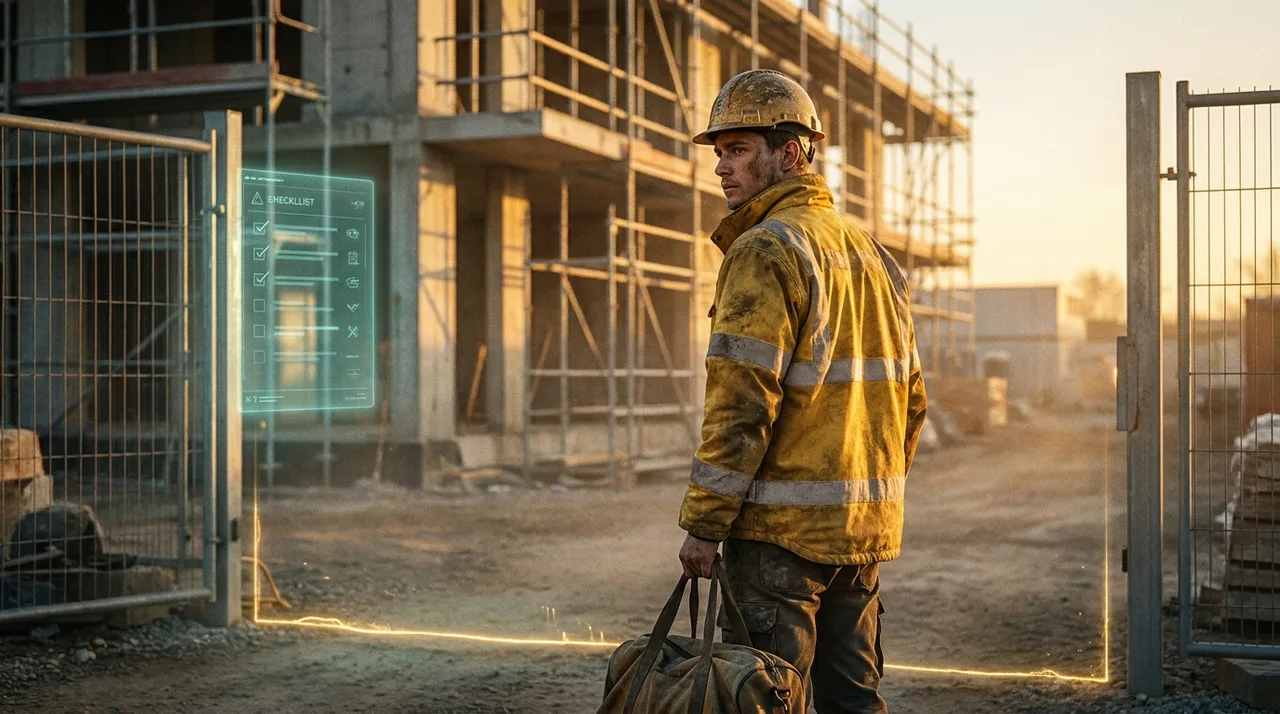
Three things turn you away at the gate before the foreman even knows your name. White Card. Boots. Hi-Vis. In that order.
The White Card — the NSW general construction induction card — is mandatory for any construction work in NSW. You get it through a SafeWork NSW-accredited RTO.
It costs around $90-$160, takes a day, and stays valid indefinitely — as long as you keep working in construction. Stop for two years and you redo it.
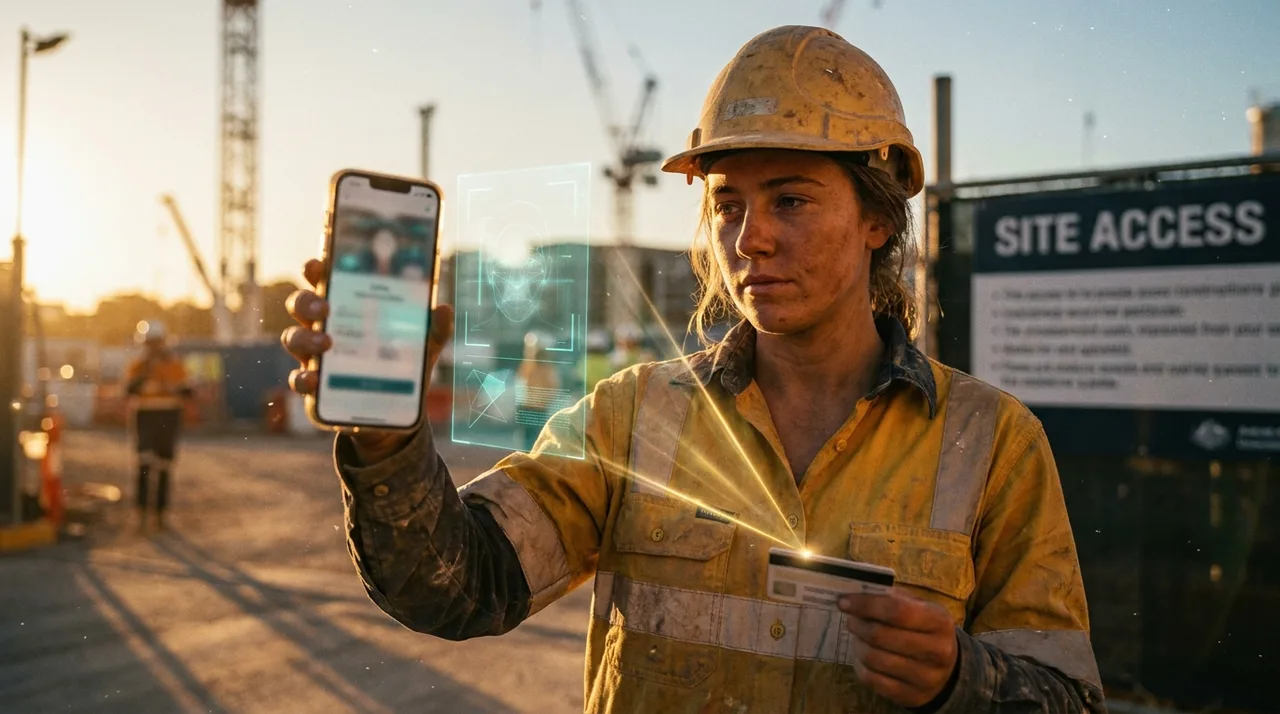
Two versions exist now: the physical card for your wallet, and the Digital White Card in the Service NSW app. Service NSW says you must still carry the physical card as backup — some site supers flat-out refuse the digital version on its own. Bring both. Always.
Miss any one of those three and you don't get past the perimeter. Under the WHS Act and SafeWork NSW PPE regulations, the site super is personally liable if they let you on without them.
So don't argue. Don't say "I'll bring it tomorrow." Sort it before the booking.
Your Day-1 PPE kit (and who pays for what)
SafeWork NSW splits the PPE duty between the labour hire agency and the host employer. Both carry obligations under the PPE Factsheet for Labour Hire Agency arrangements — gear must be suitable for the hazard, properly fitting, properly maintained.
What actually gets supplied where depends on the site.
Some sites keep a few loaner vests for the bloke who forgot his — most don't, and the foreman remembers the one who turned up without it.
Rule of thumb: boots, Hi-Vis, long pants, your own water bottle. For the hard hat and glasses, ask your agency the day before — most Sydney commercial sites supply branded hard hats and don't want unmarked ones floating around.
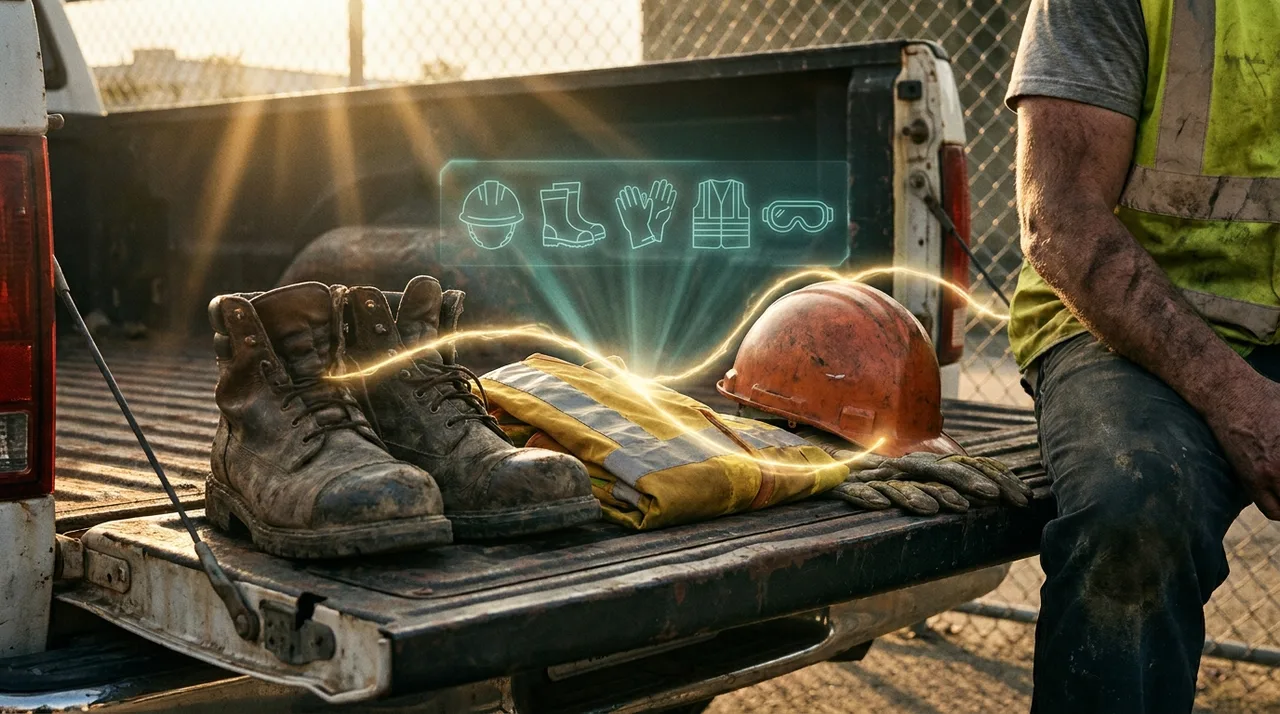
On boots: steel-capped, ankle-height, lace-up. Not work boots from Big W. Not soft-toe Blundstones. Site supers check.
Expect to spend $120-$220 on a decent pair — they last 6-12 months on a busy site. Cost of getting started, not optional.
IDs and documents on your phone
Most Sydney sites now run digital inductions via tablet at the gate. Admin types your name, scans your White Card, takes a photo for the access pass, and walks you through the site hazards. The whole thing takes 25-45 minutes.
What they'll ask for, in order:
Two extras to have queued up on your phone Notes app before you leave home:
⚠️ The super fund one trips up new workers more than anything else. Sites ask. Your agency asks. The ATO asks.
Say "I think it's AustralianSuper" when it's actually Hostplus, and your first pay sits in limbo for two weeks. Look it up. Write it down. Memorise the member number.
Five minutes sorting your super fund the night before saves a fortnight of chasing payroll.Tickets and licences beyond the White Card
The White Card gets you onto a site. It doesn't let you operate anything. Here are the common Sydney tickets:
| Ticket | What it covers | Where to verify |
|---|---|---|
| LF — Forklift | Powered forklift operation (counterbalance, reach) | Service NSW HRW Licence |
| EWP / WP | Boom and scissor lifts (over 11m needs WP ticket; under 11m needs WAH training) | Service NSW / RTO |
| CN, CV, C2/C6 cranes | Crane operation by category | Service NSW HRW |
| Asbestos awareness | Any site built pre-2003 | RTO certificate |
| First aid (HLTAID011) | Increasingly required as part of crew composition | RTO certificate |
Not sure what your tickets cover? The Service NSW Verify a White Card tool is the official check — and site supers will sometimes pull it up right at the gate.
Worth a read on the next step: Forklift Licence Types NSW: Which Ones You Actually Need.
Never bluff a ticket. Saying "yeah, I've got my forklift" when you don't gets you blacklisted from every labour hire agency in Sydney. Sites talk. Agencies talk. One bluff and the bookings dry up for months.
What actually happens at site induction
Here's a realistic morning template for a Monday 7am start at an inner-Sydney commercial site:
Arrive 20 minutes early. Not at start time. Not five minutes early. Twenty.
Here's the maths nobody explains: if induction runs 45 minutes and you rolled up at 6:55am, you're an hour late to the actual work — and the crew watched you walk past with a clipboard while they were already on the tools.
What gets a first-day worker sent home
The honest list — every one of these is real:
The first three are pure gear — 100% in your control. Pack your bag the night before. Lay your gear out by the door. Check your boots aren't covered in last week's mud — site supers notice.
🚧 The breathalyser is the silent killer. A Friday-night beer at 11pm is fine. A Sunday session that finishes at 2am isn't. Sites running 0.00 will catch residual alcohol from a heavy Sunday.
If you reckon you'll fail the breathalyser, tell your agency before the shift — they'd rather reshuffle than have you walked off.So if you've had a big weekend: drink water, eat, sleep. Honesty the night before beats a walk-off at the gate.
How should you act on your first day on site?
The gear gets you through the gate. How you carry yourself is what gets you asked back.
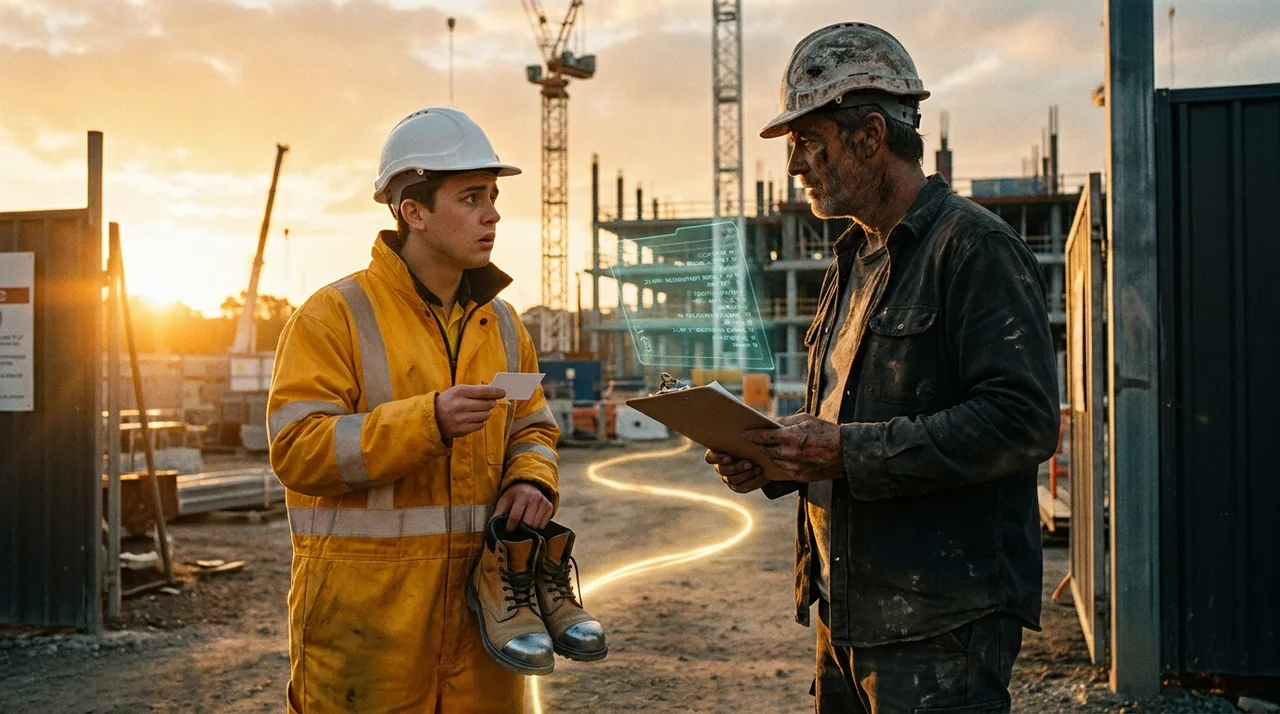
Ask any Sydney foreman why a new bloke didn't get a second shift and it's almost never the work rate. It's that he didn't listen, didn't ask, or was short with someone.
Nobody expects you to be good on Day 1. They expect you to be easy to run.Three things do the heavy lifting. None of them cost money.
1. Collect the instruction properly
The most common Day-1 mistake on site: nodding, walking away, and doing the wrong thing for forty minutes.
That's usually not laziness. It's someone who half-heard the task and was too embarrassed to ask twice.
Under the NSW Work Health and Safety Act 2011, section 28, a worker has to follow reasonable instruction. You can't follow what you never actually heard.
So stand still until the leading hand has finished, then say it back to him.
Four lines worth memorising word for word:
- "Just so I've got it right, you want..."
- "Where do you want me to stop?"
- "What does finished look like?"
- "Who do I go to if you're not around?"
No one has ever been marked down for one more question before they started. Plenty have been marked down for the redo.
2. Collect feedback before you leave
Find whoever ran your day, before you walk out the gate. Ask two questions.
"How did I go today?" and "Anything you want done differently tomorrow?"
Thirty seconds. That's the whole thing.
Asking how you went is the cheapest move a new worker has, and the one that most lifts how you get rated.Two things happen. Your name now sits in his head attached to something good.
And if you did stuff something up, you hear it from him tomorrow instead of hearing it from your allocator as "don't send that one back."
Send your allocator the same message on the way home: how the day went, anything you're unsure about, whether you're right for tomorrow. That's the habit that turns a shift into a run of work you can actually build a career on.
3. Treat everyone on site the same
Not just the foreman. The traffic controller, the cleaner, the dogman, the apprentice, the delivery driver, the crew from the other agency.
The person who decides whether you come back is often not the one you think it is.
Supers ask around. The bloke who was short with the traffic controller at 6:40am gets mentioned by lunch.
What that looks like in practice:
- Say good morning to whoever's on the gate.
- Learn three names a day and use them.
- Put borrowed tools back the way you found them.
- Don't cut through another trade's area without asking first.
- Eat smoko with the crew, not alone in your ute.
Sydney sites are properly diverse and English isn't everyone's first language. Speak plainly. Don't speak louder.
The job isn't to know everything on Day 1. The job is to turn up with the right gear, the right tickets, the right attitude — and stay close to who you're assisting. Site supers don't expect you to be brilliant. They expect you to be ready, sober, and listening.
Why we wrote this — labour hire perspective
Leap Labour places workers on Sydney commercial and warehouse sites every week. We coordinate the first-day inductions, see the gear new workers bring, watch the tickets they hold — and we see exactly what makes a site super call us back asking for the same worker next week.
This checklist is what our allocators tell every new worker the night before. It's not legal advice — it's the practical version, from the team that does this every day.
For the legislative detail, read SafeWork NSW and Fair Work Ombudsman — Building and Construction. Read those for the law. Read this for the day.
Further reading worth a click:
- Skilled vs General Labourer: Which Does Your Project Need?
- How to Level Up Your Career Through Labour Hire
- The Sydney Labourer 5-Year Salary Curve in 2026
Get Started
Got your White Card, got your boots, got your tickets? We'll find you the shift. Send us your details and we'll match you to a Sydney site →
Frequently Asked Questions
What do I need to bring on my first day on a Sydney construction site?+
Your White Card (physical and digital), photo ID, steel-capped ankle-height boots, Hi-Vis shirt or vest, long pants, your TFN, super fund details, and your emergency contact. Arrive 20 minutes early. Pack the night before so you're not rummaging at 5:30am.
Is the Digital White Card enough on its own in NSW?+
No. Service NSW says you must still carry the physical White Card as a backup. Some site supers refuse the digital version on its own — it's a cultural thing more than a legal one. Bring both.
Who pays for PPE — me or the site?+
Under the SafeWork NSW labour hire PPE rules, the host employer and labour hire agency share the duty. In practice: boots and Hi-Vis are yours. Hard hats, safety glasses, gloves and earplugs are usually supplied on site. Confirm with your agency the day before.
What gets a first-day worker sent home in Sydney?+
Wrong boots (runners, joggers, low-cut), no White Card, no Hi-Vis, arriving after the toolbox talk, or failing a breathalyser at the gate. Any one of those and you get walked off — no warning, no second chance.
What time do Sydney construction sites actually start?+
Most CBD and inner-Sydney sites start at 7am sharp, with toolbox talks at 6:45am. Some metro and infrastructure jobs start at 6am. Warehouse and logistics shifts often start at 6am or 7am. Arrive 20 minutes before start, not at start.
Do I need to do a site induction every time?+
Yes. Your White Card is the general construction induction — it gets you onto sites. Every site also runs its own site-specific induction covering local hazards, exits, and the SWMS for your task. No site induction, no work — even if you've been on 50 sites before.
How should you take an instruction on your first day on site?+
Listen to the whole instruction before you move, then repeat it back in your own words. Ask where the task stops and what finished looks like. Under the NSW Work Health and Safety Act 2011 section 28 you must follow reasonable instruction, so confirming it is safety, not weakness. Most first-day mistakes come from half-hearing a task and being too embarrassed to ask twice.
Should I ask for feedback at the end of my first shift?+
Yes. Before you leave, ask whoever ran your day two questions: how did I go today, and anything you want done differently tomorrow. It takes thirty seconds, costs nothing, and is the single move that most lifts how a new worker is rated. Send your labour hire allocator the same summary on the way home.
Who on site decides whether I get asked back?+
Often not the person you expect. Site supervisors ask around, so the traffic controller, the cleaner, the apprentice and the other agency's crew all feed into it. Treat everyone the same, learn names, put borrowed tools back, and don't cut through another trade's area without asking.