
PPE Requirements for Construction Workers in NSW
Who provides what PPE on Sydney construction sites? Clear breakdown of host employer vs labour hire duties under WHS Act 2011 and WHS Regulation 2025.
Under the WHS Act 2011 and WHS Regulation 2025, PPE responsibility is split between the labour hire agency and the host — each PCBU provides the items within their duty.
- Agency supplies (portable core 4): Safety boots (AS/NZS 2210), hi-vis vest (AS/NZS 4602), hard hat (AS/NZS 1801), work gloves (AS/NZS 2161)
- Host supplies (site-specific): Hearing protection, fall arrest harnesses, respirators, eye protection, task-specific PPE matched to site hazards
- Cost rule: PPE must be provided free of charge — no deductions, no "bring your own" mandates
- Audiometric testing: Agency obligation — only the agency has full visibility of a worker's noise exposure across multiple sites
- Unusual hazards (silica, asbestos, confined spaces): Tell the agency at booking; host carries exposure monitoring and controls
It's 6:42am at a Mascot site. The foreman counts heads. Four labour hire blokes step off the ute — boots on, hi-vis on, hard hats… in the boot of the foreman's car, because nobody told the agency what work was happening today.
This is the PPE confusion that costs sites time, money and — when it goes bad — prosecutions.
The fix is boring and legal: know who provides what, write it down, and run the same playbook every shift.
This article walks through the exact split between labour hire and host employer for every common PPE item on a Sydney construction site. It's written for builders and site managers who hire labour hire crews — not for lawyers.
Table of Contents
- The legal basis: WHS Act 2011 and Regulation 2025
- Who provides what — the PPE split
- What Leap supplies: the four core items
- Host employer items: site-specific PPE
- Australian Standards every site PPE must meet
- How Leap Labour handles PPE before workers arrive
- Frequently Asked Questions
- Get Started
The legal basis: WHS Act 2011 and Regulation 2025
The whole PPE conversation runs through two pieces of NSW law: the Work Health and Safety Act 2011 and the Work Health and Safety Regulation 2025.
The Work Health and Safety Regulation 2025 commenced on 22 August 2025, replacing the WHS Regulation 2017 which was due for automatic repeal on 1 September 2025. It includes essential elements of the work health and safety regulatory framework, setting out detailed requirements to support the duties in the WHS Act 2011.
The WHS Regulation 2025 largely continues the WHS Regulation 2017 — so if you've been operating under the 2017 rules, the substance hasn't changed. The clause numbers have. In the WHS Regulation 2017, a provision was referred to as a 'clause'. For consistency with other NSW regulations, a provision is now referred to as a 'section' in the WHS Regulation 2025.
Two PCBUs, one site, shared duty
Here's the bit that trips people up. On any labour hire job, there are at least two PCBUs.
A head contractor or labour hire company is a PCBU in the same way an employer is. In some employment arrangements, multiple people can have the same duty as a PCBU. If you are a labour-hire worker, the labour-hire agency and the person or business directing the work are both a PCBU.
Under the WHS Act 2011, PCBUs, including labour hire PCBUs and host PCBUs, have a primary duty of care. This means as a PCBU you need to ensure, so far as is reasonably practicable, the health and safety of labour hire workers you engage, cause to be engaged, or whose activities are influenced or directed by you.
So Leap Labour is a PCBU. You — the host employer — are also a PCBU. Both of you owe duties to the worker. Neither can shrug and point at the other.
The "unless provided by another PCBU" rule
This is the rule that actually decides who buys what.
Regulation 44(2) of the WHS Regulations requires each PCBU to provide workers with the necessary PPE unless it has been provided by another PCBU. This means that, for example, the person directing work may not have to provide PPE if it has already been provided by a labour-hire company.
Read that twice. Either PCBU can provide a given item — but somebody must. If both assume the other is doing it, nobody does, and both cop the breach.
That's why every labour hire engagement needs a written split. No verbal "she'll be right."
What "provide" actually means
It's not just handing over a vest.
Under regulation 44(3), the PCBU providing the worker with PPE must ensure that it is selected to minimise risk to health and safety, including by ensuring it is suitable having regard to the nature of the work and any hazard associated with the work, and a suitable size and fit, and reasonably comfortable for the worker who is to use or wear it, and maintained, repaired or replaced so that it continues to minimise risk to the worker who uses it.
Plus the PCBU must train the worker on how to use it.
And the worker can't be charged for it. Under the WHS Regulation, the PCBU has a cast-iron duty to provide any necessary Personal Protective Equipment (PPE) to workers, completely free of charge. You can't ask a worker to chip in for their own gear or make buying it a condition of their employment.
For more on how the duty splits across labour hire arrangements, see host employer responsibilities.
Who provides what — the PPE split 🦺
This is the cheat sheet. Print it. Stick it in the smoko shed.



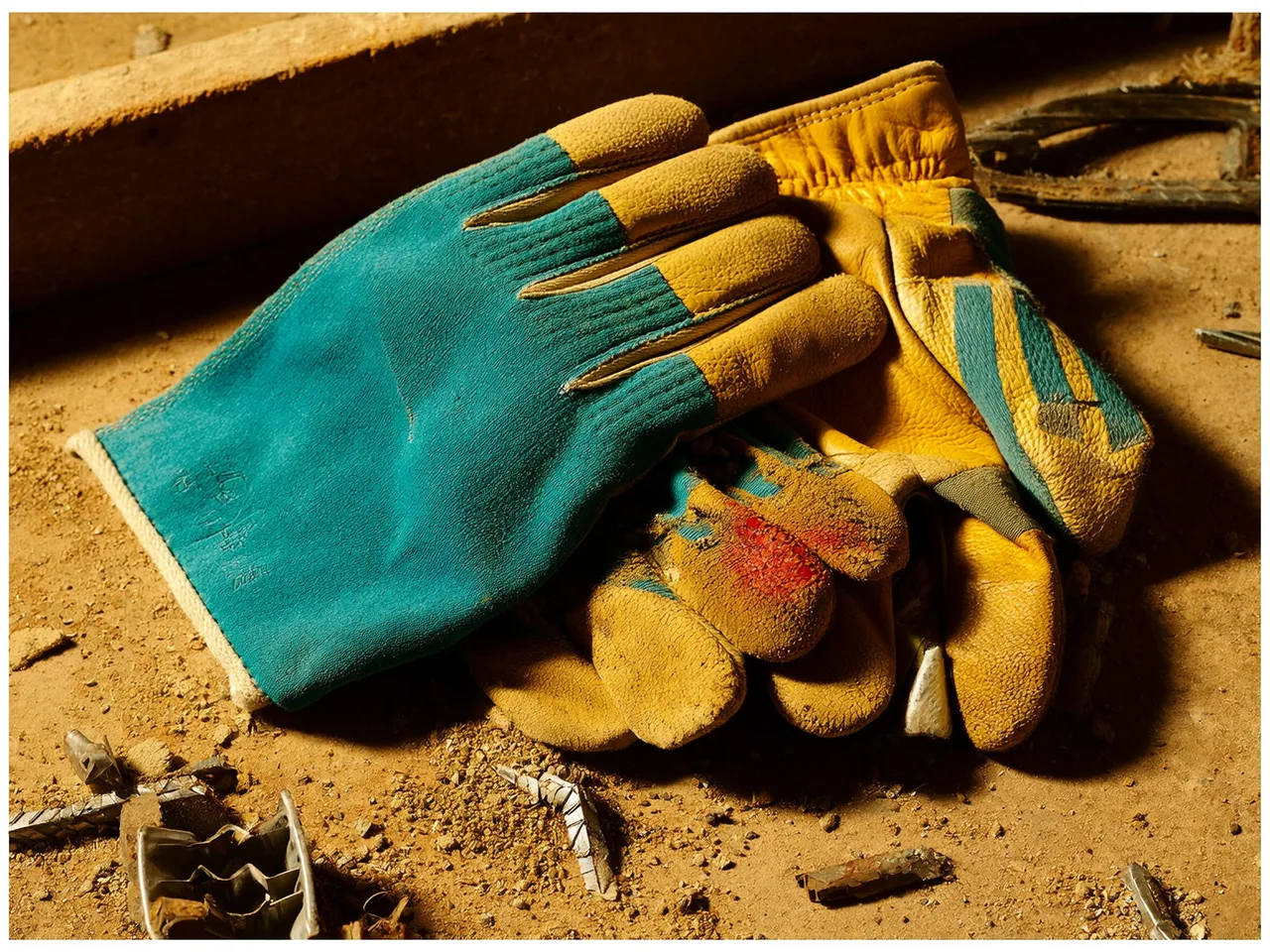
The principle: if it's personal and they wear it on every job, Leap ensures the worker has it. If it's site-specific or hazard-specific, you provide it.
That's not a Leap policy — it's the reality of how labour hire works in Sydney. Workers move between three or four sites a week. Asking a labourer to bring a different harness to each site doesn't work, and neither does asking the host to fit a new pair of boots to a worker who's only there for two days.
The four-line rule for hosts:
- Leap supplies: safety boots (AS/NZS 2210), hi-vis (AS/NZS 4602), hard hat (AS/NZS 1801), work gloves (AS/NZS 2161). Always.
- You provide: site-specific gear — hearing protection, eye protection, fall arrest harness, respirator, sunscreen.
- Unless requested otherwise: if your site requires colour-coded or branded hard hats, or task-specific cut-rated gloves, tell us at booking and the host issues those at induction.
What Leap supplies: the four core items
These are the four items every Leap worker turns up with. No exceptions. No "I left them in the other ute." Workers looking for construction roles can find work through Leap — PPE requirements are covered at onboarding.
Safety boots — AS/NZS 2210
Boots are personal. Sized to the foot, broken in over weeks, often replaced every 6–12 months. It would be daft for a host to issue boots for a 3-day stint.
The Australian Work Boots Standard refers to the AS/NZS 2210 series, which sets the benchmark for safety, protective, and occupational footwear in Australia and New Zealand. These standards ensure that work boots meet specific criteria to protect workers from common hazards, such as impacts, punctures, slips, and electrical risks.
The specific section that matters for construction is AS/NZS 2210.3. In Australia, the AS 2210.3:2019 standard is a specific part of the AS/NZS 2210 series that focuses on safety footwear with protective toe caps. AS 2210.3:2019 outlines standards for impact and compression resistance, requiring toe caps that can withstand impacts of up to 200 joules and compression loads up to 15 kN.
For most Sydney construction work — concrete, formwork, demolition, civils — you want S3-rated boots. S3 is best for jobs with a risk of punctures from below (e.g., construction sites with nails) and wet conditions.
What Leap does:
-
Every worker confirms boot ownership at onboarding
-
Boots must show the AS/NZS 2210 marking — compliant boots must include a label showing compliance with AS/NZS 2210 standards
-
Boots are inspected before deployment to high-risk sites
-
We turn workers around if their boots are knackered
If you receive a worker on site with non-compliant or worn-out boots, ring us. We'll replace the worker that morning. That's the deal.
Hi-vis — AS/NZS 4602
Hi-vis is the second non-negotiable. Every worker brings their own.
There are two main parts to the AS/NZS 4602 standards: AS/NZS 4602.1:2011 — High visibility safety garments for high-risk applications, and AS/NZS 4602.2:2020 — Garments for occupational use.
For most Sydney construction sites, AS/NZS 4602.1 (Class D/N day-and-night) is the minimum. If your site has reflective tape requirements for night work or rail proximity, that's still on the worker — they should own a Class D/N vest as standard kit.
Basic hi-visibility garments are required on all construction sites and non-office worksites. All hi-visibility clothing and/or vests must comply with Australian Standard 4602 (day/night use).
Hard hat — AS/NZS 1801
Hard hats are the third core item. Leap workers turn up with their own basic hard hat compliant with AS/NZS 1801 (white or yellow, Type 1 or Type 2 as standard).
AS/NZS 1801 specifies performance requirements for industrial safety helmets, including impact attenuation, penetration resistance, and retention system strength. A compliant hat carries the AS/NZS 1801 marking on the shell.
If your site requires colour-coded or branded hats — a common requirement for trades differentiation, visitor management, or subcontractor hierarchy — the host issues those at induction. Just tell us at booking. Leap's default hard hat is a universal baseline; the host's branded hat replaces it on site for that shift.
Work gloves — AS/NZS 2161
Leap workers arrive with a pair of general-purpose work gloves compliant with AS/NZS 2161. These handle concrete, formwork, general labouring, and light steel handling.
AS/NZS 2161 covers occupational protective gloves and sets requirements for mechanical protection including abrasion resistance, blade cut resistance, and puncture resistance.
If your work requires a higher cut-resistance level, chemical resistance, or other task-specific protection (e.g. cut-rated Level D for steel fixing, nitrile chemical gloves for hazardous materials handling), the host issues those task-specific gloves. The Leap-supplied general gloves are the baseline — not a substitute for hazard-specific protection.
The four-item baseline: boots, hi-vis, hard hat, and gloves are the items every Leap worker carries to every site. They're personal, portable, and sized to the individual. Everything beyond these four changes by site, hazard, and task — that's why the host specs and supplies it.
What if a worker arrives without one of the four items?
You ring Leap. We don't expect you to fix it on the fly. Our deal with you is that workers turn up site-ready or they don't turn up at all.
For more on how we screen and verify before deployment, see compliant labour hire Sydney.
Host employer items: site-specific PPE
Leap handles the four portable core items (boots, hi-vis, hard hat, gloves). Everything beyond those is site-specific — and site-specific gear is on the host, because only the host knows the site.
PCBUs must identify, assess, and control hazards and risks. The model WHS Regulations sets out specific requirements that PCBUs must comply with when managing risks that arise from certain hazards or hazardous work. This includes construction work, hazardous atmospheres or chemicals, asbestos, confined spaces, plant, falls or falling objects, hazardous manual tasks, and diving work.
You — the host — control the workplace. You know what's being cut, what's being lifted, what dust is being kicked up. So you spec the site-specific PPE.
Hearing protection
This one's specifically called out by SafeWork NSW for labour hire arrangements.
Labour hire PCBUs are the only PCBU that has knowledge of the full extent of their workers' noise exposure, as their workers may be sent to one or multiple host employers. Labour hire PCBUs therefore have the duty under section 58 of the WHS Regulation 2025 to organise and pay for the costs associated with audiometric testing.
So Leap pays for audiometric testing. But the actual hearing protection — the muffs or plugs used on your site — is host-supplied because:
- Class of protection depends on your specific noise levels
- Plugs/muffs need to match the work (you can't talk through Class 5 muffs while operating a dogman whistle)
- Host knows when the noisy work is happening
Alternate arrangements may be considered where the host employer pays for the cost of audiometric testing for labour hire workers. This arrangement must be negotiated through effective consultation, cooperation, and coordination between the labour hire PCBU and host PCBU.
If you'd rather Leap cover testing AND issue hearing protection, we can structure that — but it's the exception, not the default.
Eye protection
Safety glasses to AS/NZS 1337. Site-specific because grinding glasses ≠ welding shields ≠ chemical splash goggles. Hosts spec the glasses to the task.
Fall arrest harnesses and lanyards
Non-negotiably host-supplied. Reasons:
- Inspection records. Every harness must be inspected before use and every six months. Hosts hold those records.
- Anchor compatibility. Lanyard length and shock absorber type depend on the anchor system on YOUR site.
- Rescue plan. Suspension trauma kills inside 15 minutes. The rescue plan, training and equipment all sit with the host.
Respiratory protection
This is the one with the highest legal stakes — silica, asbestos, lead.
Respiratory protection sits with the host because:
- It must comply with AS/NZS 1716
- Fit testing is mandatory for tight-fitting respirators (and is usually arranged through the site safety system)
- Cartridges are job-specific (P2 dust ≠ organic vapour)
- Storage and replacement schedules sit on site
The crystalline silica risk on Sydney sites has driven major regulatory tightening. SafeWork NSW introduced the silica worker register which commenced on 1 October 2025. If your site does any silica-generating work, your RPE program needs to be airtight — and that program is yours, not ours.
Sunscreen and sun-protective clothing
For outdoor crews, the host provides sunscreen on site and ensures shirts have appropriate UV ratings. For outdoor workers it is recommended that safety clothing such as pants and shirts have UPF rating of 50+ sun protection in accordance with AS/NZS 4399:2017 Sun Protective Clothing.
Australian Standards every site PPE must meet
Quick reference. Every PPE item on a NSW construction site should meet these:
| PPE Item | Standard | What it means |
|---|---|---|
| Safety boots (toe cap) | AS/NZS 2210.3:2019 | 200J impact, 15kN compression |
| Hi-vis (high-risk) | AS/NZS 4602.1 | Day/night reflective garment |
| Hi-vis (occupational) | AS/NZS 4602.2:2020 | General visibility |
| Hard hat (industrial) | AS/NZS 1801 | Impact attenuation and penetration resistance |
| Work gloves (general) | AS/NZS 2161 | Mechanical protection: cut, abrasion, puncture |
| Eye protection | AS/NZS 1337 | Impact-rated safety glasses |
| Respirators | AS/NZS 1716 | Filter performance and fit |
| Sun-protective clothing | AS/NZS 4399:2017 | UPF 50+ rating |
| Slip resistance (boots) | AS/NZS 2210.4:2019 | Addresses slip resistance, key for construction where slip risks are high |
AS/NZS 2210.1:2010 sets out the general requirements for occupational footwear used in a range of industries. It covers aspects like material durability, structural integrity, and ergonomic features, ensuring that footwear provides basic protective functions and comfort. Compliance with this part ensures that footwear is suitable for the overall needs of workers and can withstand daily wear.
If your site PPE doesn't carry the standard marking on the label, swap it. Ensure all work boots are marked with the AS/NZS 2210 standards to verify compliance. This helps avoid subpar or unsafe products.
Why standards matter for prosecution ⚠️
Codes of Practice and Australian Standards aren't just guidelines — they're admissible evidence.
Under the Work Health and Safety Act 2011, codes of practice are admissible in court proceedings. Courts may regard a code of practice as evidence of what is known about a hazard, risk or control, and rely on it to determine what is 'reasonably practicable' in the circumstances to which the code relates.
If something goes wrong and your site issued non-compliant PPE, expect that to be Exhibit A.From 1 July 2024, the Work Health and Safety Amendment (Penalty Notices) Regulation 2024 makes amendments to the Work Health and Safety Regulation to provide for 88 new penalty notices to be issued for existing offences in the Regulation and further increases all existing penalty notice amounts by 24 per cent. Penalties have tightened — and they apply to both the labour hire PCBU and the host PCBU.
For more reading on legal exposure when hiring labour, see is labour hire worth it.
How Leap Labour handles PPE before workers arrive
Honest disclosure: Leap is a labour hire company. We supply construction and warehouse workers across Sydney. We don't run safety consulting. We don't sell PPE.
What we do is make sure the workers you book turn up site-ready, with the basics on, and the right standards met.
What we don't do
We supply four portable core items: boots, hi-vis, hard hat, and work gloves. We don't supply site-specific gear — harnesses, respirators, hearing protection, eye protection. Not because we don't care — because doing it badly is worse than not doing it at all. The host knows the site; the host owns the site-specific PPE.
We say this upfront because the most common client confusion we hear is: "I thought you'd send them with everything."
The four core items, yes. The site-specific safety systems, no. Any labour hire firm claiming to supply full site PPE for every engagement is either lying or sending the wrong gear.
For the broader picture of what we do and don't include in our rates, see labour hire cost breakdown and labour hire Sydney transparency.
Booking flow that prevents PPE drama 📋
When you book a crew through Leap:
- You tell us the site address, the work type, and any unusual hazards (silica, heights, confined space).
- We confirm worker basics — all four core items (boots, hi-vis, hard hat, gloves) — and brief them on what your site provides.
- You confirm by reply email what site-specific PPE you'll issue at induction, and whether you want the host to supply branded hats or task-specific gloves instead of the Leap defaults.
- Worker arrives. Site induction. Site-specific PPE issue. Sign off. Work starts.
It's not glamorous. It's a paper trail. That paper trail is what keeps both PCBUs out of court if things go sideways.
Consult, cooperate, coordinate
This is the legal duty that ties it all together.
When duty holders share a duty, for example a duty in relation to the health and safety of the same worker or workers, they will be required to consult, cooperate and coordinate activities with each other so far as is reasonably practicable. Since various contractors and subcontractors work on the same construction site, their activities are likely to overlap and interact with each other. They each have a duty to protect the health and safety of workers and other persons at the workplace and must therefore consult, cooperate and coordinate activities.
In plain English: you ring us, we ring you, and we agree who's doing what before the worker turns up. That's the law — and it's also just good site management.
For a deeper look at how labour hire arrangements differ from recruitment agencies on this, see labour hire vs recruitment agency.
Frequently Asked Questions
Can I require my labour hire workers to provide all their own PPE?+
No. Under regulation 44 of the WHS Regulation 2025, the PCBU providing PPE has a duty to supply it free of charge to the worker. Leap covers the four portable core items (boots, hi-vis, hard hat, work gloves). Site-specific gear — harnesses, hearing protection, respirators, eye protection, and any task-specific gloves or branded hats — is provided by whichever PCBU has the relevant duty. In practice, that's the host.
What happens if a Leap worker turns up without the right PPE?+
Ring us. We turn the worker around and replace them — usually within two hours in metro Sydney. We'd rather lose a half-day's billing than send a non-compliant worker onto your site. Workers who repeatedly arrive non-compliant are removed from our deployment list.
Who pays for hearing tests and audiometric testing?+
Under section 58 of the WHS Regulation 2025, the labour hire PCBU has the duty to organise and pay for audiometric testing, because we're the only PCBU with full visibility of a worker's noise exposure across multiple sites. Alternative arrangements where the host pays are allowed but must be agreed in writing through proper consultation.
Do labour hire workers need their own hard hats?+
Yes — Leap workers turn up with their own basic hard hat (AS/NZS 1801, white or yellow). If your site requires colour-coded or branded hats, the host issues those at induction — just tell us at booking. Hard hats are part of the four core items Leap provides: safety boots, hi-vis, hard hat, and gloves.
Is it legal to deduct PPE costs from a labour hire worker's pay?+
No. The WHS Regulation requires PPE to be provided free of charge by the relevant PCBU. You can't deduct, charge, or make purchase a condition of employment. The exception is genuinely worker-owned personal items like boots and hi-vis, which the worker buys for themselves and uses across multiple jobs.
What if my site has unusual hazards — silica, asbestos, confined spaces?+
Tell us at booking. For silica work, you'll need to align with the new silica worker register requirements that commenced October 2025. RPE, fit testing, exposure monitoring and workplace controls all sit with you as the host because they're site-specific. We'll make sure the worker we send has the relevant tickets (e.g. asbestos awareness, confined space) before they arrive.
Get Started
You need a crew. They need to turn up site-ready. You need a paper trail that keeps both PCBUs compliant.
That's the job. Here's how it runs at Leap:
- Book by phone, email or web — names in your inbox the same day
- Workers turn up with all four core items verified: boots (AS/NZS 2210), hi-vis (AS/NZS 4602), hard hat (AS/NZS 1801), work gloves (AS/NZS 2161)
- You issue site-specific PPE at induction — hearing protection, eye protection, harness, respirator, and any branded/task-specific items you've requested
- We document the split. You sign. Crew works.
For more on how we keep the back-office tight, see AI labour hire instant replies and warehouse staffing Sydney.
Useful regulator links:
- SafeWork NSW — Codes of Practice
- SafeWork NSW — Legislation (WHS Act 2011, WHS Regulation 2025)
- SafeWork NSW — PPE in Labour Hire Arrangements (Host Employer fact sheet)
- Safe Work Australia — Model Code of Practice: Construction Work
Ready for your next crew? Our construction labour hire service handles the worker side — PPE verified, White Cards checked, compliance covered. You handle the site side. That's how the law expects it — and it's how it actually works on real Sydney builds.