
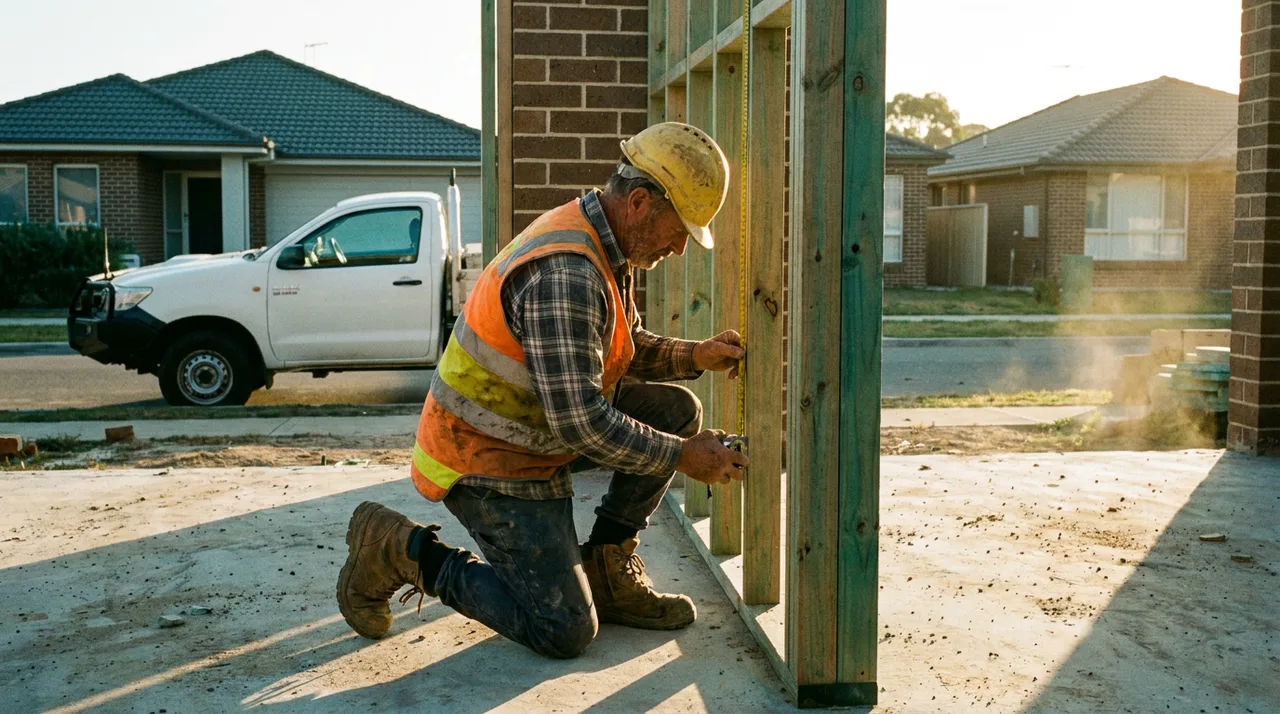
Labour Hire for Small Builders: Is It Worth It?
Honest cost-benefit guide for Sydney's small builders. When labour hire pays off, when it doesn't, and the compliance risks every 1-5 person crew faces.
Labour hire is worth it for small Sydney builders needing extra hands at least 1–2 days a week — the compliance protection alone justifies the rate premium when you have 1–5 direct employees.
- Compliance offload: agency carries workers comp, super, payroll tax, and award interpretation
- No minimum order: most small builders get ignored by large agencies — choose one that places single workers
- Injury risk: one cash-worker claim can sink a small builder; labour hire eliminates that exposure entirely
- Break-even: consistent need of 1–2 days/week tips the maths in favour of labour hire over direct casual
- Occasional use (once a month or less): direct casual or an insured sole-trader subbie may be cheaper
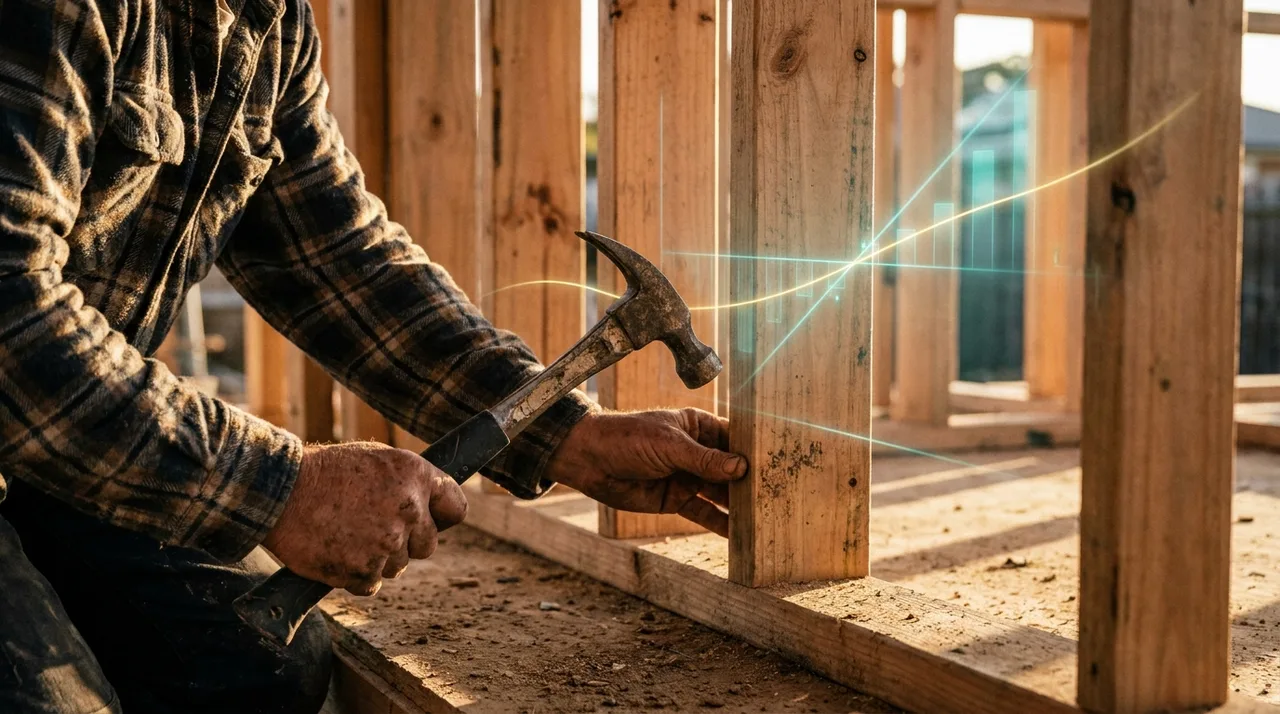
You're a builder with three blokes on the books. A renovation in Marrickville suddenly needs an extra labourer for the demo phase — three weeks, maybe four. Your usual subbie is booked. The bloke down the road who used to do cash jobs has retired. You've got a quote out, a deadline that won't move, and you're staring down the barrel of doing the demo yourself at $90 an hour of your own time.
This is the spot most small builders find themselves in. Tier-1 contractors have HR departments and labour hire panels on speed dial. You've got a phone, a ute, and a mortgage. The question isn't whether labour hire is good or bad — it's whether the rate premium is worth what you actually get back.
Let's break it down honestly. Including the bits that don't favour labour hire.
Table of Contents
- Why small builders get ignored by most agencies
- The real cost: labour hire rate vs direct hire
- Compliance protection — the case for labour hire
- The honest downside: when labour hire isn't worth it
- The break-even point for a small crew
- What to ask before you book any agency
- Frequently Asked Questions
- Get Started
Why small builders get ignored by most agencies
Walk into any big labour hire firm in Sydney and tell them you need one carpenter for two days. Watch the conversation cool down fast. Most agencies are built around tier-1 contractors — the firms ordering 20 dogmen for a tower in Parramatta, or 40 formworkers for a basement pour in the CBD.
That model doesn't work for you. You need:
- One labourer next Tuesday
- Two carpenters for a fortnight
- A formworker who knows residential, not high-rise
The big agencies will quote you minimum orders. Or they'll send whoever's left after their tier-1 clients pick first. You get the C-team. You get nobody returning your call by 4pm Friday.
This is the gap. Small residential and small commercial builders — 1 to 5 direct employees — are an afterthought for most of the industry. We're a labour hire company and we'll be straight: we built our model around this segment because nobody else was. That doesn't mean labour hire is right for every small builder. Sometimes it isn't. We'll get to that.
For more on how labour hire compares to recruitment for small operators, see our guide on labour hire vs recruitment agency.
The real cost: labour hire rate vs direct hire
Let's put numbers on the table. The Building and Construction General On-Site Award [MA000020] sets the legal minimum. Under the Building Award (MA000020), the Level 1 base rate is $24.10/hr from 1 July 2025. The casual rate (including 25% loading) is $30.13/hr. A more experienced general labourer sits higher — approximately $27.05 per hour for a general construction labourer (Level 1 with 12+ months experience). New entrants start slightly lower, around $25.90–$26.73/hour, and progress to the full rate.
That's the headline rate. It's not what the worker actually costs you.
Now compare that to a typical compliant labour hire rate in Sydney for a general construction labourer: somewhere between $48 and $65 per hour, depending on skill level, site, and notice period. See how those numbers are built on our labour hire rates Sydney page. The difference is smaller than most builders think — and in some cases, the labour hire rate is lower than direct casual once you load every cost properly.
For a deeper breakdown, see our labour hire cost breakdown pillar.
Where the workers comp number comes from
This is the bit small builders often underestimate. For House Construction in NSW, the WIC code is 411100 with a rate of 4.840% for 2025. That's applied to your full wages bill. An employer's initial premium calculation starts by multiplying the employers wages by their WIC rate to determine their average performance premium. Small employers have an APP equal to or less than $30,000.
Premiums are also rising. The average rate of workers compensation premiums in New South Wales will increase by 8% in the 2025-26 financial year. The increase is in line with a statutory direction made last year by Workplace Health and Safety Minister Sophie Cotsis, capping the average rate of increase at 8% per annum over three consecutive years (2023-24 to 2025-26).
When you use labour hire, the agency is the employer of record. In NSW it is the labour hire PCBU and not the host PCBU that provides workers' compensation to the worker. The agency carries the premium. Your wages bill stays smaller. Your premium stays lower.
Compliance protection — the case for labour hire
Here's where the maths flips hard in favour of labour hire for small builders.
A tier-1 contractor with 200 employees and an in-house safety team can absorb a workers comp claim. They have systems. They have lawyers. They have insurance stacked on insurance. You don't. One bad claim, one underpayment investigation, one sham contracting finding — any of these can end a small builder.
Workers compensation exposure
Workers compensation is a significant overhead for builders and trade contractors, particularly in sectors with higher injury risk such as residential construction, civil works and specialist trades. Premium volatility has been a growing concern, especially for small and medium operators already managing rising material costs, labour shortages and tighter margins.
If a worker on your site gets injured and they're not on a payroll with workers comp cover — yours or an agency's — the financial fallout lands on you personally. Medical bills. Lost wages claims. Common-law damages if there's negligence. Lawyers' fees. None of which your home and contents insurance touches.
WHS duties don't disappear with labour hire — but they're shared
Under The WHS Act 2011 Persons Conducting a Business or Undertaking (PCBU), including labour hire PCBUs and host PCBUs, have a primary duty of care. This means as a PCBU you need to ensure, so far as is reasonably practicable, the health and safety of labour hire workers you engage, cause to be engaged, or whose activities are influenced or directed by you.
You're still responsible for site safety as the host. But the labour hire agency carries a parallel duty. A labour hire agency must provide an induction and ensure the host PCBU also provides an induction, assess the placement to ensure the host workplace and its operations are safe before a labour hire worker starts their placement, monitor the host employer throughout the placement.
That's a second pair of eyes on your site. For a small builder running solo as the supervisor, that's not nothing. For more on shared duties, see our guide on host employer responsibilities.
Sham contracting — the cash workers trap
We're not going to pretend cash work doesn't happen on small residential sites. It does. We're also not going to encourage it, because the regulator is paying attention.
Fair Work Ombudsman Anna Booth said employers should be aware that FWO has investigations on foot into alleged sham contracting in sectors such as building and construction, and road transport. 'We won't hesitate to take enforcement action where we find unlawful activity in any sector,' Ms Booth said. 'We are pleased to be joining forces with the ATO to shine a spotlight on this unlawful practice that leaves workers worse off and can land employers in court, exposed to significant penalties.'
The penalties are real. Under the Fair Work Act, courts can impose penalties against businesses or individuals for sham contracting. The maximum penalties for each contravention are: for businesses with 15 or more employees, the greater of $495,000 or three times the underpayment amount. Smaller businesses face lower max penalties, but still in the tens of thousands per breach — and the ATO can pile on PAYG and super guarantee penalties on top.
Taxable payments annual reporting (TPAR) provides the ATO with visibility of payments made to contractors each year. Data from businesses in road freight, construction, cleaning, courier, security, IT and other industries is matched with tax returns, ABN records, super reporting and Single Touch Payroll to identify sham contracting warning signs. In 2024–25 through TPAR, the ATO had visibility of almost 185,000 businesses making payments to more than 1.4 million contractors, totalling over $507 billion.
Translation: data matching is now standard. The "he's a subbie with an ABN" defence stops working when the ABN was issued last week and he only ever invoices you.
The compliance protection argument in one sentence: A tier-1 builder can absorb a $50K compliance hit. A small builder with three direct employees often cannot. Labour hire transfers that risk to the agency for a few dollars per hour.
The honest downside: when labour hire isn't worth it
We're a labour hire company. We benefit when builders use labour hire. So when we say don't use it, take it seriously.
Scenario 1: One labourer, one day, every few months
If your need is a single hand for a single day three or four times a year, the fixed compliance overhead built into a labour hire rate is hard to justify. The agency still has to onboard the worker, run an induction, do a site assessment, carry the premium for the week. Those costs are spread over very few hours.
Better options for genuinely irregular needs:
- A sole-trader subbie with their own insurance — if they're a real subbie (own ABN, own tools, multiple clients, set their own rate), they're a contractor. Sham contracting occurs where an employee tries to mask an employment relationship as an independent contractor arrangement in order to avoid their obligation to provide employee entitlements, such as entitlements under awards, enterprise agreements and the National Employment Standards. So check the substance, not just the ABN.
- A direct casual through an ad — pay them properly under the award, give them a payslip, deduct PAYG, pay super, cover them on your workers comp policy. Slower to set up, but cheaper if you'll only use them occasionally.
Scenario 2: You already have a reliable subbie network
Some builders have spent 15 years building a network of trusted subbies who turn up when called. If that's working for you, labour hire is solving a problem you don't have. We'd rather tell you that than burn a relationship over a placement you didn't really need.
Scenario 3: Highly specialised, very rare trades
If you need a stonemason for a heritage job in Paddington, you're better off with a specialist directly than asking a generalist labour hire agency. We know our limits — concreters, formworkers, dogmen, traffic controllers, general labourers, carpenters, warehouse staff. Heritage stonework? Call a specialist.
Cash workers are not a fourth option. We're listing them here because builders ask. They're illegal in any meaningful sense — no super, no workers comp, no payslips, no PAYG. The exposure is personal. Don't do it.
The break-even point for a small crew
So when does labour hire actually pay off? Here's the rough maths for a Sydney small builder.

The rough rule
- Less than 1 day a month of consistent need — direct casual or genuine subbie usually cheaper
- 1 day a week, every week — labour hire usually wins on total cost and risk
- 2+ days a week, ongoing — strong case to convert to a direct employee (we'll help you do that — see hire labour hire worker permanently)
A worked example
Say you need a labourer for the demo phase of a renovation — 3 weeks at 38 hours a week. That's 114 hours.
- Labour hire at $52/hour: $5,928, one invoice, no payroll setup, no workers comp impact, no super to remit, no leave accrual, no termination admin.
- Direct casual at $33/hour visible rate: $3,762 wages, plus $451 super, plus $182 workers comp loading on your next premium calc, plus payroll tax if you're over threshold, plus your time setting them up in payroll (1-2 hours of your time = $90-$180), plus PPE, plus induction time. Real total: $4,500–$4,900 — if nothing goes wrong.
The headline gap is $1,000-$1,400. That's the price of risk transfer. For a single 3-week project, it might not be worth it. For a builder who runs back-to-back projects all year? It usually is.
What to ask before you book any agency
If you're going to use labour hire, the agency you pick matters enormously. The industry has cowboys. Use this checklist.
For more on how to spot a compliant agency, see compliant labour hire Sydney and labour hire Sydney transparency.
Specific questions for small-builder fit
- "What's your minimum order? Will you place a single worker for two days?"
- "Do I get the same allocator each time, or whoever picks up the phone?"
- "How fast can you confirm a worker — same day, next day, or within the hour?"
- "What's the temp-to-perm conversion fee if I want to bring this worker on permanently?"
If the answers feel like they were written for a different sized customer than you — they probably were.
A note on us — we're a labour hire company
We're Leap Labour. We're based in Sydney. We focus on small and medium builders, residential and small commercial, plus warehouse staffing. We're writing this article because builders keep asking us "is it actually worth it for someone my size?" and we'd rather give you a straight answer than a sales pitch.
If after reading this you decide labour hire isn't right for you — fine. We'd rather you make the right call for your business than book a placement you'll regret. If you decide it is right, talk to us. We work with crews of 1-5 direct employees every day. No minimum order. Names in your inbox, usually inside an hour.
We've also written about how AI is changing how we allocate workers — see AI labour hire instant replies and our take on automation as a silver bullet (spoiler: it isn't, but it speeds up the boring bits).
Frequently Asked Questions
Is labour hire worth it for a builder with only 2-3 direct employees?+
Yes, if you need extra hands weekly or even fortnightly. The compliance protection — workers comp, super, payroll tax, award interpretation — is handled by the agency. One serious injury claim on a cash worker can sink a small builder. If you only need a hand once every few months, the maths is tighter and casual direct hire might suit. See our is labour hire worth it breakdown for more scenarios.
How much more does labour hire cost than paying a worker direct?+
Expect to pay roughly $48–$65 per hour for a general construction labourer through a compliant agency in Sydney, versus an award base of around $27/hour direct. The 2025 hourly rate is approximately $27.05 per hour for a general construction labourer (Level 1 with 12+ months experience). The premium covers casual loading, super, workers comp premium (the House Construction WIC sits at 4.840% for 2025 under WIC code 411100 ), payroll tax, leave provisions, PPE, induction and agency margin. Once you load every direct-hire cost properly, the gap is much smaller than the headline numbers suggest.
What happens if a cash worker gets injured on my site?+
You're personally exposed. Cash workers don't have workers compensation cover, so the injured person can pursue you directly for medical costs, lost wages and damages. Under The WHS Act 2011, PCBUs have a primary duty of care to ensure, so far as is reasonably practicable, the health and safety of workers they engage, cause to be engaged, or whose activities are influenced or directed by them. SafeWork NSW can prosecute for breaches of WHS duties. Sham contracting penalties under the Fair Work Act can hit tens of thousands per contravention for small businesses, and the ATO can pile on PAYG and super guarantee charges.
Do most labour hire agencies even take on small builders?+
No — most chase tier-1 contractors with weekly orders of 20+ workers. Small residential and commercial builders get ignored or quoted high minimums. We work with crews of 1-5 direct employees and place single workers when that's what you need. No minimum order. See our warehouse staffing Sydney page for the same model applied to warehouse clients.
Can I trial a labour hire worker before bringing them on permanently?+
Yes. Temp-to-perm is common for small builders. You hire them through us, see how they work for a few weeks, then convert them to direct employment. A transfer fee usually applies but it's far cheaper than a bad permanent hire. See our guide on hiring labour hire workers permanently for the full process and typical fee structures.
What's the break-even point where labour hire makes sense?+
Roughly 1-2 days a week of consistent need. At that frequency the compliance overhead, recruitment time and injury risk of direct casual hiring outweigh the rate premium of labour hire. Below that — say one day a month — direct casual or a sole-trader subbie with their own insurance is often cheaper. Above 2 days a week consistently for the same person, start thinking about a permanent hire instead. For role-specific guidance see skilled vs general labourer.
Get Started
If you're a small builder in Sydney and you've got a site that needs an extra hand — call us, email us, or send the brief through the form on leaplabour.com.au.
Tell us:
- The site address (so we can match a worker who lives nearby)
- The role (concreter, formworker, dogman, general labourer, carpenter — full list on our construction labour hire page)
- The start time and expected duration
- Any tickets you need (white card minimum, plus whatever the role requires — for forklift roles see forklift licence types NSW)
Names in your inbox, usually inside an hour during business hours. No minimum order. Workers covered by our workers comp from minute one. One invoice, GST included.
If you're not sure labour hire is right for you — call us anyway. We'd rather have a 10-minute conversation about your actual situation than send you a quote that doesn't fit. That's the difference between a builder-focused agency and one that's chasing tier-1 panel deals.
External resources we've referenced in this article: