Will AI Replace Construction Workers? No — Here's Why (2026 Reality Check)
AI doesn't pick up a hammer — it absorbs the paperwork. Here's the real split: AI monitors, flags and suggests; humans decide and build. What that means for your job in 2026.
No — AI is not replacing construction workers. It's replacing the paperwork, not the people.
- What it absorbs: document checks, timesheet reconciliation, compliance monitoring, routine follow-ups — the middle-office admin grind
- How it works: AI monitors the data and flags what needs attention — a human still decides
- What stays human: pouring concrete, fixing steel, building formwork, running a crew — and every real decision in the office
- Net effect: leaner ops, instant info, nobody waiting — the good workers get more valuable, not replaced
Every few months a headline lands: "AI Will Replace 40% of Jobs by 2030."
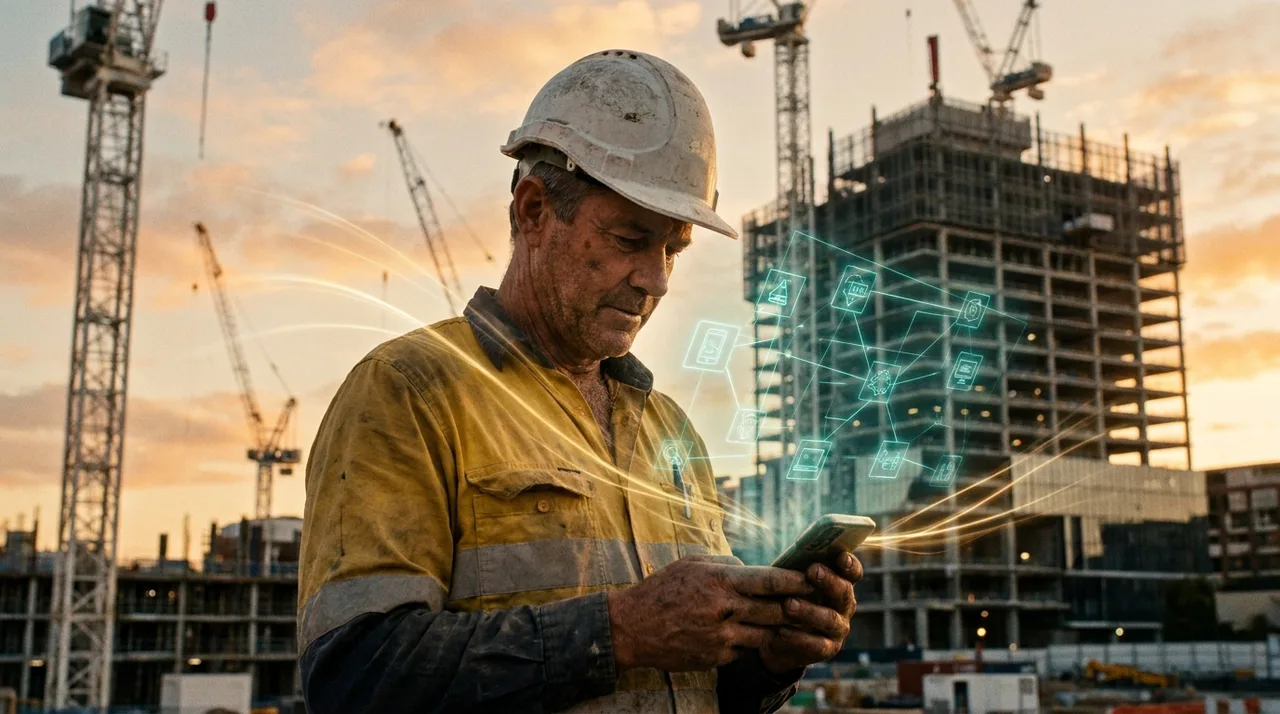
You read it on your phone at smoko.
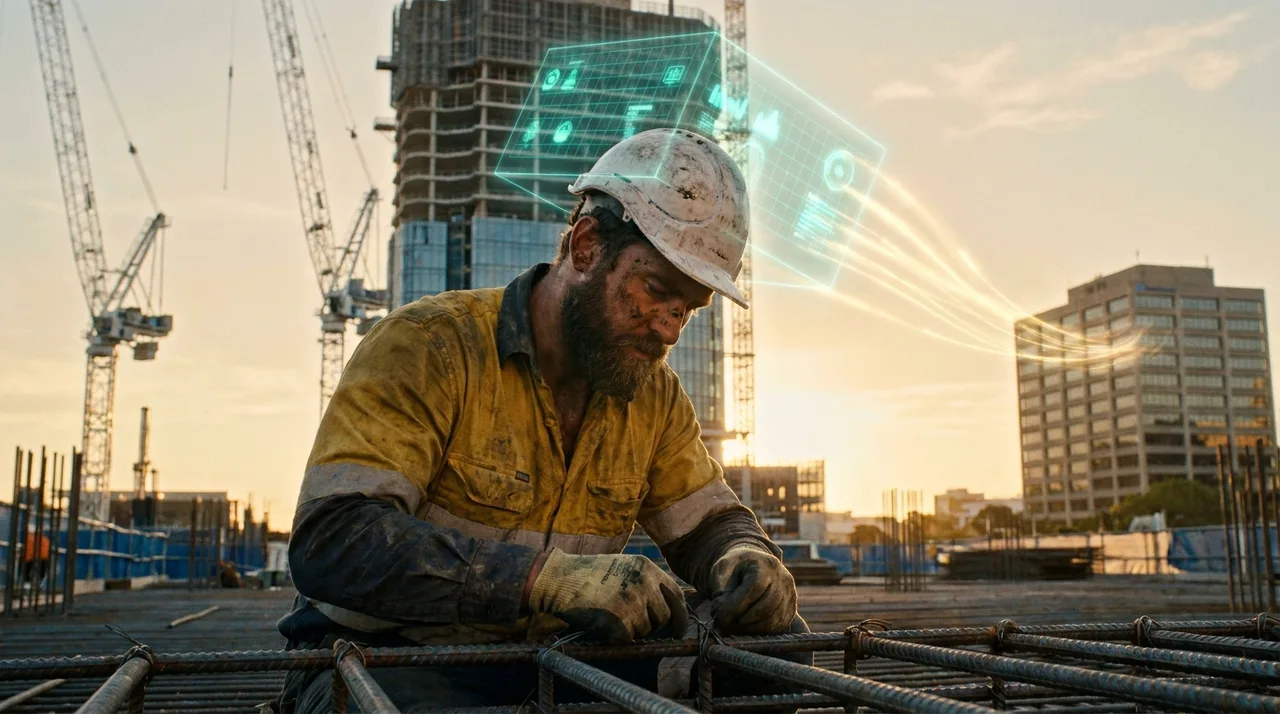
Then you look around the site. Blokes tying reo. Someone screaming at a concrete pump. A scaffolder 12 metres up in the wind.
And you think: "How?"
Fair question. For construction workers the answer is simple: it won't.
Not because AI is weak — it's powerful. But the thing it's good at is paperwork, not hammers.
AI doesn't replace the worker on the tools. It replaces the admin grind behind every shift: the document checks, the timesheet chasing, the compliance follow-ups.
That's the bit getting absorbed — and good riddance.
AI replaces the paperwork, not the people.This is a straight reality check. No hype, no panic. Just what AI actually does in construction, what it can't do, and why the good workers come out ahead.
Table of Contents
- The Three Levels: Old Way → Automation → AI
- What AI Actually Does (Monitor, Flag, Suggest)
- What AI Cannot Do (And Won't For a Long Time)
- The Real Threat Is Not AI — It Is Ignoring It
- Why This Is Good For Workers
- What Smart Workers Are Doing About It
- Frequently Asked Questions
The Three Levels: Old Way → Automation → AI
To get what AI is doing, you have to see where it sits.
There are three levels. Most of the panic comes from confusing them.
That's the whole story.
AI lives at Level 3. And Level 3 is the office, not the tools.
It monitors the admin. It flags the exceptions. It suggests the fix.
It never pours the footing.
AI monitors and suggests. Humans decide. Workers build.
What AI Actually Does (Monitor, Flag, Suggest)
Let's kill the mystery.
Here's the honest list of what AI does in construction labour hire in 2026. Read the verbs carefully.
Notice the pattern?
Every single item is paperwork or a suggestion to a human.Not one is a final decision. Not one touches a hammer, a concrete vibrator, a scaffold tube or a crane hook.
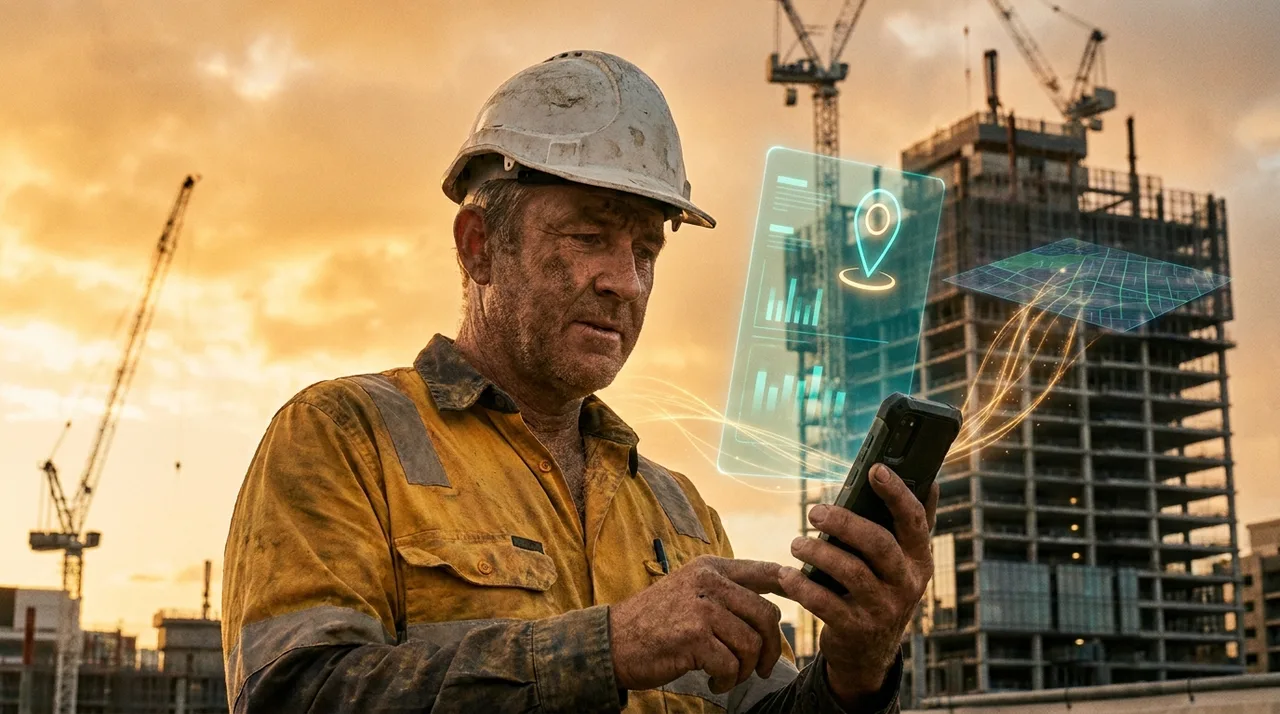
At Leap, our AI assistant Sammy reads worker queries via WhatsApp and surfaces the answer — shift details, pay status, a compliance flag. It works 24/7 and never puts you on hold.
But it has never poured a footing, fixed a length of reo, or told a dogman where to land a load.
And when something needs a real call? A human allocator makes it. 📋
The grind disappears. The decision stays human.What AI Cannot Do (And Won't For a Long Time)
Construction is one of the hardest environments on earth for automation.
Here's the gap, laid out straight:
Three things make construction almost impossible for AI and robots:
1. Every site is different.
A factory robot does the same weld 10,000 times on an identical joint.
A construction worker walks onto a new site and adapts — different soil, different plans, different foremen, different trades around them. Every single week.
AI doesn't adapt to chaos. You do.
2. The physical environment is hostile.
Dust. Water. Concrete slurry. Vibration. Extreme heat, extreme cold. Working at height. Working underground.
Robots that cost a fortune break in these conditions.
A general hand shows up and gets it done.
3. Construction needs judgement, not just data.
When a formwork panel doesn't sit right, you don't run a database query.
You look at it, tap it, feel whether it's plumb — and make a call.
That tactile, experiential judgement is decades away from any machine.
The experimental "robot bricklayer" you've seen in the news lays bricks on a flat, level surface in perfect weather. A real bricklayer works on uneven ground, in rain, around other trades, and adjusts every course to the conditions. There's a reason robot bricklayers aren't on Sydney sites.
The Real Threat Is Not AI — It Is Ignoring It
Here's the honest part.
AI won't take your job.
But workers who refuse the simple tools fall behind workers who use them.
Not because the tools are mandatory (though they increasingly are). Because they save you time — and time is money when you're paid by the hour.
Look at the three levels in action.
Worker A — resists the tools:
- Calls the office at 8am to check his shift — office is busy, calls back at 9:30am
- Fills a paper timesheet Friday arvo — supervisor's gone, chases the signature Monday
- Drives to the agency office to sign a new contract — loses half a day
- Misses a compliance reminder — White Card expired, can't work until it's renewed
Worker B — uses the tools:
- Texts Sammy at 9pm Sunday — knows his Monday shift in 10 seconds
- GPS clock-in via the app, hours flow straight to payroll, paid on time every week
- Signs his new contract on his phone in 2 minutes between shifts
- Flagged 30 days before his White Card expires — renews on time, never misses a shift
Worker B just has fewer headaches and more hours on the tools — because the admin doesn't eat his time. ⏱️
That's the real story. AI doesn't threaten your livelihood. Admin friction does. AI removes the friction.
Instant is the new fast. 🎯
Why This Is Good For Workers
When AI absorbs the middle-office grind, the maths shifts in the worker's favour.
Here's the chain:
What has NOT changed:
- You still do the work. Nobody's sending a robot to pour your slab.
- Your allocator is still a real person for anything that matters — disputes, site issues, advice. AI just hands them more time to actually help.
- Your pay is still governed by Fair Work Australia and the relevant Modern Award.
- Your rights under the Work Health and Safety Act 2011 (NSW) are unchanged.
AI handles the admin layer around your work.
The work itself — the physical, skilled, unpredictable craft of building things — stays entirely yours.
What Smart Workers Are Doing About It
The workers thriving in 2026 aren't fighting the technology. They're using it to get ahead.
The difference between a worker who gets steady shifts and one who has gaps is rarely skill.
It's availability, reliability, and how easy you are to book.
The tools make you easy to book. That's the edge. 💡
AI isn't coming for your hammer. It's coming for the paperwork — it monitors it, flags it, suggests the fix while a human decides.
The construction workers who'll do best over the next decade are the ones who let AI handle the admin while they focus on what machines can't: build things, solve problems on the fly, and show up when it matters.
Leaner ops behind them means instant info, faster pay, and an agency with the time to actually back them.
Want an agency that uses technology to make your life easier — not harder? Register with Leap and feel the difference.
Frequently Asked Questions
Will AI take construction jobs in Australia?+
No. AI takes over the paperwork — document checks, timesheet reconciliation, compliance monitoring, follow-ups. It monitors the data and flags issues for a human to decide on; it doesn't decide who works where. Physical work like formwork, concreting, steel fixing and scaffolding needs human judgement, skill and real-time adaptation. For more on the tools workers actually use on site, see Chatbots, GPS Timesheets & Digital Inductions.
What does AI actually do in labour hire?+
It watches the admin layer and surfaces what needs attention: reading worker queries and drafting replies, flagging timesheets that don't reconcile, tracking White Card and induction expiry, and suggesting which available workers fit an open shift. It monitors and suggests — a human allocator makes the call. Read more in AI & Labour Hire: Instant Replies.
Are robots replacing builders on construction sites?+
Not in any meaningful way in 2026. Experimental bricklaying robots and 3D-printed concrete exist, but they handle repetitive tasks on flat surfaces in controlled conditions. Real construction sites are messy, uneven, and change daily. Humans adapt to chaos — robots do not.
Should I be worried about AI if I work in construction?+
No. But learn the simple tools your agency and builder provide. Workers who adopt the app, GPS clock-in, chatbot queries and digital inductions get booked faster, paid sooner, and deal with less admin friction. AI removes the boring middle-office work — it's not a competitor for your role.
What construction work is most affected by AI?+
The middle-office admin grind: data entry, timesheet reconciliation, shift scheduling, compliance monitoring, routine follow-ups. On-site physical work is the least affected. If your job means physical presence, adaptation and hands-on skill — AI makes the paperwork around you easier, not your role redundant.
Will AI make construction workers earn less?+
No. AI absorbs admin and removes the delays that eat productive hours. Leaner ops mean a better margin and faster pay; instant shift confirmations mean nobody waits. Workers on the digital tools tend to get more shifts because booking them is frictionless. Instant is the new fast — and that works in your favour.
Part of the Future of AI in Labour Hire series. See also: Chatbots, GPS Timesheets & Digital Inductions and Zero Paperwork, More Pay.