

Why Good Workers Leave Sydney Sites (And the Five Basics That Keep Them)
Pay is rarely why good workers leave your Sydney site. Here are the real turnover triggers and the five basics a site manager controls: names, paying on time, clean instructions, no harassment, and backing your crew up.
Good workers rarely leave a Sydney site over the rate. They leave over five basics:
- Nobody senior knows their name after three weeks on site
- Pay lands late, usually because a timesheet was approved late
- Instructions keep changing and nobody says what is happening
- Harassment is tolerated, from a spray at 7am to jokes about an accent
- The leader does not back them up when something goes wrong
All five cost nothing to fix. What you cannot fix is the amount of work available, and workers know that.
Most builders think turnover is a pricing problem. It is almost always a treatment problem.
A worker who is known, paid on time, told clearly what to do, left alone by bullies and backed by his leader does not go shopping for another site. He has no reason to.
Pay is rarely the first reason someone leaves your site. It is the reason they give on the way out.Below are the five basics, in the order they bite, plus the honest line between what you can fix and what you cannot.
Table of Contents
- Why do good workers really leave Sydney sites?
- Basic 1: Does anyone senior know their name?
- Basic 2: Do they get paid on time, every time?
- Basic 3: Are your instructions clean?
- Basic 4: Is your site actually free of harassment?
- Basic 5: Do you back your workers up?
- Which of these can you actually fix in 2026?
- How do you know any of it is working?
- Frequently Asked Questions
Why do good workers really leave Sydney sites?
They leave over respect and treatment. Not the number on the payslip.
An exit conversation almost always lands on money because money is the socially safe answer. Nobody tells a builder "your leading hand made me feel like furniture." They say "I got offered more down the road."
Here is the part that should interest you: the real reasons are already named in NSW work health and safety guidance. SafeWork NSW lists poor support, inadequate reward and recognition, low job control and poor change consultation among the recognised psychosocial hazards at work.
Read that list again as a turnover list rather than a safety list. It is the same list.
Every reason your best labourer walked is already written down as a psychosocial hazard.That is not a compliance argument. It is a signal that these are known, documented, predictable failure modes, and predictable things can be fixed cheaply.

Notice where money sits. It does not appear in the top five.
Basic 1: Does anyone senior know their name?
Three weeks on a site and still being called mate is not a small thing. It tells the worker exactly how replaceable he is.
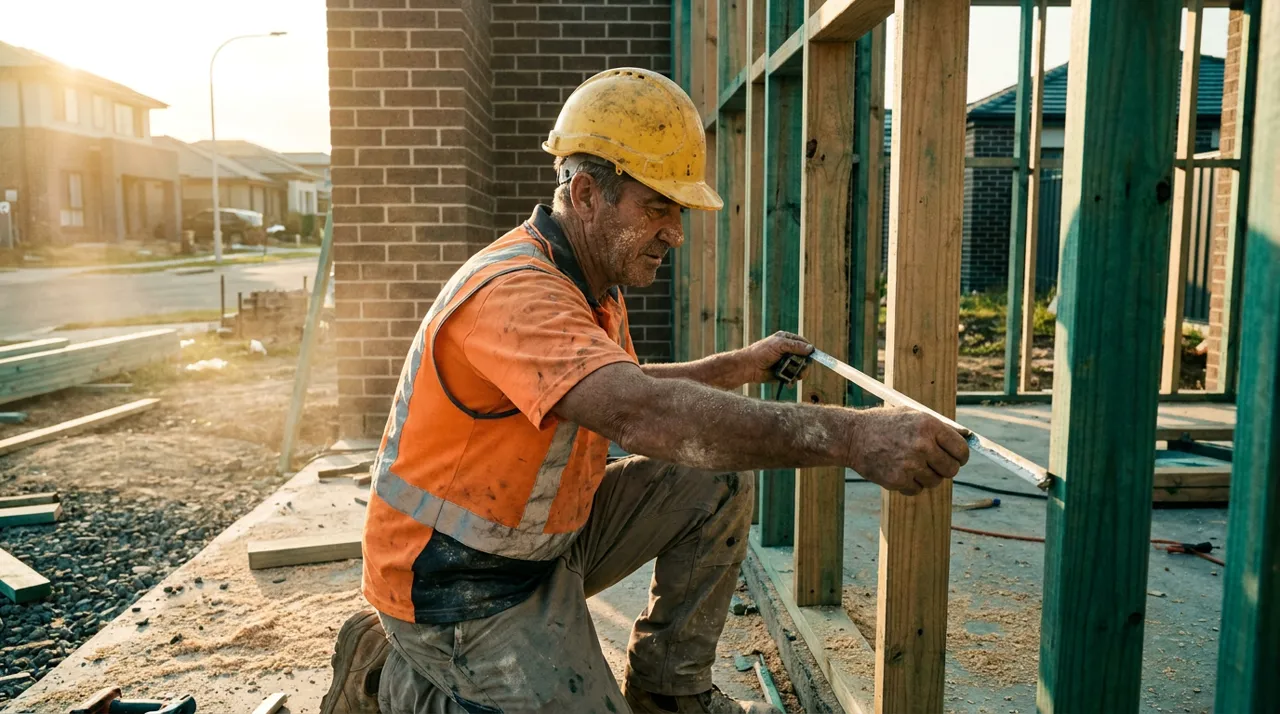
The fix is embarrassingly small. One senior person learns every name in the first week and uses it.
Not the leading hand alone. Someone the crew reads as senior. The site manager, the PM, whoever they see as the person who decides.
SafeWork NSW names inadequate reward and recognition as a psychosocial hazard in its Code of Practice for managing psychosocial hazards at work, published in 2021. Being anonymous on your own site is the entry level version of that hazard.
The name test. Walk your site tomorrow and count how many of your labour hire crew you can name without checking the sign in board. If it is under half after two weeks, that is your turnover number, and you already have it.
Nail this early and you get a second benefit. Workers you know by name are the ones you can sensibly take on permanently later instead of starting the search from scratch.
Basic 2: Do they get paid on time, every time?
This one surprises builders, because the agency pays the worker, not you. 💰
But the agency cannot pay until you approve the timesheet. A late approval on your desk is a late payment in his account.
⚠️ The quiet killer: a timesheet sitting unapproved for two days. You barely notice. He notices immediately, because rent, fuel and food are timed to that deposit. Two late weeks and he treats your site as unreliable, regardless of the rate.
Casual workers run tight. There is no buffer. Late pay is not an admin issue to a worker, it is a broken promise.
Basic 3: Are your instructions clean?
Forty minutes of standing around at 7am is not a productivity problem. It is a respect problem, and the crew reads it exactly that way.
A clean start means three things are decided before the crew walks through the gate: who is doing what, where the gear is, and who they ask when the task runs out.
Communication is the same discipline off the tools. If the start time moves, say it before knock off, not at 9pm.
There is a rule attached to that. The right to disconnect started on 26 August 2024 for employees of non small business employers and on 26 August 2025 for small business employees, per the Fair Work Ombudsman. A worker can refuse to monitor or reply to contact outside working hours where refusing is reasonable.
The Building and Construction General On site Award MA000020 preserves contact for circumstances such as notifying an emergency roster change. You are not banned from ringing. You are being told to plan better.
A crew judges how well your site is run in the first forty minutes of day one.Basic 4: Is your site actually free of harassment?
Ask the honest version of the question. Not "do we have a policy", but "what happens on my site at 7am when something goes wrong?" 🚧
On plenty of Sydney sites the answer is a spray in front of the crew. Then a joke about someone's accent that nobody pulls up. Then the same bloke copping it every week because he is the easy target.
That is not toughness. It is the fastest way to lose the workers who have options.
The good ones do not argue with you. They just stop accepting your bookings.
There is a legal floor under this too. Employers and hosts carry a positive duty under the Sex Discrimination Act 1984 to take reasonable and proportionate measures to eliminate sexual harassment and sex based harassment, enforceable by the Australian Human Rights Commission since 12 December 2023. It is a duty to act first, not to respond after a complaint.
Bullying and harassment also sit in the SafeWork NSW psychosocial hazard list, which means they are a WHS matter on your site, not just an HR one. A safe, discrimination free site is a baseline obligation for a host, and we set the rest of them out in host employer responsibilities.
Practical version: correct the work, never the person, and never in front of the crew.
Basic 5: Do you back your workers up?
This is the one that decides whether a good worker stays for six months or six weeks.
Something goes wrong. A task gets built to the wrong line, a delivery lands in the wrong bay, an instruction turns out to have been half an instruction.
The leader either wears his share of it or hangs the worker out. The whole crew watches which one you do.
Backing someone up is not going soft. It is owning the part of the failure that was yours, in front of the same people who saw the failure.
SafeWork NSW lists poor support as a recognised psychosocial hazard for exactly this reason. A worker who cannot rely on his leader has no way to control his own risk.
The crew is not judging whether you get things wrong. They are judging who you blame when you do.Which of these can you actually fix in 2026?
Here is the honest split, and it matters more than any tactic above.
Five of the six triggers have a fix that costs nothing. Names, pay on time, clean instructions, no harassment, and backing your people up are all attention, not budget. None of them needs a new supplier or a higher rate.
The sixth one is different. You cannot manufacture work that does not exist. When the job is quiet, the hours dry up, and no amount of goodwill changes that. The business has to stay profitable or there is no site at all.
📋 What workers actually accept. Crews on Sydney sites understand a quiet month. They have all lived through one. What they do not accept is being left in the dark about it, being messed around while it is quiet, or being treated as disposable the moment the work slows down.
So the volume of work is not always in your control. The relationship always is. And the relationship is the cheap half.
You cannot always give a worker more hours. You can always give him a reason to come back when the hours return.
When it is quiet, the move is the honest one: tell them early, tell them straight, and tell them where they sit when it picks up. A worker who was told the truth in a quiet month answers your call first in a busy one.
How do you know any of it is working?
You will feel the basics inside two to three weeks, because they change what the crew experiences on the very next shift.
Track three things. None of them needs software.
- Return rate: what share of last week's crew is back this week
- Requests by name: how often your leading hand asks the agency for a specific worker
- Silent exits: workers who simply stop accepting bookings without a conversation
That third one is the honest metric. A silent exit is a retention failure you never got told about.
This is where a labour hire partner earns its place. We see the pattern across sites, so we can tell you when a worker went quiet after a specific shift, and our systems flag it for a human to chase. The AI watches the pattern and raises it. The allocator makes the call and decides what to do. Never the other way around.
📋 What we can and cannot tell you. We can tell you a worker stopped accepting bookings and roughly when the pattern changed. We cannot tell you what he told his mates. The name on day one and the timesheet approved on time still have to come from your side of the fence.
Get Started
You do not need a new supplier to fix most of this. You need names, pay on time, clean instructions, a site without harassment, and a leader who backs his crew. 💡
The parent guide to leading a labour hire crew in Sydney covers the wider management picture, and we go through whether the model stacks up at all in is labour hire worth it.
If you want a crew that shows up consistently enough for those five basics to compound, tell us what your site needs and we will hold the same faces on it. Start with our labour hire rates and coverage page.
Frequently Asked Questions
Why do good workers actually leave Sydney construction sites?+
Most leave over respect and treatment, not the number on the payslip. The common triggers are nobody senior knowing their name, pay landing late, instructions that keep changing, a site where spraying people is normal, and a supervisor who does not back them when something goes wrong. Pay is the reason most workers give on the way out because it is the safest one to say.
What are the five basics that keep a good worker on your site?+
Learn and use their names. Make sure they get paid on time, which on a labour hire crew means approving timesheets by the cut off. Give clean instructions and keep communication straight. Run a site with no harassment or bullying. Back your workers up when something goes wrong instead of hanging them out. All five cost nothing but attention.
Does approving timesheets late really affect worker retention?+
Yes. A labour hire worker is paid by the agency, but the agency cannot pay until the host approves the timesheet. A late approval means a late payment, and a late payment means the worker starts taking other calls. Approving by the cut off is the cheapest retention move a site manager has after learning names.
What does no harassment mean in practice on a Sydney site?+
No spraying, no personal abuse, no jokes about accent, race or religion, and no one being singled out. Employers and hosts also carry a positive duty under the Sex Discrimination Act 1984, enforceable by the Australian Human Rights Commission since 12 December 2023, to take reasonable steps to eliminate sexual harassment and sex based harassment rather than wait for a complaint.
What does it mean for a leader to back up a labour hire worker?+
It means that when a task goes wrong, the person who gave the instruction owns their part of it in front of the crew. A worker who gets blamed for a bad instruction learns that your site is not safe to speak up on. SafeWork NSW lists poor support as a recognised psychosocial hazard, and it shows up as turnover well before anyone raises money.
What if I genuinely have no work for the crew next week?+
Then say so early and honestly. You cannot manufacture work that does not exist, and the business has to stay profitable. Workers understand a quiet month. What they do not forgive is silence, being messed around, or being treated as disposable while it is quiet. The work volume is not always in your control. The relationship always is.
Can I contact my labour hire crew after hours about tomorrow's start?+
You can make contact, but the worker can refuse to monitor or reply if refusing is reasonable. The right to disconnect started on 26 August 2024 for employees of non small business employers and on 26 August 2025 for small business employees. The Building and Construction General On site Award MA000020 preserves contact for things like notifying an emergency roster change. In practice, send the change before knock off and you never test the rule.
How long does it take to see turnover improve on a site?+
Two to three weeks for the basics, because they change what the crew experiences on the very next shift. Paying on time and clean instructions show up almost immediately. Being known by name and being backed up compound over a month or two.