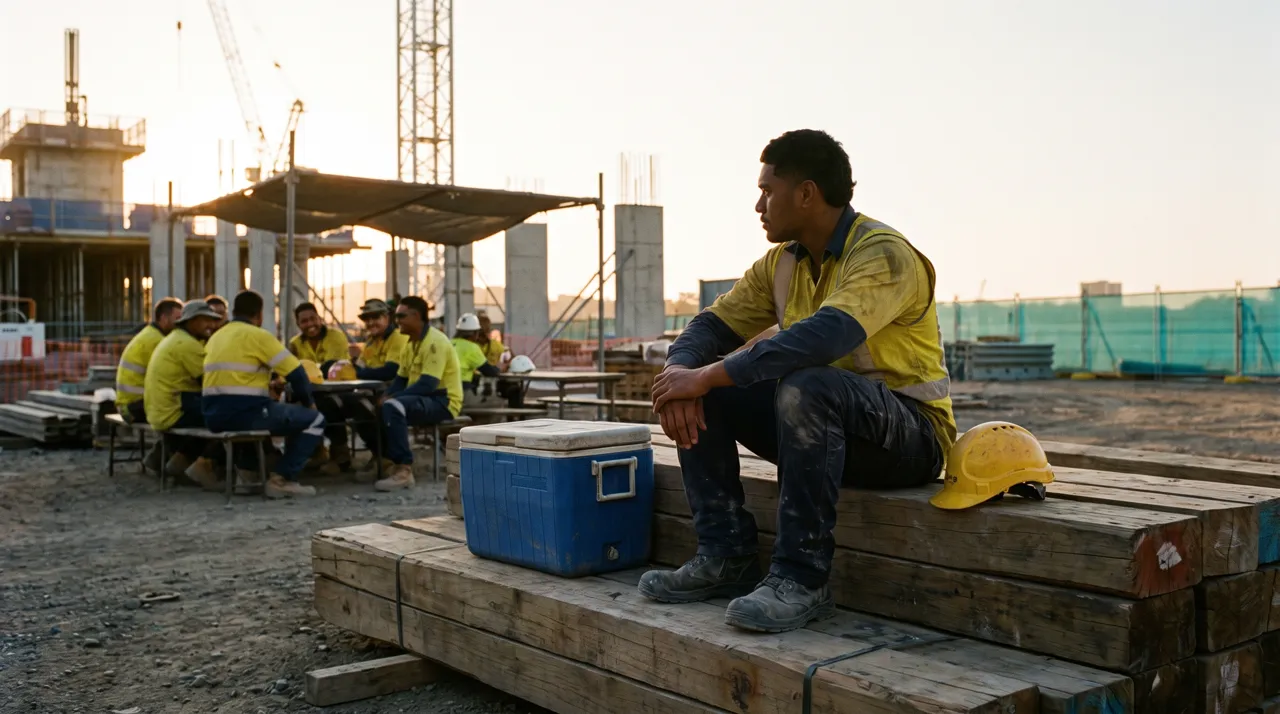

The Two Week Test: Keep, Move or Release a Labour Hire Worker
Attitude shows on day 1 and 2. Pace and skills take two weeks. How to spot a bad worker fast, a good worker who is the wrong fit, and the day-14 keep, move or release call.
A new labour hire worker gets two checks, then one of three calls: keep, move or release.
- Day 1 and 2: attitude. Is he a good worker? Late with no call, phone out, waiting to be found, arguing with safety: flag it to the agency now
- Day 14: pace and skills. Is he a good fit? Week one pace is clouded by your site, week two is the honest read
The five week-two signals:
- Does the same correction come back?
- Does he keep a steady pace across the day and the week?
- Does work continue when nobody is watching?
- Does he ask before guessing on things that matter?
- Has your crew started using him without being told to?
📋 Every site makes this decision. Most make it on Wednesday of week one.
A new bloke arrives on a morning when nobody has a task ready. He stands around for an hour. By smoko, someone has decided he is "not the one".
That is not a decision. That is a first impression wearing a hard hat.
Standing around with no task tells you about your site. How he behaves while he waits tells you about him. That is the first check, and it takes two days.
Here is a framework that survives contact with a real site.
How can you tell fast that he's not a good worker?
Attitude shows on day 1 and 2. Skills can be taught and pace builds up. Attitude walks through the gate with him.
None of these depend on your induction. A worker can be confused on day one and still be keen, polite and asking questions. Confused is normal. Careless is not.
The safety one is not just attitude. Under the WHS Act 2011 (s28), every worker must take reasonable care and follow reasonable safety instructions (SafeWork NSW, 2026).
A slow day one is a site problem. A careless day one is a worker problem.See two or three of these by day 2? Ring the agency then, not on day 14. Be specific about what you saw, and let the agency handle it with the worker.
Why do pace and skills need two weeks?
Because in week one, most of what slows a worker sits on your side of the fence.
Under Leap's 2026-27 Terms of Hire, the host provides the site hazard briefing and induction, and only puts workers on tasks they are qualified for. Those are host decisions, and week one is mostly a test of them.
Four of those five are you. A worker who looked slow on a site where nothing was ready has told you nothing about himself.
If your last three replacements all went the same way, the common factor is not the workers.Most of those four are set the day before, when the work order is written.
What should you watch for in week two?
By week two the excuses are gone on both sides. He knows the gate, the crew and the routine. Now you can read his pace and skills.
Signal four has the same legal edge as the day-one safety flag (WHS Act 2011, s28). A worker who guesses on an exclusion zone is not just slow. He is a risk.
Signal five is the one experienced supervisors trust most. It is not your judgement. It is the judgement of the people who have to work next to him.

What looks like a signal but is not?
Three things feel like evidence and are not.
- Speed in the first hours. A fast start on an unfamiliar site is usually someone guessing confidently.
- How much he talks. Quiet is not disengaged, and chatty is not lazy.
- One bad day. A pattern across week two is a signal. A single Tuesday is weather.
One exception. If a worker who was solid in week one drops off in week two, that is a change, not a fit problem. Read how to spot a worker who is struggling before you make any call.
What if he's a good worker but not a good fit?
This is the call most sites get wrong. Good attitude, honest effort, and it still is not working. That is a fit problem, not a worker problem.
The most common reasons we see:
- Wrong skill mix for the task. A strong general hand on a job that really needs formwork or machinery experience.
- Pace suited to different work. A steady, careful worker on a fast-turnaround crew, or a fast mover on detailed finishing.
- The site or crew dynamic. Some crews talk constantly, some barely talk. Some people work best on their own.
- Travel and start time. A site an hour and a half from home, or a 6am start he cannot reach reliably on public transport.
- The physical demands. Repetitive heavy lifting all day suits some bodies and wears others down.
- He wants different hours. Full weeks when you offer three days, or nights when you run days.
Under Leap's 2026-27 Terms of Hire, the host only puts workers on tasks they are qualified for, and work orders go through the Leap allocator, not directly to the worker. So the fix is one phone call: ask the agency for a move, and say exactly which reason it is.
Release a good worker for a fit problem and you lose him. Move him and somebody else gets a great worker.How do you make the day-14 call: keep, move or release?
Three outcomes. The middle one is the one most sites forget exists.
| Criteria | Keep | Move | Release |
|---|---|---|---|
| What you saw | Corrections stick, works unwatched, crew uses him | Good worker, wrong job or wrong site | Same corrections, stops when unwatched, guesses |
| What you tell the agency | Ask for him by name, flag the role ongoing | Good worker, wrong fit, and exactly why | Specific behaviours, not 'not suitable' |
| What it costs you | Nothing. This is the outcome you wanted | One handover | A fresh induction and another two weeks |
| What the worker gets | A run of work on a site he knows | A better-matched placement | Honest feedback he can act on |
Highlighted cells = best option per criterion
Keep
Ask for him by name and mark the role ongoing, so the agency protects the continuity.
If you already know you want him for good, that is a separate conversation. Under Leap's 2026-27 terms, direct hire is not open for the first 500 worked hours without Leap's approval. The full mechanics are in hiring a labour hire worker permanently.
Move
Move is not a soft option. A good worker on the wrong site is a real and common outcome.
Treat it as a failure and you cost someone his standing over a matching problem. Tell the agency it is fit, not performance, and name the reason from the list above, so he gets redeployed somewhere that suits him.

Release
The week-two signals point the wrong way, consistently. Ring the agency first, before the worker hears anything.
You are ending an assignment, not employment. How to do that cleanly is covered step by step in ending a worker placement well.
When your own crew starts asking him for a hand unprompted, the decision has been made for you.What should you tell the agency?
The reason, specifically. It is the most useful thing you can give an allocator.
"Not suitable" changes nothing. She has no idea what to filter for, so you get a similar person and repeat the fortnight.
"Needed the same instruction three times on the lifting method, and stopped when the leading hand went upstairs" changes who gets sent next.
A vague reason buys you the same worker with a different name.A replacement gets moving once the agency has that sentence. Without it, the allocator is guessing too.
Day 1 and 2: read attitude, flag the bad ones early. Day 14: read pace and skills on five signals. Same correction twice, steady pace, work unwatched, ask versus guess, crew adopts him. Good worker, wrong fit? Move, don't release. Then say specifically why.
Why is two weeks the cheap option?
🎯 Every release costs you a fresh induction, a slow first hour and another fortnight of uncertainty.
It also costs a worker a placement, sometimes for a reason that was never his.
Two days for attitude, two weeks for the rest is not a soft policy. It is the cheapest version of this decision available.
Want the right worker matched the first time? Book casual labour hire in Sydney and tell us what the role actually involves.
Related reads worth your time:
- Managing a construction crew you did not hire
- Hiring for attitude: spotting the rough gem on site
- The difficult conversation script for a worker who is not working out
Frequently Asked Questions
How long should you give a new labour hire worker before deciding?+
Two checks. Attitude shows on day 1 and 2, so a worker with the wrong attitude can be flagged to the agency straight away. Pace and skills take longer to read, so the keep, move or release call comes around day 14.
How can you tell fast that a labour hire worker is not a good worker?+
Watch attitude on day 1 and 2: turning up late without a call, phone out on the job, waiting to be found instead of asking for the next task, arguing with or ignoring safety instructions, long disappearing breaks, and refusing the less pleasant work. These are behaviour, not site problems.
What should you judge a labour hire worker on at two weeks?+
Pace and skills, read through five signals: whether the same correction comes back, whether he keeps a steady pace, whether work continues unwatched, whether he asks before guessing, and whether your crew has started using him. Not first impressions and not first-hour speed.
Why not judge pace and skills in week one?+
Because most of what slows a worker in week one is site-side: no ready task, an incomplete induction, an unclear finish time, or a job described differently from what it turned out to be. Attitude is the exception, and it shows on day 1 and 2.
What are the three outcomes of the two week test?+
Keep, move or release. Keep means ask for him by name and flag the role ongoing. Move means a good worker on the wrong job, so the agency redeploys him. Release means the week-two signals point the wrong way and you end the assignment cleanly.
Can I hire the worker permanently if he passes the two week test?+
Possibly, but not straight away. Under Leap's 2026-27 terms a host cannot directly hire a worker for his first 500 worked hours without Leap's approval, and permanent release needs the worker's consent and Leap's written approval. See hiring a labour hire worker permanently.
Should you tell the agency why you are releasing someone?+
Yes, specifically. A vague request teaches the agency nothing and you get a similar person next time. A specific reason changes who gets sent and is the most useful thing you can give an allocator.
What if the worker is good but the fit is wrong?+
Say that, and ask the agency for a move rather than a release. The common reasons are the wrong skill mix for the task, a pace suited to different work, a clash with the crew, a site too far or a start too early, the physical demands, or wanting different hours. None of them make him a poor worker.