

The Labour Hire Orders We Say No To (and What a Good Order Looks Like)
Sites that miss our contract minimums, cash jobs, impossible orders and jobs too small to hire for. The 4 Sydney labour hire orders we decline, and what a good order has.
We decline client orders for four reasons:
- Below our contract minimums: no induction, no toilet or running water, an unsafe workplace, or tasks the worker isn't qualified for
- Cash jobs: every Leap worker is paid through payroll, with 12% super
- Impossible orders: a location we can't get to, or work we judge unsafe or physically impossible for our worker
- Too small: well under the 4-hour minimum, or nothing to do with the work we cover
Each one protects the client as much as the worker.
Taking an order we can't deliver isn't service. It's a wasted shift with an invoice attached.🚧 A builder rings at 3pm. Two labourers, 6am start, cash is fine, and the amenities "should be there by Wednesday."
That sounds like an easy yes. It's actually two of the four reasons on this list in one sentence.
Most agencies take almost any order. It looks like keenness. It's usually the client who pays for it later.
So here are the orders we turn down, why, and what the order looks like when we say yes straight away. It's a fair test to run on any Sydney agency, including us.
This post is about the orders we decline from clients. For the workers we decline, see why we turn down workers.
Why do we decline a site that misses our contract minimums?
Because our Terms of Hire set a minimum every host site agrees to before a worker arrives. If a site can't meet it, the order isn't compliant with our contract, so we don't fill it.
The minimum is short:
- A site induction and hazard briefing before work starts
- Basic amenities, including a toilet and running water
- A safe, discrimination-free and harassment-free workplace
- Only tasks the worker is qualified for
None of this is exotic. It mirrors what the law already asks. Under the Work Health and Safety Act 2011 (NSW), the agency and the host are both PCBUs owing a duty to the same worker, and section 46 requires them to consult, cooperate and coordinate. That still applies in 2026.
The last point catches the most orders. If the job needs a ticket or licence, we match a worker who holds it. We won't send someone unqualified "to help" because the right person isn't free.
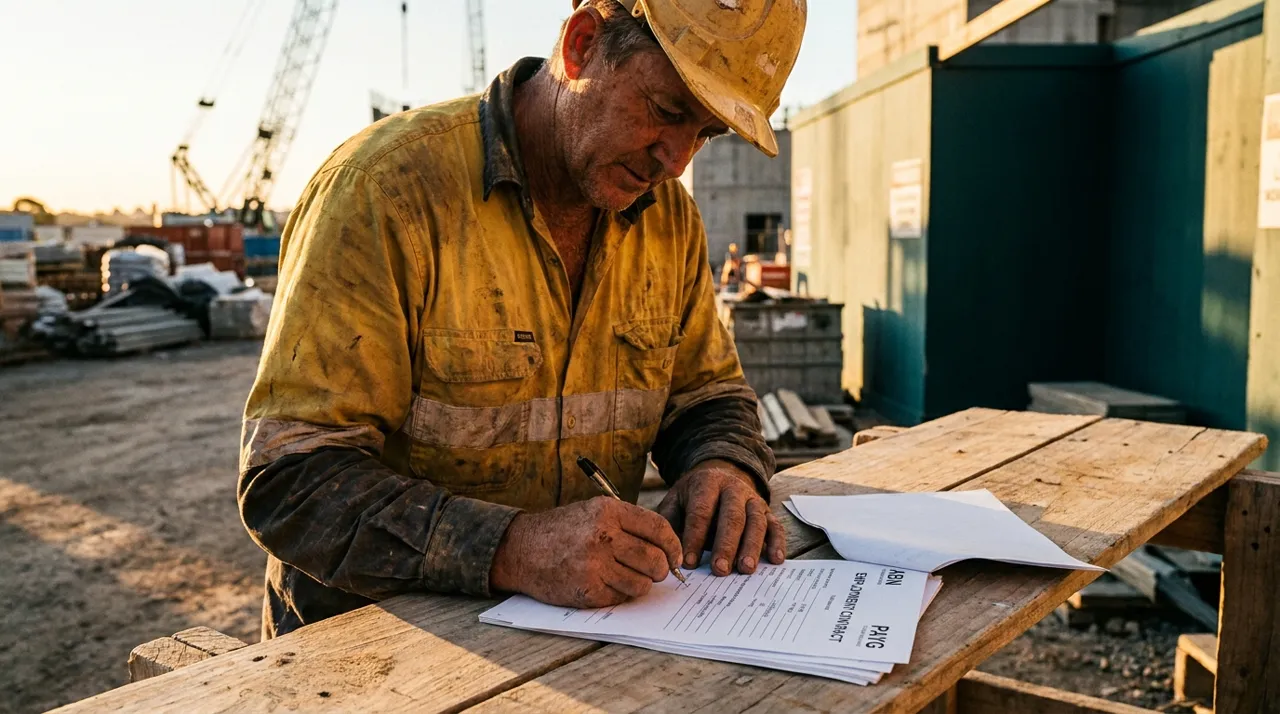
For the full split of who owns what, see host employer responsibilities.
Why do we decline cash jobs?
Because every Leap worker is paid through payroll. No exceptions.
Single Touch Payroll reporting to the ATO is mandatory for every employer pay run, and super at 12% applies from 1 July 2025. Calling a worker a contractor to avoid that is sham contracting under section 357 of the Fair Work Act.
"Cash is fine" isn't flexibility. It's a job we don't take.What cash really costs a site is covered in the real cost of a cash-in-hand worker.
Why do we decline impossible orders?
Because sending a worker into a job that can't be done safely, or can't be done at all, helps nobody.
We look at three things:
- The location. A site our workers can't physically get to at the start time, or can't get into once they arrive.
- The safety. Work we judge unsafe for our worker, whatever the paperwork says.
- The physical ask. A task one or two people can't realistically do: the load, the height, the hours, the conditions.
That judgement is ours to make. Under section 19 of the WHS Act 2011 (NSW), a PCBU must ensure the health and safety of its workers so far as reasonably practicable. Our name is on the payslip, so the duty is ours too.
⚠️ If we think a job is unsafe or physically impossible for one of our workers, we'll tell you why on the phone. Sometimes a change to the scope, the crew size or the start time fixes it. Sometimes it doesn't, and we'd rather lose the order.
Why do we decline jobs that are too small?
Because a contract has a minimum for a reason.
We get calls from people who need a hand moving furniture or collecting rubbish for an hour or two. Fair enough. But Leap's minimum hire is 4 hours per shift, and a job like that is often well under it, or has nothing to do with the construction and warehouse work we cover.
For a job that small, collecting a contract and arranging the logistics isn't worth it for us. It isn't worth it for the person paying, either.
So sometimes we do something simpler: we put a worker in touch with the person directly, and they sort the job out between them.
A ninety-minute job doesn't need a labour hire contract. It needs one capable person and a phone number.What does a good labour hire order look like?
Short. Specific. Easy to say yes to.
For general labourers, the standard is same day or next day once the order is clear. Skilled and ticketed roles take longer, and we'll tell you honestly where we stand. What slows any order down is missing information, not the phone call.

Below our contract minimums. Cash. Impossible. Too small. Four reasons, and every one is cheaper to hear on the phone at 3pm than to discover on site at 7am.
Why is saying no good for the client?
📋 Saying no costs us the order. It's still the right call, because the alternative costs the client a day and a worker a wasted morning, and we'd get blamed for both anyway.
If you're comparing Sydney agencies, ask each one what they decline. Our dodgy agency red flags list covers what the answer should sound like.
Got a job and not sure if it clears the bar? Tell us the task, the site and the start time, and we'll tell you straight. Start with our casual labour hire in Sydney page, or see how labour hire rates are built.
Frequently Asked Questions
Do labour hire agencies turn down orders?+
Reputable ones do. An order that can't be filled properly costs the client a wasted shift and can put the worker at risk, so declining it is the cheaper outcome for both sides.
Why would a labour hire agency refuse an order?+
We decline four kinds: a site that can't meet the minimum conditions in our contract, a cash job, an order that is impossible, unsafe or physically impossible for the worker, and a job too small to justify a contract.
What does a host site have to provide a labour hire worker?+
Under Leap's Terms of Hire: a site induction and hazard briefing before work starts, a toilet and running water, a safe, discrimination-free and harassment-free workplace, and only tasks the worker is qualified for.
Can a labour hire worker be paid cash?+
No. Employers must report pay through Single Touch Payroll and pay 12% super from 1 July 2025. Every Leap worker is paid through payroll, so a cash job is one we decline.
Why won't a labour hire agency take a very small job?+
Leap's minimum hire is 4 hours per shift. When a job is well under that, or outside the work we cover, the contract and logistics cost more than the job is worth to either side.
What does a good labour hire order include?+
A named supervisor who answers the phone, a clear task list, the tickets the work needs, the site address and start time, the induction and PPE arrangements, and at least 4 hours of real work.
Should a builder be worried if an agency says no?+
The opposite. An agency that takes every order regardless of whether it can deliver is showing you how it will handle yours when it goes wrong. Ask any supplier what they decline and why.