

NSW Mental Health Workers Comp Claims for Sydney Tradies (2026)
NSW psychological injury workers comp changed on 1 July 2026. The closed list of relevant events, the reasonable-action exclusion, and the evidence a Sydney tradie needs.
For injuries reported on or after 1 July 2026, a primary psychological injury in NSW is compensable only if all three are true:
- It was caused by a "relevant event" on a closed statutory list
- There is a real and direct connection to your employment
- Employment was the main contributing factor
The closed list: violence or threat of violence, serious criminal conduct, witnessing a traumatic incident or a dead or seriously injured person, death of a person in your care, vicarious trauma, bullying, sexual harassment, racial harassment, excessive work demands.
No compensation where the injury came from the employer's reasonable action, including demotion, performance appraisal, retrenchment and dismissal.
Source: Workers Compensation Legislation Amendment (Reform and Modernisation) Act, commenced 1 July 2026.
Australian male construction workers die by suicide at about 1.8 times the rate of other employed men: 25.7 deaths per 100,000 against 14.3, pooled across 2001 to 2021 in national coronial data (King et al., Labour and Industry, 2026, commissioned by MATES in Construction). The rate has been falling faster in construction than in other industries, but the gap has not closed. What you are feeling on site is real.
Whether the workers comp scheme pays for it is a separate question, and since 1 July 2026 it is a harder one.
Saying you have a psychological injury does not mean the claim gets accepted. It means the claim gets tested.This guide is for the labour hire tradie who is not coping: the formworker, dogman, scaffolder, picker, TA.
It is written soberly on purpose. You deserve the real version of this process, not the encouraging one.
If you need to talk to someone right now, ring Lifeline on 13 11 14 or MATES in Construction on 1300 642 111. Both are free, 24/7, and neither has anything to do with your claim.
Table of Contents
- What changed on 1 July 2026
- What counts as a relevant event
- Why performance management is not a claim
- Who has to diagnose you
- The paper trail you need
- Who is your employer if you are labour hire
- Honest: Leap is a labour hire company
What changed for NSW psych claims on 1 July 2026?
The Workers Compensation Legislation Amendment (Reform and Modernisation) Act passed on 4 February 2026, was assented on 11 February 2026, and commenced 1 July 2026.
It replaced the old, broad test with a narrow one. 🚧
A primary psychological injury is now compensable only where it was caused by a "relevant event", with a real and direct connection to employment, and with employment as the main contributing factor.
Read that middle phrase again. Not "a substantial factor". The main one.
Any advice about NSW psych claims written before February 2026 is now out of date, including advice you will still find online.If your injury was reported before 1 July 2026, the older pathway still applies to you: a diagnosis from a doctor, documented in a Certificate of Capacity using correct medical terminology.
Source: Personal Injury Commission, "Workers compensation changes to commence 1 July 2026" (pi.nsw.gov.au). The reforms exclude exempt workers.

What counts as a relevant event?
This is a closed list. That is the single most important thing on this page.
If what happened to you is not on that list, the claim does not get up.
That is true no matter how real the injury is, how bad the workplace was, or how much a doctor agrees with you.
The injury can be genuine and the claim can still fail, because the scheme now tests the cause and not the suffering.Three of those nine carry most Sydney site claims: bullying, racial harassment, and excessive work demands.
And each of them still has to clear the other two hurdles: a real and direct connection to the work, and employment as the main contributing factor.
Source: Workers Compensation Legislation Amendment (Reform and Modernisation) Act 2026; see also the SIRA reform FAQs.
Why does performance management not count as a claim?
Because the Act expressly excludes it. This is the part most workers find out too late.
There is no compensation where the injury arose from the employer's reasonable action taken in the normal course of employment.
A worker who is distressed about being performance managed does not have a claim on that basis. Neither does a worker who broke after being sacked.
The word doing the work is reasonable. If the "performance management" was actually a foreman running a bullying campaign with a paperwork wrapper, that is a different fact pattern.
But you will have to prove which one it was, and the burden sits with you.
Source: reasonable-action exclusion as it applies under the reformed NSW scheme from 1 July 2026.
Who has to diagnose you for the claim to run?
Not you. A doctor, and in practice a psychologist or psychiatrist supporting the diagnosis.
Your own account of what happened is evidence of the events. It is not evidence of the injury.
The medical side runs like this:
That one-year tail is worth knowing before you plan around a claim. Treatment is not open-ended for most psychological injuries.
What paper trail do you need before you claim?
Start it the day it starts, not the day you claim. This is where most site claims are won or lost.
If you are being harassed or bullied, report it to your boss in writing. Text or email, never a corridor conversation.
A complaint you made at the time is worth more than the best account you can give a year later.For bullying, harassment and excessive-demands claims, the worker must complete and sign the SIRA Worker's Injury Claim Form and include the required supporting information.
The kind of material that helps:
- Dates of incidents, even approximate ones
- Written reports you made to your supervisor or agency, kept outside their systems
- Emails and messages, screenshotted before anyone deletes them
- Names of foremen, host PMs and workmates who saw it
- Your doctor's certificate and GP visit dates naming the work issue
⚠️ The specific contents of SIRA's "required supporting information" sit in SIRA guidance, and it changes. Do not treat the list above as SIRA's official checklist. Get the current requirements from sira.nsw.gov.au or from icare's psychological injuries page before you lodge.
A note on order: report to the employer, see the doctor, then lodge. Each step creates the record the next one relies on. 📋
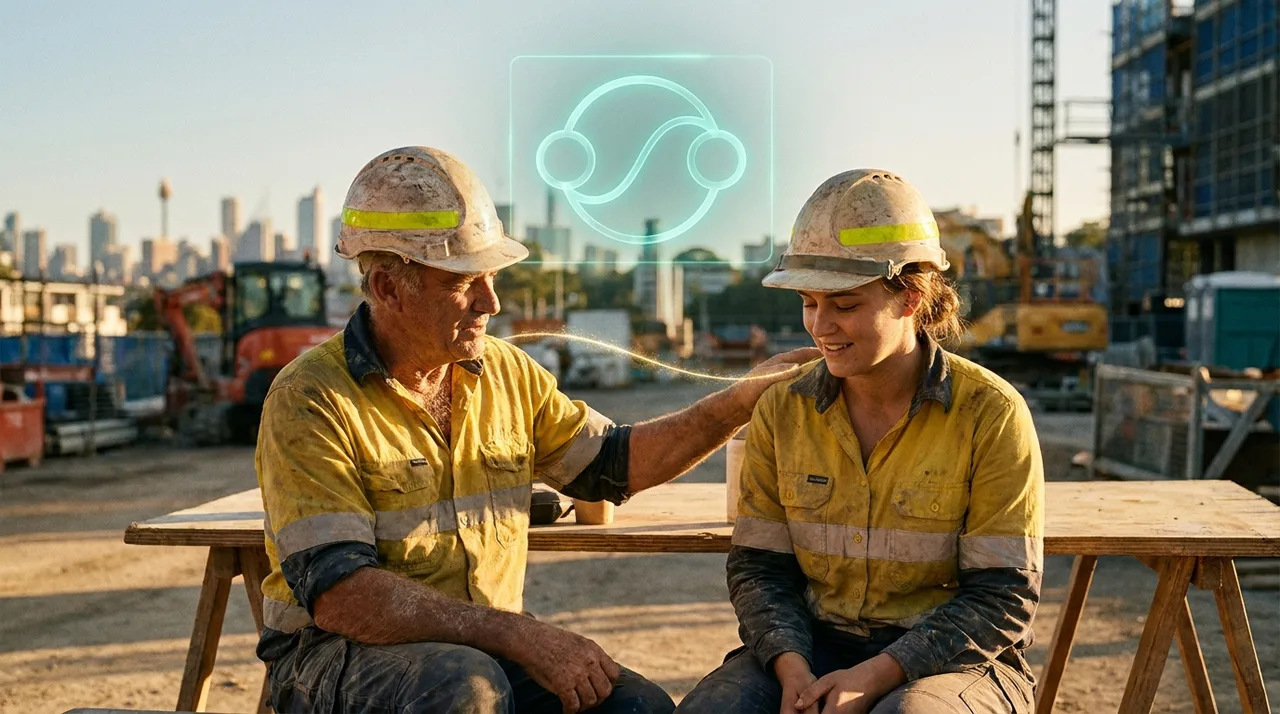
Who is your employer if you are labour hire?
The agency, not the builder. Your claim goes through your legal employer.
If you found the gig through a Sydney job board or an agency call, the agency is your employer for workers compensation.
Their insurer pays weekly entitlements. Their file, their nominated treating doctor.
The host builder's conduct still matters, on a separate track. The host owes you duties under the Work Health and Safety Act 2011 regardless of who pays you.
Bullying by a foreman on the host's site can be investigated by SafeWork NSW as a WHS matter even if your comp claim is contested.
If the agency tells you it "does not do psych claims", that is not a thing. Lodge anyway, and check your options with icare.
For the host side of the duty, read our host employer responsibilities guide. If you are weighing up which agency to sign with, our labour hire compliance guide covers what a clean operator looks like.
Honest: Leap is a labour hire company
Straight up, Leap Labour is a Sydney labour hire agency. We have skin in this game.
By law we are your legal employer while you are out on a job. Workers comp, super, PAYG and tax all run through us.
If you cop a psychological injury on one of our placements, you lodge through us, the same as a broken hand.
What we do:
- We do not blacklist workers for lodging claims
- We do not send workers back to hosts reported for psychosocial breaches
- We pull the worker, ring the host, and either fix it or stop supplying
What we will not do is tell you a claim is easy. Since 1 July 2026 it is not, and pretending otherwise would set you up to be blindsided.
Get the conversation started
If you are not coping, that comes first and it is not conditional on any claim. Lifeline 13 11 14. MATES in Construction 1300 642 111, 24/7, free, builder-to-builder.
If you are between agencies and want to land somewhere that does not punish you for raising things: get on our books in minutes
Frequently Asked Questions
Can a Sydney tradie claim workers comp for a psychological injury in NSW?+
Sometimes, and it is not automatic. For injuries reported on or after 1 July 2026, a primary psychological injury is compensable only if it was caused by a listed relevant event, with a real and direct connection to employment, and with employment as the main contributing factor. Saying you are unwell is not the test.
What is a relevant event under the NSW workers compensation reforms?+
The Workers Compensation Legislation Amendment (Reform and Modernisation) Act, which commenced 1 July 2026, sets a closed list: violence or threat of violence, serious criminal conduct, witnessing a traumatic incident or a dead or seriously injured person, death of a person in the worker's care, vicarious trauma, bullying, sexual harassment, racial harassment, and excessive work demands. If what happened is not on that list, the claim does not get up.
Do I need a psychologist or psychiatrist for a psychological injury claim in NSW?+
Yes, in practice. A treating doctor must diagnose the condition and record it in a Certificate of Capacity using correct medical terminology, and psychological injury claims are supported by a psychologist or psychiatrist. Your own account of what happened is not a diagnosis and will not carry the claim on its own.
Can I claim if I was performance managed or sacked?+
No, where the injury arose from the employer's reasonable action taken in the normal course, which expressly includes demotion, performance appraisal, retrenchment and dismissal. Being upset about being performance managed is not a compensable psychological injury in NSW.
What evidence do I need for a bullying or harassment claim in NSW?+
For bullying, harassment and excessive-demands claims the worker must complete and sign the SIRA Worker's Injury Claim Form and include the required supporting information. In practice that means written reports made to your employer at the time, dates, names of witnesses, emails and messages, plus the doctor's certificate. Check sira.nsw.gov.au for the current requirements.
Who is my employer for a psych claim if I am labour hire?+
Your labour hire agency is the legal employer for workers compensation, so the claim is lodged through the agency and its insurer. The host builder still owes you work health and safety duties, and conduct on the host's site can be investigated by SafeWork NSW as a separate matter.
How long is medical treatment covered for a psychological injury in NSW?+
Workers with a primary psychological injury get one year of reasonable and necessary medical treatment after weekly benefits cease. Highest-needs workers, assessed above 30% whole person impairment, keep lifetime access to treatment.