
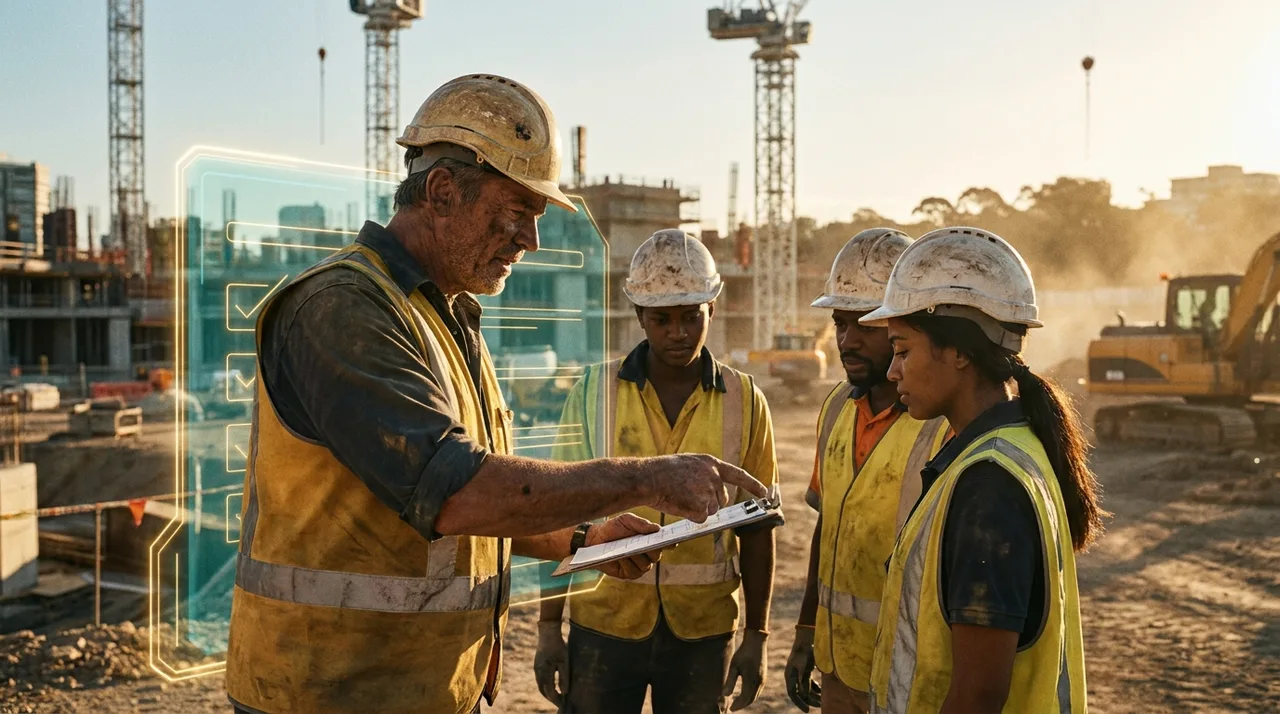
3 Things Sydney Site Managers Get Wrong When Leading a Labour Hire Crew (2026)
Most labour hire problems aren't bad workers — they're three leadership gaps: unclear minimum requirements, a vague brief, and no definition of done. Here's the fix for each.
Most labour hire problems on Sydney sites aren't bad workers — they're 3 leadership gaps:
- Minimum requirements — the crew turns up without the tickets, PPE or induction the task needs, and loses the first hour
- The brief — what to do is vague or sent at 6am on the gate instead of the day before
- No definition of done — the brief says what to do but never says what finished looks like, so the work is "complete" but wrong
Fix all three and the same crew, at the same rate, starts faster and redoes nothing. 🎯
Table of Contents
- Why Leadership Decides What You Get Back
- Thing 1: Minimum Requirements — What the Crew Needs to Start
- Thing 2: The Brief — What to Do, Sent the Day Before
- Thing 3: Definition of Done — What Finished Actually Looks Like
- The Business Case for Getting These Three Right
- How Leap Helps You Lead, Not Just Supply
- Frequently Asked Questions
Why Leadership Decides What You Get Back
Here's the thing nobody puts on the program: a labour hire crew is led, not just ordered.
The agency supplies vetted, ticketed bodies. What happens after they walk through the gate is on you. And the gap between a crew that's productive by smoko and one still milling around at 10am almost never comes down to the workers. It comes down to three things the site manager controls.
Same crew, same rate, same day — what you get back is decided by how well you set them up, brief them, and tell them what "done" looks like.This post narrows the noise to the three things that actually move the needle:
- Minimum requirements — does the crew arrive with everything the task needs to start?
- The brief — do they know exactly what to do, told early enough to plan?
- Definition of done — do they know what finished looks like, broken into checkable outcomes?
The third one is the one almost everybody misses — and it's the one that quietly costs the most. We'll spend the most time there.

If you're still deciding how to source the crew, start with our labour hire cost breakdown. This post is about what happens after the crew lands.
Thing 1: Minimum Requirements — What the Crew Needs to Start
A labour hire worker arrives vetted and ticketed — White Card, the licences the role needs, standard PPE. What they don't arrive with is your site. The minimum requirements are the things that have to be in place before the crew can turn a hand.
Get them wrong and the crew loses the first hour — the most expensive hour on the job — standing around while you sort out what should have been ready.
The minimum set, every time:
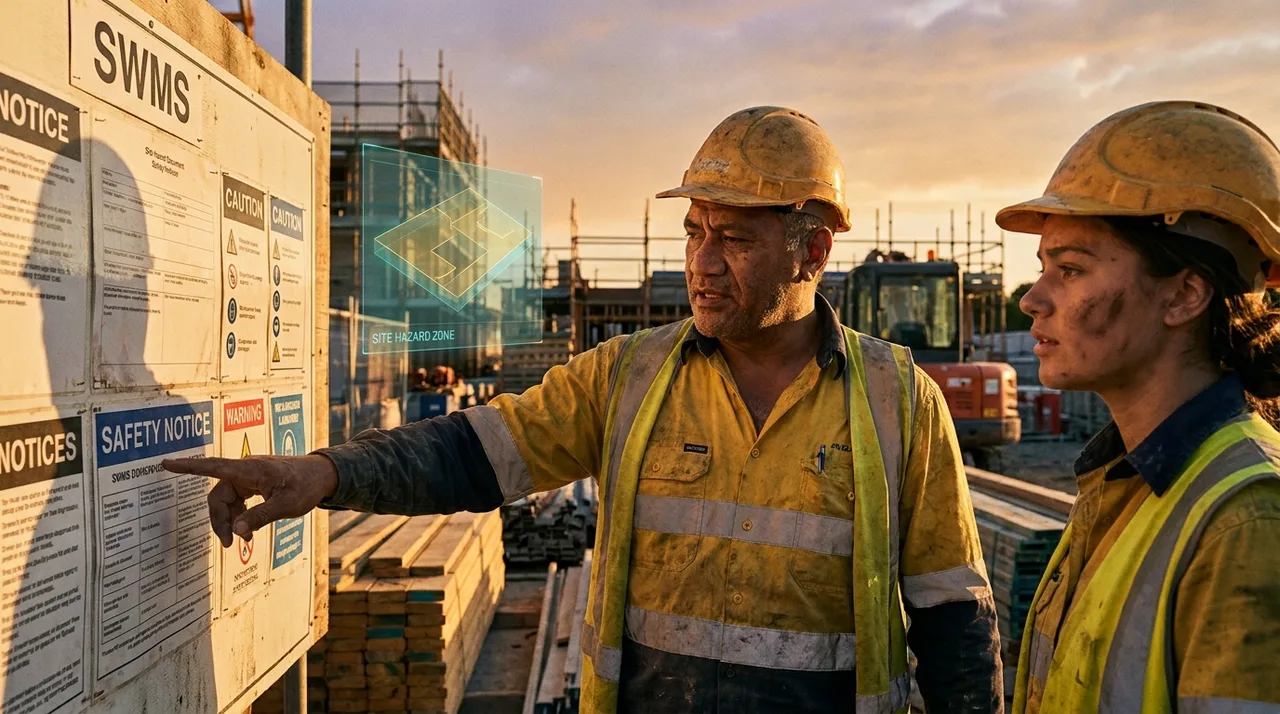
⚠️ The site-specific induction is the host's legal duty, not the agency's. Under the Work Health and Safety Act 2011 (NSW) the host PCBU carries the duty of care for everyone on site, hire crew included. Skipping it doesn't save time — it transfers risk onto you and slows the crew down.
The fix is a 60-second pre-arrival check. Before the crew turns up, confirm: tickets match the task, PPE is sorted, the induction is ready to run, the contact is named, and the amenities work. If all five are yes, the first hour is productive. For the full host-side checklist, see host employer responsibilities.
Thing 2: The Brief — What to Do, Sent the Day Before
"Just send us five labourers for Monday." Then nothing until 6am at the gate. That's the second thing site managers get wrong, and it's everywhere on Sydney sites.
A vague brief means the wrong tickets show up and the crew mills around the first hour working out what they're doing. A last-minute brief — texted at 9pm or barked at the gate — means workers can't plan travel, parking, or which boots and tools to bring.
Vague in, vague out. The agency and the crew can only execute what you actually told them — and only if you told them in time to use it.A good brief is sent the day before, in writing, and names:
- Where — site address, gate, parking, what to bring
- When — start time, expected finish, shift pattern
- Who — the supervisor's name and number on the gate
- What — the actual task, not just "labouring"
- Tickets — White Card plus anything role-specific (e.g. "Working at Heights for a Parramatta high-rise")
📋 A builder rang us at 6:12am one man short on a pour. We got a body there fast — but the day still ran late because nobody had told the worker the gate code or where the pump was. The fix wasn't a better worker. It was a brief sent the night before.
Brief early and you also get the lead time right. Our lead times by trade run 1–2 days for a general labourer up to a month or more for rare trades like doggers and crane drivers — but only if you brief early enough to use them.
Thing 3: Definition of Done — What Finished Actually Looks Like
This is the one almost nobody does, and it's where most of the cost hides.
A normal brief tells the crew what to do. A good leader also tells them what "done" looks like — broken into specific, checkable outcomes. The brief is how to execute the job. The definition of done is how everyone knows the job is finished — and finished right.
Without it, the crew fills the gap with guesses. The work comes back technically complete but not what you wanted — and you only find out at knock-off, when fixing it is most expensive.
⚠️ A brief without a definition of done is a half-brief. "Tidy up Level 3" is not an instruction — it's a guess generator. The crew does their version of tidy, you wanted yours, and the gap costs you the afternoon.
Brief to execute, then define what done looks like
The two halves work together. Here's the same task with and without the second half:
How to write a definition of done
Take the task and finish this sentence: "This is done when…" — then list the outcomes you can actually point at. Concrete, observable, no adjectives.
💡 The bit most builders miss: a definition of done lets the crew self-check before they down tools. They're not guessing whether they're finished — they're ticking a list. That's the difference between work you have to inspect and re-issue, and work that's right the first time.
Why this is the highest-leverage habit on site
- It removes guessing. The crew stops inventing your standard and starts meeting it.
- It makes verification fast. You walk a short list instead of re-explaining what you meant.
- It carries between shifts. A crew that knows what done looked like yesterday hits it again today with no re-brief.
- It surfaces problems early. If the crew can't hit the list, you hear about it at lunch, not at knock-off.
Brief to execute. Then define what finished looks like, broken down. Do both halves and the work comes back right — from the same crew, at the same rate.
The Business Case for Getting These Three Right
This isn't about being nice. It's about output and cost on a crew you're already paying for.
The rate is fixed. Whether the crew starts fast, executes the actual task, and finishes it right is up to you — and that swing is worth more than any day-rate negotiation.- Minimum requirements met → no lost first hour, no safety risk, no scramble for missing tickets or gear.
- A clear brief, sent early → the crew plans, arrives ready, and starts on the real task instead of working out what it is.
- A definition of done → work comes back right the first time. No redo, no overtime to fix it, no carrying it to tomorrow.
Leadership is the cheapest productivity lever on site — it costs you nothing and works on the crew you've already booked. Sort the minimum requirements, brief the day before, and define what done looks like in checkable outcomes. The rate is the rate; whether the crew starts fast and finishes right is where the real money is won or lost.
The flip side: a low day-rate means nothing if the crew loses the first hour, builds the wrong thing, and you find out at 3pm. For the wider economics, see is labour hire worth it.
How Leap Helps You Lead, Not Just Supply
A good agency doesn't just send bodies. It makes the crew easy to lead — so your effort goes into the brief and the definition of done, not into chasing basics.
- Vetted, ticketed workers — every worker arrives with verified White Card and role licences, so your induction covers your site, not their basics.
- Standard PPE supplied — hard hat, hi-vis, steel-caps, gloves, so the crew turns up ready to work.
- A named Allocator — one single point of contact per Work Order. Not a call centre, not whoever picks up — one person who knows your site.
- A two-way feedback loop — tell us what worked and what didn't after each shift; we vet and re-allocate so the crew that returns is the one that fit. More on that in how AI is changing labour hire recruitment.
- Clear engagement modes — On-Hire (you direct the work, Leap payrolls) or Subcontract (Leap delivers a defined outcome under Leap supervision). The mode is on the Work Order so everyone knows who owns the brief and the definition of done.
You don't need a leadership course. You need to set the crew up with what the task requires, brief the day before, and define what finished looks like. Do that and the same crew starts fast, builds the right thing, and finishes it right.
Get a crew that shows up ready →
Frequently Asked Questions
What does a labour hire crew actually need to start work on a Sydney site?+
Three things have to be in place before the crew can turn a hand: the right tickets and PPE for the task (White Card plus any role licence), a site-specific induction covering hazards, exclusion zones, muster point and amenities, and a named point of contact. Confirm all of it before the crew arrives — a 60-second pre-arrival check — and the first hour is productive instead of wasted.
How far ahead should I brief a labour hire crew?+
Brief the job the day before, in writing, not at 6am on the gate. Confirm the site address, gate, parking, start time, the supervisor's name and number, the actual task, and the tickets it needs. A last-minute brief is the single biggest driver of slow starts and first-morning confusion. Lead times depend on it too — a general labourer is 1–2 days, rare trades up to a month or more.
What is a 'definition of done' for a labour hire crew?+
It's the brief's other half: not just what to do, but what finished looks like, broken into checkable outcomes. Instead of "tidy up the level", done becomes "offcuts in the bin, walkways clear, materials stacked on the east wall, tools back in the container by 2:30". The crew can self-check before they down tools, and you can verify in 60 seconds instead of re-explaining what you meant.
Why do labour hire briefs fail even when the workers are good?+
Because the brief says what to do but never says what done looks like. Workers fill the gap with guesses, so the work comes back technically complete but not what you wanted — and you only find out at knock-off, when fixing it is most expensive. A definition of done removes the guessing: the crew builds to a standard you can both point at.
Whose job is it to induct a labour hire worker?+
The host site. Under the Work Health and Safety Act 2011 (NSW) and Leap's Terms of Hire, the host PCBU must provide a site hazard briefing and induction. Leap supplies vetted, ticketed workers and standard PPE, but the site-specific induction — hazards, exclusion zones, muster point, amenities — is the host's legal duty. It cannot be skipped.
How does better crew leadership reduce labour hire costs?+
A crew that starts with the right tickets, a clear brief, and a defined finish point doesn't lose the first hour, doesn't redo work, and doesn't need re-explaining the next day. Leadership is the cheapest productivity lever on site — it costs nothing and lifts output on the same crew at the same rate. The expensive option is a careless start that turns into redo and overtime.
Is it the agency's fault when a labour hire crew underperforms?+
Sometimes — a genuinely wrong-for-the-job worker is a real agency issue, and a same-day feedback flag to your Allocator fixes it. But just as often the minimum requirements weren't met, the brief was vague, or "done" was never defined. Sort those three first, then judge the supply on a like-for-like basis. If everything on your side was right and the worker still underperformed, that's an agency issue — flag it with specifics.
Does Leap help me lead the crew, not just supply it?+
Yes. Workers arrive vetted, ticketed and in standard PPE, so your induction covers your site, not their basics. Every Work Order has a named Allocator as your single contact and a two-way feedback loop — tell us what worked and what didn't after each shift, and we vet and re-allocate accordingly. That frees your effort for the brief and the definition of done, which is where leadership actually happens. Tell us what your site needs.
The agency supplies the crew. You set it up, brief it, and define what done looks like. Do all three and the same crew starts fast and finishes right.
Leap Labour is a Sydney-based labour hire agency providing general hands, forklift drivers, skilled labourers, traffic controllers, and leading hands across construction and warehouse sectors. All placements comply with Fair Work and SafeWork NSW requirements.