Forklift Licence Types in NSW: LF vs LO and Which You Actually Need
LF vs LO forklift licence for Sydney warehouses and construction sites — what each class covers, which one employers ask for, RTO vetting, real costs, and the 2026 process.
Two NSW forklift classes — one is what employers actually ask for:
- LF (TLILIC0003) — counterbalance forklift. What Sydney construction yards and warehouses mean by "forklift ticket." Start here.
- LO (TLILIC0004) — order picker only. Gets you into specialist high-bay DCs but misses most bookings that need counterbalance work.
LF course: $350–$450 at a SafeWork NSW approved RTO, 2–3 days. Licence issued by SafeWork NSW, valid 5 years, nationally recognised.
🦺 An LO-only ticket locks you out of roughly 90% of Sydney bookings that need counterbalance work.
Most workers know they need a forklift ticket. Few know there are two different classes.
The wrong forklift class wastes two days and $400 — and you find out at the site gate, not before.You show up to a warehouse in Wetherill Park on Monday. The supervisor checks your card.
"You've got LO. We need LF. You can't operate that machine."
You drove 45 minutes. You turned down another shift. And you're going home — because nobody told you the classes are different.
This is the straight version from the people placing forklift operators into Sydney warehouses and construction yards every week. LF vs LO, which class matches which job, how to get certified without overpaying, and exactly what employers check.
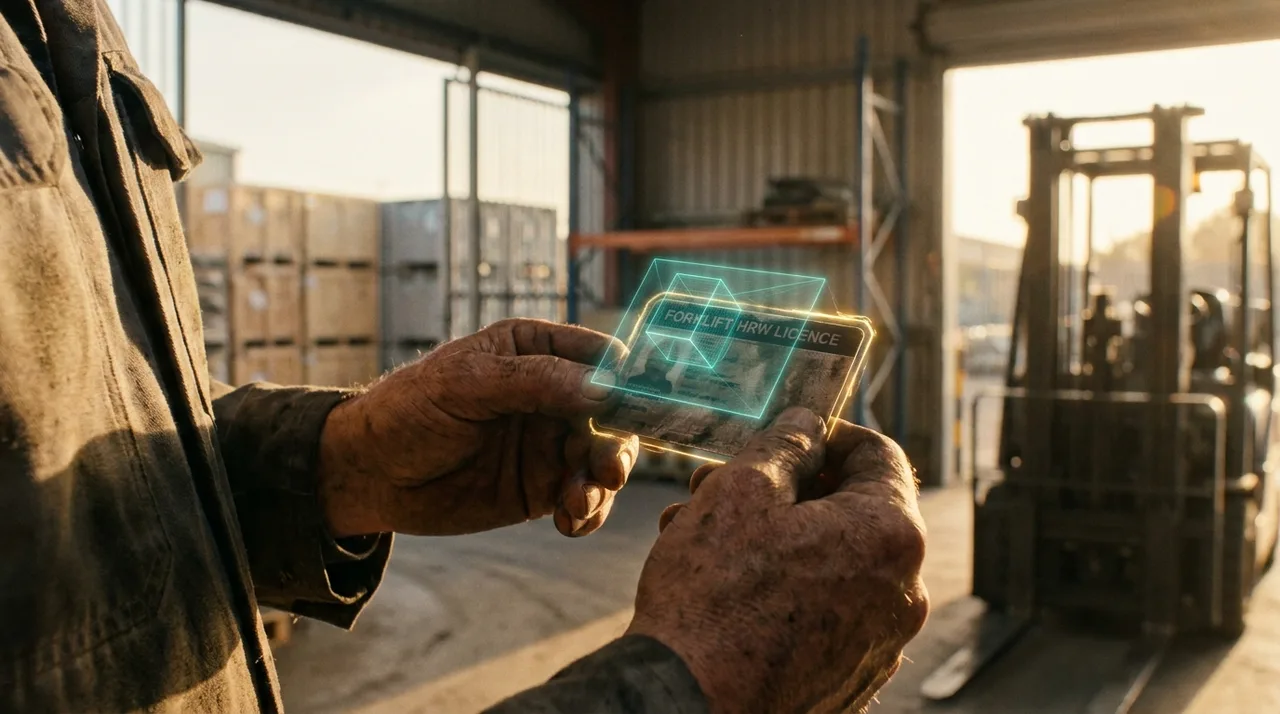
Table of Contents
- LF vs LO — What Each Class Covers
- Which Licence for Which Job
- Course Cost, Duration, and the Assessment
- How to Verify Your RTO Is Legit
- Step-by-Step: Getting Your Licence in NSW
- What Employers Actually Check
- Frequently Asked Questions
LF vs LO — What Each Class Covers
In NSW, forklift licences are issued under the High Risk Work Licence (HRWL) scheme, regulated by SafeWork NSW under the Work Health and Safety Regulation 2025.
Both classes require training at a SafeWork NSW approved RTO and assessment by a SafeWork NSW accredited assessor. That's where the similarity ends.
LF — Licence to Operate a Forklift Truck (TLILIC0003) 🔧
The LF covers a standard counterbalance forklift — the sit-down machine with a counterweight at the back, sitting in nearly every construction yard, logistics depot, and warehouse in Sydney.
The LF is the most in-demand class in Sydney — across both construction sites and warehouse operations.
When a job ad says "forklift licence required" without specifying — they mean LF. Almost every time.
It is the one you should get first.
LO — Licence to Operate an Order Picking Forklift (TLILIC0004)
The LO covers an order picking forklift — a machine where the operator's controls elevate with the load carriage, so the worker rides up with the forks to pick stock at height.
These run in large distribution centres, supermarket DCs, cold storage, and high-bay warehouses — often narrow-aisle, high-reach electric machines.
An LO licence does not automatically cover counterbalance forklifts.
LO without LF = limited. The moment anyone needs you on a standard counterbalance, you're sidelined.The one-sentence rule: If you've never held either licence — start with LF. It opens more doors, pays at least as well, and you can add LO later as a single class on your existing HRW card.
Which Licence for Which Job
Here's what Leap sees week to week placing forklift operators into Sydney warehouse, logistics, and construction yard roles.
When a supervisor calls in a request for a "forklift operator," they almost always mean someone with an LF counterbalance ticket. Construction yard coordinators, demolition site managers, civil logistics supervisors — same thing.
Illustrative breakdown of typical Sydney warehouse bookings by licence class — based on Leap placement patterns across Greater Sydney. Individual employer needs vary.
LO-only workers are essentially locked out of roughly 90% of warehouse bookings that require counterbalance work. That's the honest shape of the market.
The operators earning the best day-rate in our network hold both LF and LO — a floating asset on any mixed-fleet site, which is exactly what labour hire clients want.
🏗️ Roles where LF alone is the standard call:
- Warehouse goods-in / goods-out, cross-dock, freight terminals
- Construction material handlers (steel, timber, block, drainage pipe)
- Demolition and civils — materials staging, strip-out, crushing plant feeds
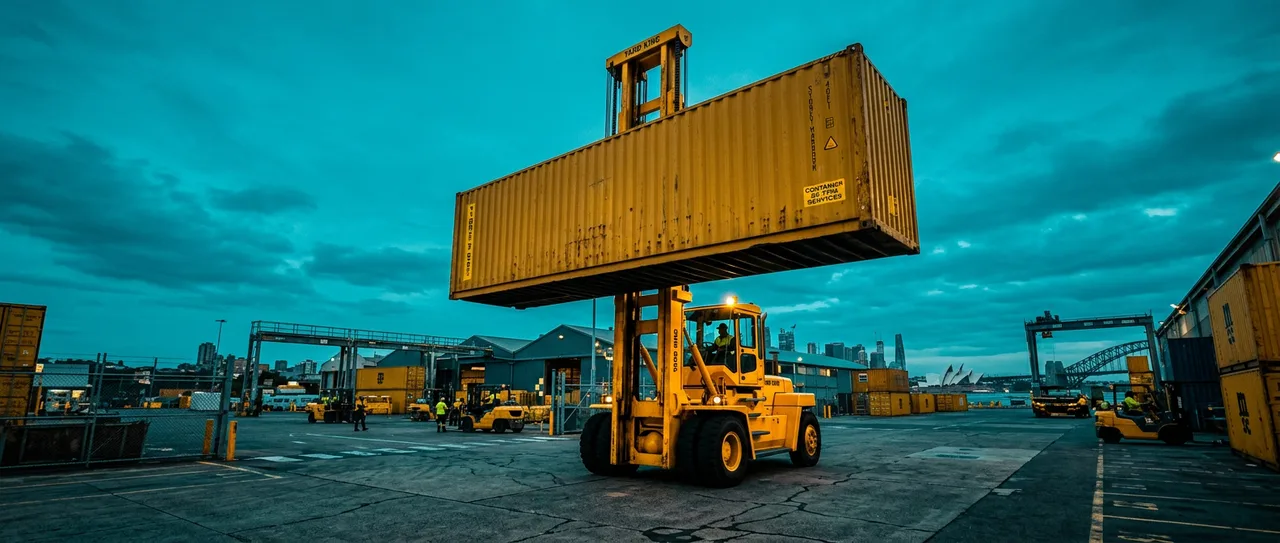
- Logistics yards and container yards near Port Botany
Roles where LO is added or preferred:
- Pick-to-voice or RF-scan order picking in high-bay DCs
- Supermarket and FMCG distribution centres
- Pharmaceutical and cold-chain logistics warehouses
Construction Sites — LF Is the Ticket 🏗️
On a Sydney construction site, the machine is almost always a counterbalance forklift. LF is the required class.
If you show up with an LO and the WHS induction asks for your forklift class, the supervisor sends you home.
Warehouse Pick-Pack — Usually LF, Sometimes Both 📦
For standard pick-pack — moving pallets, receival, loading docks — an LF is typically enough.
Higher-volume DCs that run order selectors need LO in addition to, or instead of, LF. Ask the specific employer before enrolling.
Telehandler and Rough Terrain — Additional Ticket Required ⚠️
Neither LF nor LO covers a telehandler.
Telehandler operation on NSW construction sites typically needs a separate competency assessment or a specific HRWL class depending on the machine's rated capacity. Always verify with your supervisor before operating any machine outside your class.
Course Cost, Duration, and the Assessment
This is where a lot of workers get burned. They search "forklift licence Sydney," click the first result, and book a $700 course — when the same training runs $350–$450 at a SafeWork NSW approved RTO down the road.
What an LF Course Costs in Sydney 💰
The realistic sweet spot for a standard LF beginner course is $350–$450, assessment included. Some providers advertise all-inclusive pricing with no hidden charges. Others list a lower headline fee and charge separately for the assessment day — always ask before you book.
The government licence fee is separate: around $90–$100 for a 5-year licence, paid via Service NSW when you apply.
Total out-of-pocket for your LF, all-in: approximately $450–$550.
For a combo LF+LO, budget $550–$650 for the course plus the single licence fee. Some providers offer multi-course discounts of up to 15%.
A forklift ticket pays for itself fast — the operator rate premium over a general labourer covers the course in the first couple of weeks of higher-rate shifts. Few career moves have a faster payback.
How Long the Course Takes ⏱️
A typical LF course spans 2 days of training plus an assessment day (3 days total). Day 1 covers theory, pre-start checks, load calculations, and a practical intro. Day 2 is practical training — stacking, manoeuvring drills. Day 3 is the SafeWork NSW assessment.
💡 If you have prior operating experience, ask about express or advanced courses. LF courses are competency-based — some providers keep two-day pricing and only charge for extra days if you need them. The LO order picker course can be as short as 1 day.
What the Assessment Involves
Assessment day is run by a SafeWork NSW accredited assessor and has three parts:
- Written knowledge test — load capacity, hazard ID, pre-start checks, WHS regs
- Calculation assessment — load maths
- Practical driving test — manoeuvring, stacking, load handling in a simulated workplace
Under SafeWork NSW guidelines you receive a Notice of Satisfactory Assessment (NSA) for the parts you pass, and only re-sit the sections you failed. You usually have up to 60 days to complete any reassessment.
PPE You Must Bring on Training Day
⚠️ You now need a MyServiceNSW Account and an Assessment Enrolment Number (AEN) before sitting your assessment. Get the AEN through Service NSW online before your course starts. Your RTO should tell you this — if they don't, ask.
How to Verify Your RTO Is Legit
Not every provider advertising "forklift licence Sydney" is authorised to deliver the SafeWork NSW assessment. Some run training-only courses and outsource assessment to a third party — adding cost. Others have assessors who aren't current on their accreditation. And the $45 instant online "certificate" isn't a licence at all.
A dodgy or non-compliant course means your application gets rejected — two days of your time gone, plus the fee.
Here's the five-minute check.
Same SafeWork NSW assessment. Same card. Different price.
A $380 course at a fully approved, assessor-accredited Sydney RTO delivers the identical outcome to a $700 course. The licence card looks identical. The employer sees the same HRW class printed on it. Don't pay $300 extra for branding.
Step-by-Step: Getting Your Licence in NSW
No guesswork. Here's the exact 2026 sequence — two steps: train and assess through an RTO, then apply to SafeWork NSW.
You must apply within 60 days of your NSA being issued. You can present the NSA — or your digital HRW licence in the Service NSW app — while waiting for the printed card.
Licence validity: an HRW licence lasts 5 years. Any classes you add later expire at the same time as the original. Get your licence in 2026, it expires in 2031 — add LO in 2027 and both expire in 2031.
Adding LO to an existing LF licence? Same training-and-assessment process to add a new class to your card. The LO add-on typically takes 1–2 days and costs $280–$380 at most Sydney RTOs.
The RTO trains and assesses you. SafeWork NSW licences you. Both steps are required — a Statement of Attainment alone is not a licence.
What Employers Actually Check
You have your HRW card. You show up to site. Here's what gets verified before you operate.
The Card Itself — Not Just a Screenshot 📋
Employers and WHS coordinators check the physical HRW card on most Sydney construction sites. Screenshots, photos, or "it's in the post" aren't accepted on most worksites — though the NSA (within its 60 days) and the digital licence in the Service NSW app are increasingly accepted.
Carry your proof.
Licence Class Matches the Machine
The card lists your class — LF, LO, or both. Before you operate, the supervisor should verify your class matches the equipment.
Operating outside your licensed class is a SafeWork NSW offence.
Under the Work Health and Safety Regulation 2025, operating high risk plant without the applicable licence can attract on-the-spot fines. For a worker, the penalty can reach $15,000. For a PCBU (employer), penalties are substantially higher. More on this in our guide to compliant labour hire in Sydney.
Expiry Date 🗓️
Your HRW licence runs 5 years. Expired licences aren't valid — and an expired licence on site creates liability for the host employer, not just the worker.
SafeWork NSW emails and texts renewal reminders roughly 60 days out, but don't rely on them. Book your refresher 4–6 weeks before expiry.
High Risk Work Licence Registry
Employers can verify your licence directly via the SafeWork NSW online registry at verify.licence.nsw.gov.au.
Labour hire companies placing forklift operators — including Leap Labour — check the registry before allocating. If your name doesn't appear or the licence shows expired, you won't be placed.
The registry check takes 30 seconds — and it happens more often than workers expect.For workers — before you apply for forklift roles:
- Check your HRW card is current — expiry date, class listed correctly
- Verify your name appears on the SafeWork NSW online registry
- Know your class — LF covers most Sydney roles; LO is for order picking environments
- Carry the physical card (NSA or Service NSW digital licence in the interim)
For clients — before you place a forklift operator:
- Verify the worker's HRW class matches the machine on your site
- Check the SafeWork NSW registry directly — takes 30 seconds
- Confirm expiry before the worker starts — an expired licence creates site liability
- If your site uses telehandlers or specialised plant, confirm additional competencies
An expired licence on site is a liability problem — for the host employer, not just the worker.
Where to Go From Here
A forklift licence isn't a magic ticket. The licence gets you the job — showing up on time, operating safely, and being reliable is what keeps the shifts coming.
We've placed hundreds of forklift operators across Sydney. The ones who stay busy aren't the most experienced. They're the ones who communicate, turn up when they say they will, and treat the equipment with respect.
The licence opens the door. Everything after that is on you.
If you're a worker chasing forklift roles across Sydney — warehouses, construction yards, distribution centres — register with Leap Labour. We verify your licence class before allocation, match you to sites that need your specific ticket, and aim for consistent, ongoing work. 💼
If you're a client and need to confirm the workers we supply hold the correct HRW class for your site — we run that check as standard, before anyone touches your equipment. Get in touch here.
For more on what employers are legally required to check, see Compliant Labour Hire in Sydney. For a breakdown of what clients pay, see Labour Hire Cost Breakdown.
Frequently Asked Questions
What is the difference between an LF and LO forklift licence in NSW?+
Different machines. LF (TLILIC0003) covers a counterbalance forklift — the standard sit-down machine on construction yards and in most warehouses. LO (TLILIC0004) covers an order picking forklift, where the operator platform elevates with the load — common in large distribution centres. LO does not automatically cover counterbalance forklifts. When a job ad just says "forklift licence required," it almost always means LF. Start with LF.
How long does it take to get a forklift licence in NSW?+
About 3 days, then a few weeks for the card. An LF beginner course is typically 2 days of training plus a separate assessment day. After you pass, SafeWork NSW issues a Notice of Satisfactory Assessment (NSA) — usually the same day — which is a valid temporary licence for 60 days while your plastic HRW card is posted. Experienced operators may qualify for a 1-day express course; the LO order picker course can be done in 1 day.
How much does a forklift licence cost in NSW in 2026?+
$350–$450 for the LF course. A standard LF beginner course at a SafeWork NSW approved Sydney RTO typically runs $350–$450 including the assessment — a combo LF+LO is roughly $550–$650. You also pay a separate government licence fee of around $90–$100 via Service NSW. Beware $700+ courses: the same SafeWork NSW assessment and the same card are available for far less.
How do I verify my Sydney RTO is legit?+
Check the SafeWork NSW approved list. Confirm the provider appears on the SafeWork NSW approved RTO list and that their assessors hold current accreditation — the assessor, not just the trainer. Ask which unit code they deliver (TLILIC0003 for LF, TLILIC0004 for LO) and cross-check their RTO number on training.gov.au. If in doubt, call SafeWork NSW on 13 10 50. A $45 instant online "certificate" gets your application rejected.
Do I need a separate licence to operate a telehandler in NSW?+
Yes. A standard LF forklift licence does not cover a telehandler. Telehandler operation on NSW construction sites typically requires a separate competency assessment or a specific HRWL class depending on the machine's rated capacity. Never assume your LF covers rough terrain or telescopic equipment — always verify with your site supervisor before operating.
Can I work as a forklift operator while waiting for my HRW card to arrive?+
Yes — with your NSA. Once you pass, SafeWork NSW issues a Notice of Satisfactory Assessment (NSA), which is a valid temporary licence for 60 days. You can legally operate while waiting for the plastic card, and you can also add your digital HRW licence to the Service NSW app. You must lodge your card application within 60 days of the NSA being issued.